












Product Details
Product Overview
The GE IS200REBFH1A functions as a high-reliability REBF Control Board within the General Electric Mark VI Speedtronic turbine control ecosystem. This printed circuit board (PCB) executes critical logic and signal processing tasks required for large-scale industrial turbine management. We supply this component as 100% Brand New and Original, ensuring your system maintains peak operational integrity. As a core member of the Mark VI "Group One" product line, the IS200REBFH1A provides the stable hardware foundation necessary for complex excitation or turbine control sequences.
Technical Specifications
The IS200REBFH1A utilizes a standardized "Normal Assembly" profile, optimized for domestic industrial standards and seamless integration into Speedtronic racks.
| Attribute | Specification |
| Manufacturer | General Electric (GE) |
| Series | Mark VI Speedtronic |
| Functional Acronym | REBF |
| Coating Style | Conformal Coating (Industrial Grade) |
| Assembly Type | Normal Assembly |
| Product Grouping | Group One |
| Revision Level | Functional Revision A |
| Condition | 100% Brand New Original |
Engineering Advantages
-
Conformal Coating Protection: The IS200REBFH1A features a high-grade conformal coating. This protective layer shields the delicate surface-mount components and copper traces from moisture, dust, and corrosive chemical vapors commonly found in power plant environments.
-
Optimized Signal Integrity: The Group One architectural design minimizes electromagnetic interference (EMI). This ensures clean signal transmission between the REBF board and interconnected I/O modules, preventing logic errors during high-load turbine operations.
-
Direct Mark VI Compatibility: This board fits natively into the IS200 series racks. The "Normal Assembly" designation ensures that the physical dimensions and connector pinouts align perfectly with original GE specifications, eliminating the need for mechanical modifications.
-
Revision A Performance: As a functional Revision A board, the IS200REBFH1A incorporates the baseline hardware logic validated by GE for the Mark VI series, ensuring predictable performance and full compatibility with standard Speedtronic firmware versions.
FAQs
-
What is the primary function of the "REBF" acronym?
The REBF acronym designates the specific functional role within the Mark VI system. While GE documentation for legacy boards can be restricted, REBF boards typically handle specialized feedback or excitation logic within the Speedtronic control chain.
-
Does the conformal coating affect heat dissipation?
No. The professional-grade coating used on the IS200REBFH1A provides environmental insulation without compromising the board's thermal profile. The board maintains standard operating temperatures even in high-density rack configurations.
-
Is this board a direct replacement for other IS200 series boards?
You must match the functional acronym (REBF). While many boards share the IS200 prefix, the REBF designation ensures the internal circuitry and logic processing meet the requirements of your specific control loop.
-
How do I verify the "Brand New" status of the IS200REBFH1A?
Every unit we ship remains in its original factory state. You can verify the authenticity via the GE functional product number and the "A" revision stamping on the PCB, confirming the board has never undergone repair or refurbishment.
Additional Information
- 100% Genuine Parts: All products are original and authentic, ensuring reliable industrial performance.
- 30-Day Refund Guarantee: Return any in-stock item within 30 days in original, unopened packaging for a full refund (excluding shipping and fees).
- 12-Month Warranty: Covers defects in materials or workmanship; excludes misuse, normal wear, or unauthorized modifications.
- Worldwide Shipping: We ship via USPS, UPS, FedEx, and DHL. Delivery times vary by country and may be subject to customs or import fees.
- Support & Contact: Technical and warranty assistance is available anytime. Contact us here: Contact.
- Purchase Guidance: Check product specifications and compatibility carefully before ordering to ensure proper application.


Tech & Buying Guide
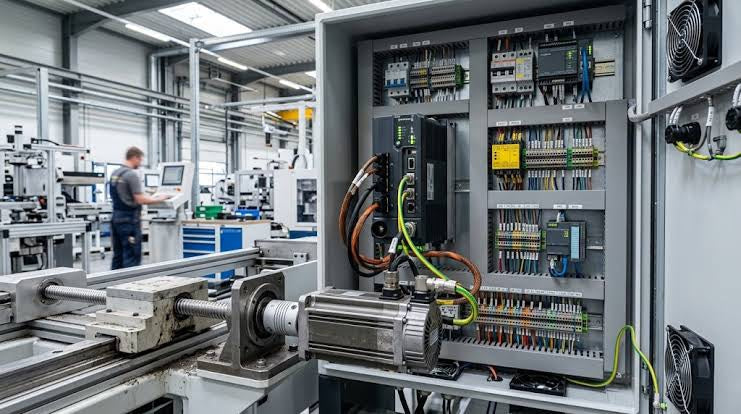
Demystifying Programmable Logic Controllers: Comprehensive Guide to PLC Classification and Selection in Industrial Automation
Modern industrial automation heavily relies on Programmable Logic Controllers (PLCs) to drive factory floor efficiency. Over my 15 years as an industrial automation expert working with DCS, TSI, and control systems, I have seen PLCs evolve into the central nervous system of modern manufacturing. Selecting the right controller requires a deep understanding of PLC types based on physical size, hardware architecture, and power supply configurations.

Comprehensive Guide to PLC Types in Modern Industrial Automation
Modern industrial automation relies on programmable logic controllers to govern critical factory operations. System integrators classify PLCs based on scale, hardware architecture, and power supply design. Understanding these core categories enables automation engineers to select the right control system architecture. Consequently, proper hardware selection optimizes performance while minimizing long-term operational costs.

Demystifying the DDE Protocol in Legacy Industrial Automation Systems
Modern control systems rely heavily on seamless interprocess communication to exchange operational data between software programs. Microsoft first introduced the Dynamic Data Exchange (DDE) protocol in 1987 to enable real-time data sharing. In factory automation, DDE served as an early bridge between control software and Windows desktop applications. Therefore, understanding DDE mechanics provides crucial insights into how legacy industrial networks established software-level connectivity.