












Product Details
Product Overview
The GE Fanuc IS200AEPAH1AFD functions as a high-performance Analog Input and Output Module within the Mark VI Speedtronic control architecture. This module bridges the gap between field instrumentation and the central control processor, managing critical analog signals required for complex industrial processes and turbine regulation. We supply this component as 100% Brand New and Original, ensuring your system maintains peak signal accuracy and operational safety. Its rugged design enables precise data acquisition in high-demand environments where signal integrity remains non-negotiable.
Technical Specifications
The IS200AEPAH1AFD utilizes high-grade circuitry to deliver consistent performance across a wide environmental spectrum.
| Attribute | Technical Specification |
| Manufacturer | GE Fanuc (General Electric) |
| Series | Mark VI Speedtronic |
| Functional Type | Analog Input and Output (I/O) |
| Input Voltage | 24 VDC |
| Power Consumption | 10 W |
| Operating Temperature | -40°C to +70°C |
| Dimensions | 160 mm x 120 mm x 20 mm |
| Weight | Approximately 0.3 kg |
| Condition | 100% Brand New Original |
Engineering Advantages
-
Extreme Thermal Resilience: This module operates reliably between -40°C and +70°C. This broad range allows for installation in remote field enclosures or high-heat turbine decks without the need for specialized climate control hardware.
-
Optimized Power Efficiency: Consuming only 10 W, the IS200AEPAH1AFD minimizes the thermal load within the control cabinet. This low power draw reduces the risk of localized overheating and extends the lifespan of adjacent electronic components.
-
Compact Integration: The slim 20 mm profile facilitates high-density mounting in crowded Mark VI racks. Engineers can maximize I/O channel counts without expanding the physical footprint of the control enclosure.
-
Precision Signal Interfacing: The board utilizes advanced filtering to isolate and process analog signals. This prevents electrical noise from corrupting data, ensuring the Mark VI controller receives a clean, accurate representation of field conditions.
-
Industrial-Grade Durability: The 0.3 kg lightweight yet rigid construction resists the persistent mechanical vibrations common in power generation facilities, ensuring secure electrical connections over long-term service.
FAQs
-
Can the IS200AEPAH1AFD replace earlier "H1A" or "H1B" revisions?
Yes. The "H1AFD" suffix denotes a later hardware revision that incorporates optimized circuit protections. It maintains full backward compatibility with earlier IS200AEPAH1 variants within the Mark VI series.
-
What type of field devices does this module support?
This module interfaces with standard analog transmitters and actuators, typically supporting 4-20 mA loops or voltage-based signals used for pressure, temperature, and flow monitoring.
-
Does this module require manual calibration upon installation?
The IS200AEPAH1AFD comes factory-calibrated. However, we recommend performing a system-level loop check via the Mark VI Toolbox software to verify that the field instrument scaling matches the controller logic.
-
Is this a new or refurbished unit?
We offer the IS200AEPAH1AFD exclusively as a 100% Brand New original part. It arrives in its factory-original packaging with all GE Fanuc manufacturing date codes and serial numbers intact.
Additional Information
- 100% Genuine Parts: All products are original and authentic, ensuring reliable industrial performance.
- 30-Day Refund Guarantee: Return any in-stock item within 30 days in original, unopened packaging for a full refund (excluding shipping and fees).
- 12-Month Warranty: Covers defects in materials or workmanship; excludes misuse, normal wear, or unauthorized modifications.
- Worldwide Shipping: We ship via USPS, UPS, FedEx, and DHL. Delivery times vary by country and may be subject to customs or import fees.
- Support & Contact: Technical and warranty assistance is available anytime. Contact us here: Contact.
- Purchase Guidance: Check product specifications and compatibility carefully before ordering to ensure proper application.


Tech & Buying Guide
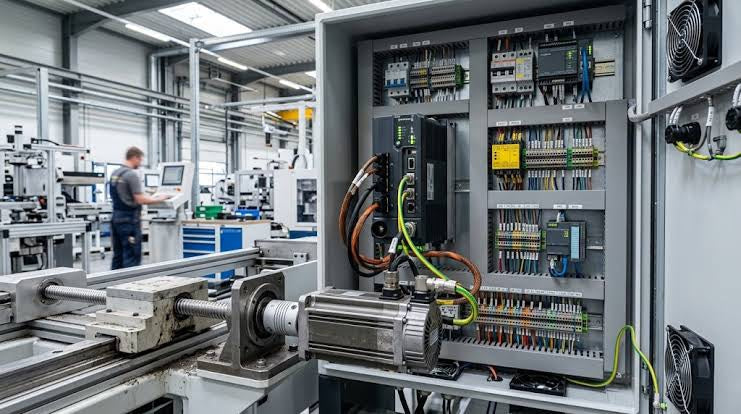
Demystifying Programmable Logic Controllers: Comprehensive Guide to PLC Classification and Selection in Industrial Automation
Modern industrial automation heavily relies on Programmable Logic Controllers (PLCs) to drive factory floor efficiency. Over my 15 years as an industrial automation expert working with DCS, TSI, and control systems, I have seen PLCs evolve into the central nervous system of modern manufacturing. Selecting the right controller requires a deep understanding of PLC types based on physical size, hardware architecture, and power supply configurations.

Comprehensive Guide to PLC Types in Modern Industrial Automation
Modern industrial automation relies on programmable logic controllers to govern critical factory operations. System integrators classify PLCs based on scale, hardware architecture, and power supply design. Understanding these core categories enables automation engineers to select the right control system architecture. Consequently, proper hardware selection optimizes performance while minimizing long-term operational costs.

Demystifying the DDE Protocol in Legacy Industrial Automation Systems
Modern control systems rely heavily on seamless interprocess communication to exchange operational data between software programs. Microsoft first introduced the Dynamic Data Exchange (DDE) protocol in 1987 to enable real-time data sharing. In factory automation, DDE served as an early bridge between control software and Windows desktop applications. Therefore, understanding DDE mechanics provides crucial insights into how legacy industrial networks established software-level connectivity.