










Product Details
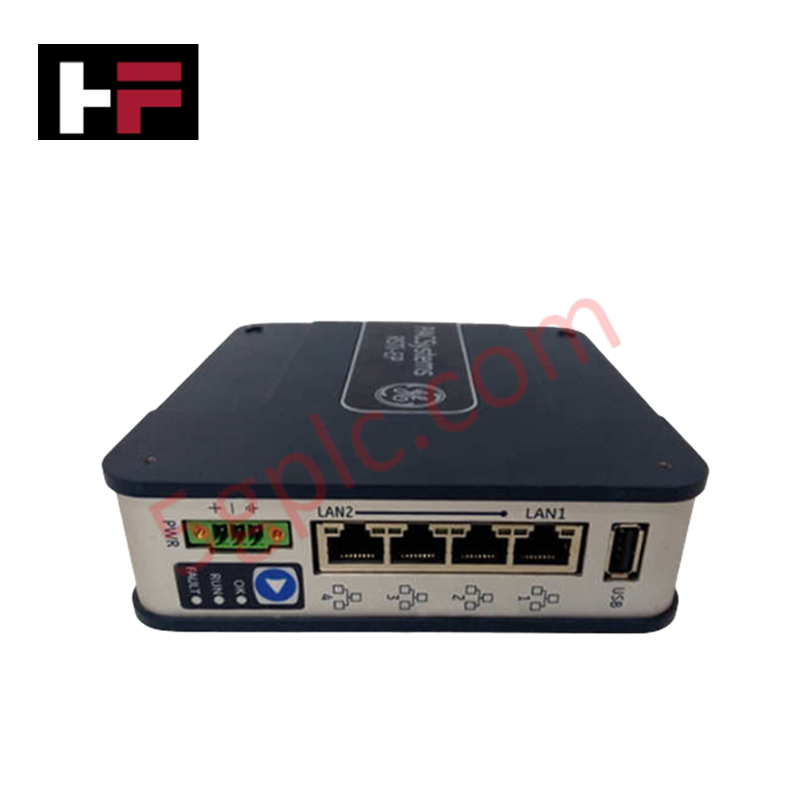
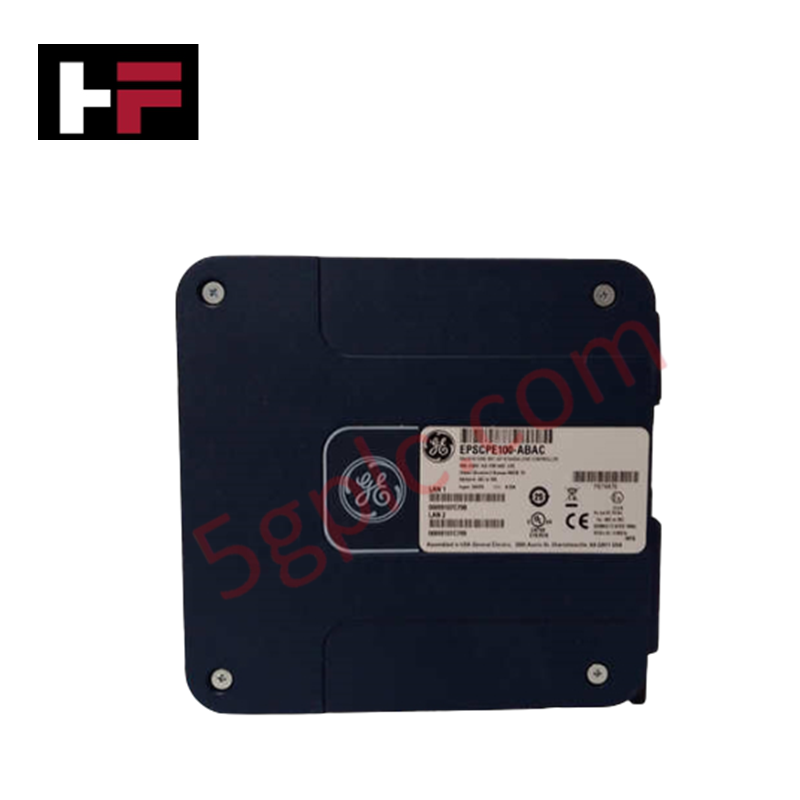
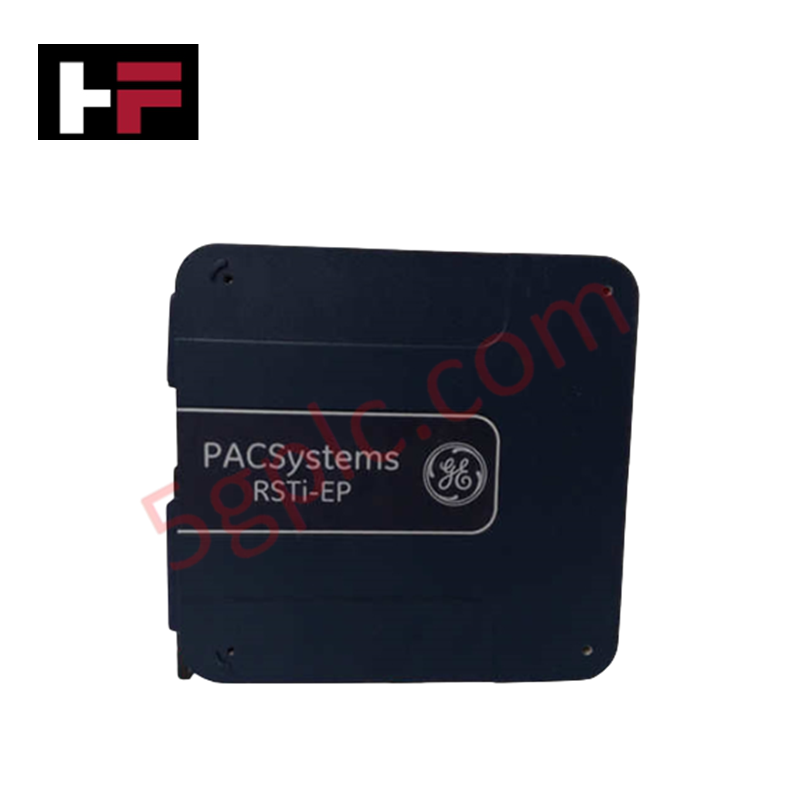
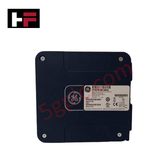
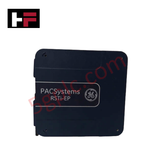
The GE EPSCPE100, also cataloged as the EPSCPE100 Standalone Controller, operates as a dedicated hardware component for industrial process execution and real-time I/O scan management within PACSystems RSTi-EP platforms.
Hardware Specifications
| Parameter | Specification |
|---|---|
| Model | EPSCPE100 |
| Brand | GE / Emerson |
| Origin | USA |
| Weight | 3.00 lbs (1.36 kg) |
| Dimensions | Not Specified |
| Operating Temp | -20 to +60 deg C |
| Power Consumption | Passive Base Logic (24 VDC System Power) |
| Processor | Integrated System-on-Module Processor |
| Memory | 1 MB User Memory Storage, Micro SD Slot Support |
| Communication Ports | 2 Ethernet Ports (1-10/100, 1-3-Port Switch 10/100), 1 RS-232, 1 USB-A 2.0 |
| Communication Protocols | PROFINET, Modbus TCP/IP, SRTP, EDG |
| I/O Capacity | 2K Bits Discrete I/O, 32K Words Analog I/O |
Profinet Deterministic Networks and I/O Density Scaling
The EPSCPE100 controller utilizes integrated PROFINET real-time protocols and a 3-port switched Ethernet interface to manage field devices across deterministic networks. Support for Media Redundancy Protocol (MRP) maintains network ring continuity without cycle loss during single-cable failures. The system architecture supports modular I/O density scaling up to 2K discrete bits and 32K analog words while maintaining rapid task execution and internal firmware flash compatibility across connected slave nodes.
Frequently Asked Questions
Q: Does the EPSCPE100 require shutdown to update controller configuration via the USB or Ethernet ports?
A: Logic changes can be downloaded online depending on the programming environment settings, but updating core system firmware requires placing the CPU into a stopped state to ensure flash memory integrity.
Q: How does the EPSCPE100 execute network redundancy on ring topologies?
A: The onboard switch hardware runs Media Redundancy Protocol (MRP), providing automatic failover to the secondary network path within milliseconds if a ring segment breaks.
Field Installation Guidelines
- Mount the EPSCPE100 CPU onto a standard 35 mm DIN rail inside the enclosure, ensuring the module locking tab clicks into position.
- Connect a low-impedance copper strap from the cabinet earth grounding bar to the CPU ground terminal for EMC compliance.
- Wire external 24 VDC power to the input supply connector, observing proper polarity limits.
- Insert Category 5e or Category 6 Ethernet cables into the RJ45 ports to establish PROFINET ring or star network topologies.
- Secure all field communications cables away from high-voltage AC lines to prevent signal interference.
Additional Information
- 100% Genuine Parts: All products are original and authentic, ensuring reliable industrial performance.
- 30-Day Refund Guarantee: Return any in-stock item within 30 days in original, unopened packaging for a full refund (excluding shipping and fees).
- 12-Month Warranty: Covers defects in materials or workmanship; excludes misuse, normal wear, or unauthorized modifications.
- Worldwide Shipping: We ship via USPS, UPS, FedEx, and DHL. Delivery times vary by country and may be subject to customs or import fees.
- Support & Contact: Technical and warranty assistance is available anytime. Contact us here: Contact.
- Purchase Guidance: Check product specifications and compatibility carefully before ordering to ensure proper application.


Tech & Buying Guide

Mastering the Siemens PLC Scan Cycle: How the CPU Executes Automation Programs
Industrial automation relies heavily on programmable logic controllers (PLCs) to manage complex manufacturing processes. Many engineers dive straight into programming without mastering the underlying architecture. However, understanding how a PLC CPU executes a program ensures reliable system design. Therefore, mastering the scan cycle optimizes both performance and troubleshooting in modern control systems.

How to Connect to Siemens S7 PLCs: 5 Essential Communication Methods
Establishing a reliable hardware link between a programming terminal and a Siemens SIMATIC controller is essential for engineering workflows. Field engineers rely on distinct physical layers, ranging from legacy serial connections to high-speed Industrial Ethernet protocols. Modern factory automation environments prioritize fast data transfer and seamless driver integration. Selecting the correct connection method simplifies program downloads, online monitoring, and system troubleshooting in complex control systems.

Will PLCs Become Obsolete? The Future of Control Systems in Industry 4.0
Modern manufacturing is undergoing a rapid technological transformation driven by Industry 4.0 innovations. Technologies like Artificial Intelligence (AI), Machine Learning (ML), and the Industrial Internet of Things (IIoT) are dominating discussions across the factory automation sector. Consequently, many engineers wonder if these advanced digital tools will eventually replace traditional Programmable Logic Controllers (PLCs). However, evaluating the core physics of industrial operations reveals a very different reality for control systems.