










Product Details
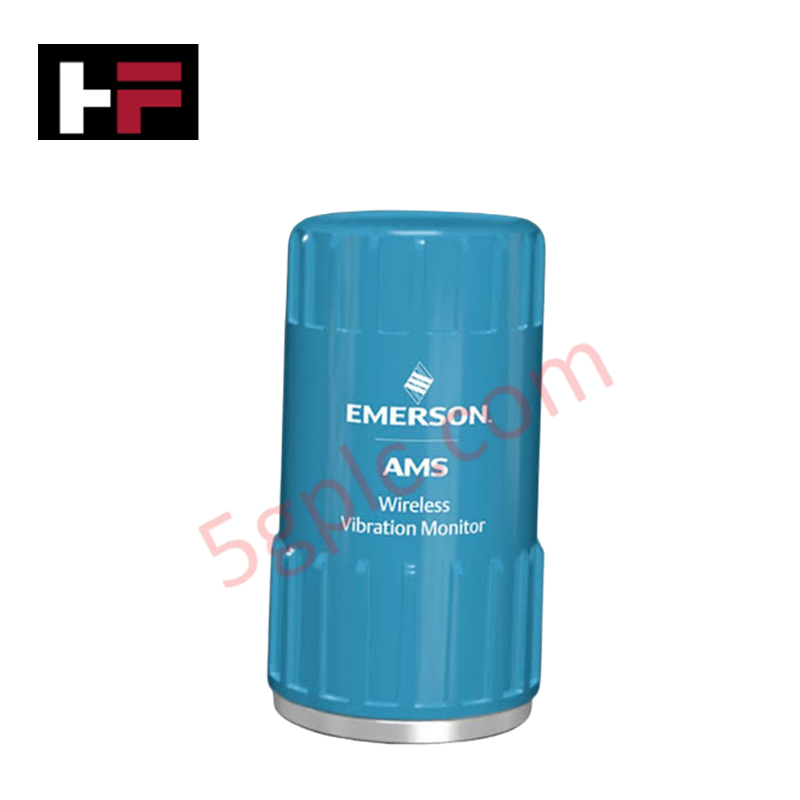
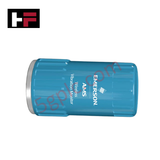
Configured for dynamic machinery telemetry acquisition and thermal monitoring in wireless asset networks, the Emerson A9530V3 (A9530V3 Wireless Vibration Monitor) provides direct physical/electrical execution. It acquires triaxial acceleration profiles and surface temperature variables, executing local PeakVue sampling algorithms to transmit spectral diagnostics across WirelessHART infrastructure.
Hardware Specifications
| Parameter | Specification |
|---|---|
| Model | A9530V3 |
| Brand | Emerson |
| Origin | USA |
| Operating Temp | -40 to +85 deg C |
| Power Consumption | Long-life internal battery module |
| Product Type | Wireless Vibration Monitors |
| Protection Rating | IP65 rated enclosure |
| Operating Humidity | 95% non-condensing |
| Communication Protocol | WirelessHART (IEC 62591) |
| Measurement Types | Triaxial vibration and temperature monitoring |
| Signal Processing | PeakVue technology for transient impact detection |
4-20 mA HART Loop Protocol and Channel Isolation
The wireless architecture maps sensor field variables directly into system topologies running alongside wired 4-20 mA HART loop protocol instruments. Channel-to-channel isolation on the internal analog front-end prevents common-mode potential shifts between triaxial axes from distorting high-frequency spectral processing. Integrated cold junction compensation and internal digital thermal calibration maintain measurement accuracy across the full -40 to +85 deg C operating span.
Frequently Asked Questions
Q: How does the internal PeakVue algorithm execute signal peak processing?
A: PeakVue samples high-frequency stress waves from bearing defects and mechanical impacts, bypassing standard low-frequency filters to calculate true peak amplitudes without signal averaging.
Q: What installation precautions ensure valid triaxial vibration measurements?
A: The sensor chassis must be rigid stud-mounted onto a flat, solid surface on the machine bearing housing to maintain mechanical coupling up to the high-frequency cutoff point across all three orthogonal axes.
Q: How does the WirelessHART protocol negotiate network join procedures?
A: The monitor authenticates using a pre-configured Network ID and Join Key, establishing encrypted mesh node routing to the wireless gateway upon power-up.
Field Installation Guidelines
- Prepare a flat, unpainted mounting surface on the machine bearing housing using a surface facing tool to ensure acoustic coupling.
- Drill and tap a threaded hole according to the mounting stud specification, maintaining perpendicular alignment to the machine face.
- Apply thread locking fluid and torque the sensor base down to the mounting surface using a calibrated torque wrench applied to the lower hex interface.
- Verify that the battery compartment seal is clean and undamaged before securing the outer housing cover to preserve the IP65 protection rating.
- Provision the monitor with the required WirelessHART network parameters using a field communicator prior to final positioning.
- Check radio signal link stability at the WirelessHART gateway to confirm mesh network integration.
Additional Information
- 100% Genuine Parts: All products are original and authentic, ensuring reliable industrial performance.
- 30-Day Refund Guarantee: Return any in-stock item within 30 days in original, unopened packaging for a full refund (excluding shipping and fees).
- 12-Month Warranty: Covers defects in materials or workmanship; excludes misuse, normal wear, or unauthorized modifications.
- Worldwide Shipping: We ship via USPS, UPS, FedEx, and DHL. Delivery times vary by country and may be subject to customs or import fees.
- Support & Contact: Technical and warranty assistance is available anytime. Contact us here: Contact.
- Purchase Guidance: Check product specifications and compatibility carefully before ordering to ensure proper application.




Tech & Buying Guide

Comprehensive Guide to PLC Types in Modern Industrial Automation
Modern industrial automation relies on programmable logic controllers to govern critical factory operations. System integrators classify PLCs based on scale, hardware architecture, and power supply design. Understanding these core categories enables automation engineers to select the right control system architecture. Consequently, proper hardware selection optimizes performance while minimizing long-term operational costs.

Demystifying the DDE Protocol in Legacy Industrial Automation Systems
Modern control systems rely heavily on seamless interprocess communication to exchange operational data between software programs. Microsoft first introduced the Dynamic Data Exchange (DDE) protocol in 1987 to enable real-time data sharing. In factory automation, DDE served as an early bridge between control software and Windows desktop applications. Therefore, understanding DDE mechanics provides crucial insights into how legacy industrial networks established software-level connectivity.

Demystifying CPU Communication Ports in Siemens PLC Architectures
Industrial automation relies heavily on robust data exchange between devices. Without seamless connectivity, field instruments, network switches, human-machine interfaces, and programmable logic controllers cannot coordinate effectively. Therefore, understanding the various CPU communication ports available in Siemens hardware ensures efficient factory automation design and seamless system integration.