












Product Details
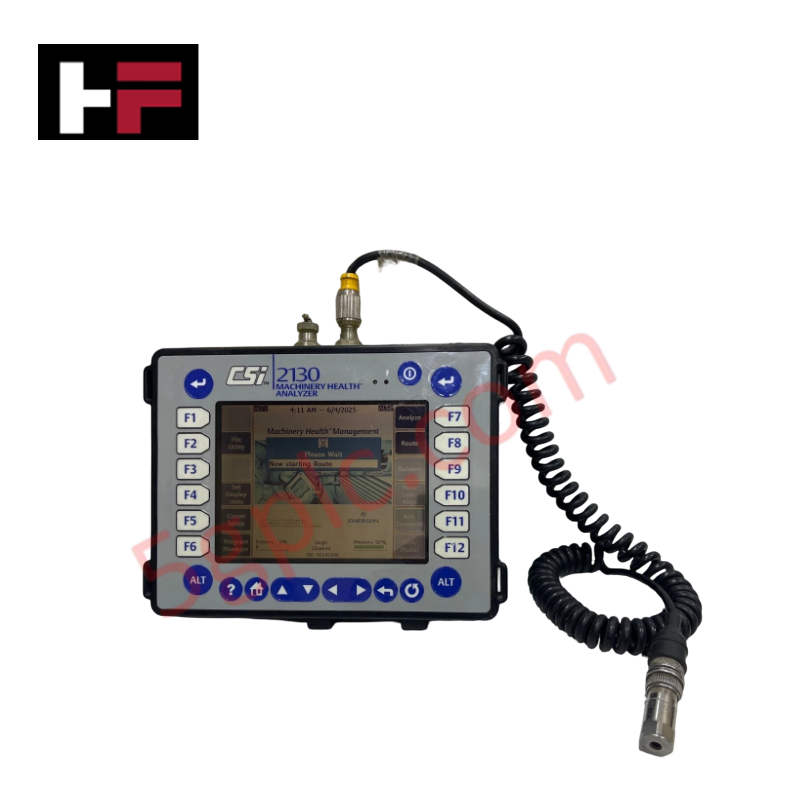
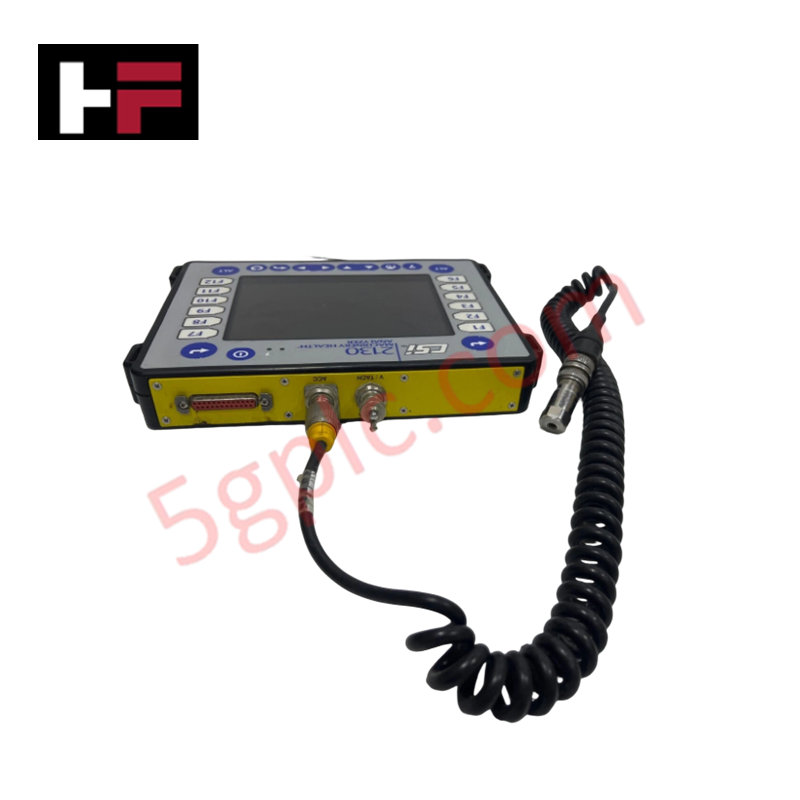
The Emerson CSI 2130, also cataloged as the CSI 2130 Machinery Health Analyzer, operates as a dedicated hardware component for portable vibration data acquisition and transient fault diagnosis within AMS Machinery Manager environments. The portable unit processes multi-channel analog vibration signals from accelerometers and proximity probes to execute cross-channel diagnostics, dynamic balancing, motor analysis, and laser shaft alignment.
Hardware Specifications
| Parameter | Specification |
|---|---|
| Model | CSI 2130 |
| Brand | Emerson |
| Origin | USA |
| Weight | 1.2 kg (2.6 lbs) standard handheld mass |
| Dimensions | 20.3 cm x 24.1 cm x 3.8 cm |
| Operating Temp | -10 to +50 deg C |
| Power Consumption | Internal rechargeable lithium-ion battery pack |
| Product Type | Machinery Health Analyzers |
| Display | Backlit VGA color display |
| Enclosure Rating | IP65 dust-tight and water-jet resistant |
| Measurement Capability | Vibration Analysis, Cross-Channel, Transient Analysis |
| Auxiliary Functions | Dynamic Balancing, Laser Shaft Alignment, Motor Diagnostics |
| Software Connectivity | Data upload/download interface to AMS Suite |
4-20 mA HART Loop Protocol and Channel Isolation
The machinery analyzer incorporates high-speed analog-to-digital converters with channel-to-channel isolation to prevent ground loop noise from degrading phase and frequency spectra during multi-channel signal collection. When interfacing with continuous process loops, internal signal processing filters isolate dynamic vibration components from static 4-20 mA HART loop protocol signals. Cold junction compensation and precision voltage scaling retain phase integrity across transient speed variations, ensuring accurate orbit tracking and rotor dynamic assessments.
Frequently Asked Questions
Q: How does the IP65 enclosure rating affect field usage in harsh environments?
A: The IP65 rating ensures complete ingress protection against industrial dust and low-pressure water jets, permitting data collection near operating turbomachinery without damaging internal measurement circuitry.
Q: What data transfer protocol connects the hardware to host diagnostic software?
A: The unit utilizes high-speed communications to upload collected vibration waveforms, transient spectra, and balancing data directly into the AMS Machinery Manager software database.
Q: Can the unit process transient vibration events during machine startup and coast-down?
A: Yes. The processing core supports dedicated transient analysis mode, capturing continuous time-waveform series correlated with tachometer pulses to generate Bode and Nyquist spectrum plots.
Field Installation Guidelines
- Connect external vibration sensors or laser alignment heads to the multi-pin circular input connectors located on the upper housing panel.
- Verify that sensor cable shields and BNC ground sleeves are free of physical damage to maintain differential channel isolation.
- Secure the hand strap and protective rubber bumper to prevent mechanical impact damage during field data collection routes.
- Clean the touch-screen surface and VGA display using non-abrasive industrial wipes to maintain optical clarity.
- Connect the external power supply charging cord only when the unit is located in a non-hazardous field area.
- Seal all connector protective rubber caps when signal cables are disconnected to maintain the IP65 ingress rating.
Additional Information
- 100% Genuine Parts: All products are original and authentic, ensuring reliable industrial performance.
- 30-Day Refund Guarantee: Return any in-stock item within 30 days in original, unopened packaging for a full refund (excluding shipping and fees).
- 12-Month Warranty: Covers defects in materials or workmanship; excludes misuse, normal wear, or unauthorized modifications.
- Worldwide Shipping: We ship via USPS, UPS, FedEx, and DHL. Delivery times vary by country and may be subject to customs or import fees.
- Support & Contact: Technical and warranty assistance is available anytime. Contact us here: Contact.
- Purchase Guidance: Check product specifications and compatibility carefully before ordering to ensure proper application.




Tech & Buying Guide
Comprehensive Guide to PLC Types in Modern Industrial Automation
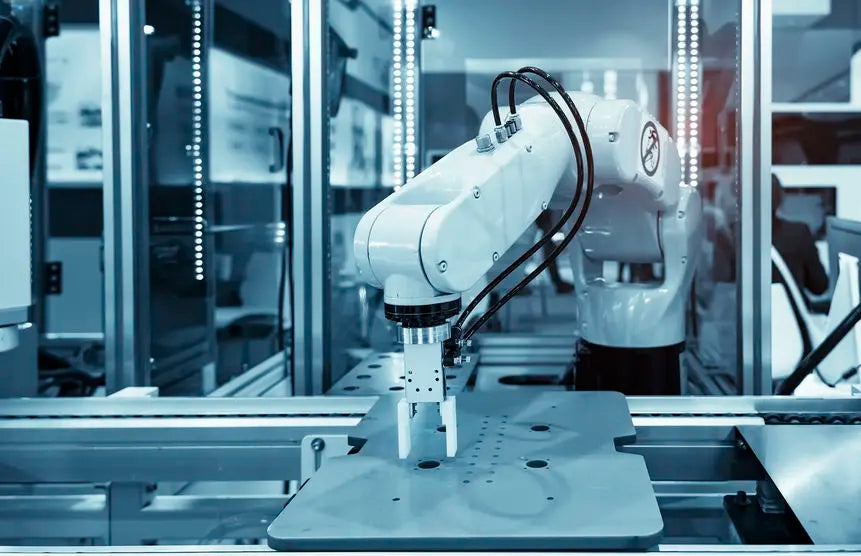
Modern industrial automation relies on programmable logic controllers to govern critical factory operations. System integrators classify PLCs based on scale, hardware architecture, and power supply design. Understanding these core categories enables automation engineers to select the right control system architecture. Consequently, proper hardware selection optimizes performance while minimizing long-term operational costs.

Demystifying the DDE Protocol in Legacy Industrial Automation Systems
Modern control systems rely heavily on seamless interprocess communication to exchange operational data between software programs. Microsoft first introduced the Dynamic Data Exchange (DDE) protocol in 1987 to enable real-time data sharing. In factory automation, DDE served as an early bridge between control software and Windows desktop applications. Therefore, understanding DDE mechanics provides crucial insights into how legacy industrial networks established software-level connectivity.

Demystifying CPU Communication Ports in Siemens PLC Architectures
Industrial automation relies heavily on robust data exchange between devices. Without seamless connectivity, field instruments, network switches, human-machine interfaces, and programmable logic controllers cannot coordinate effectively. Therefore, understanding the various CPU communication ports available in Siemens hardware ensures efficient factory automation design and seamless system integration.