










Product Details
Product Overview
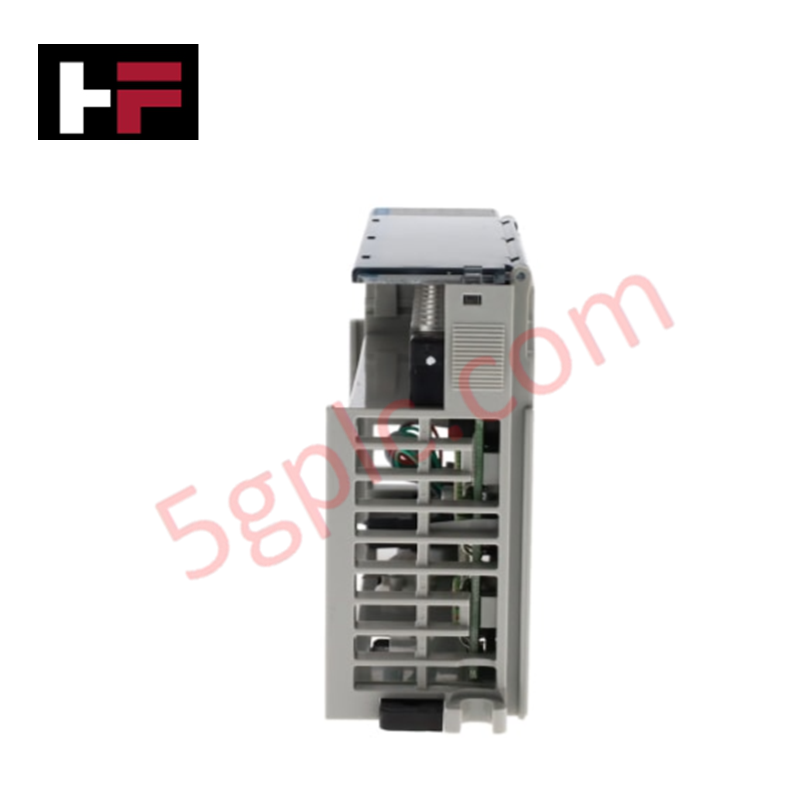
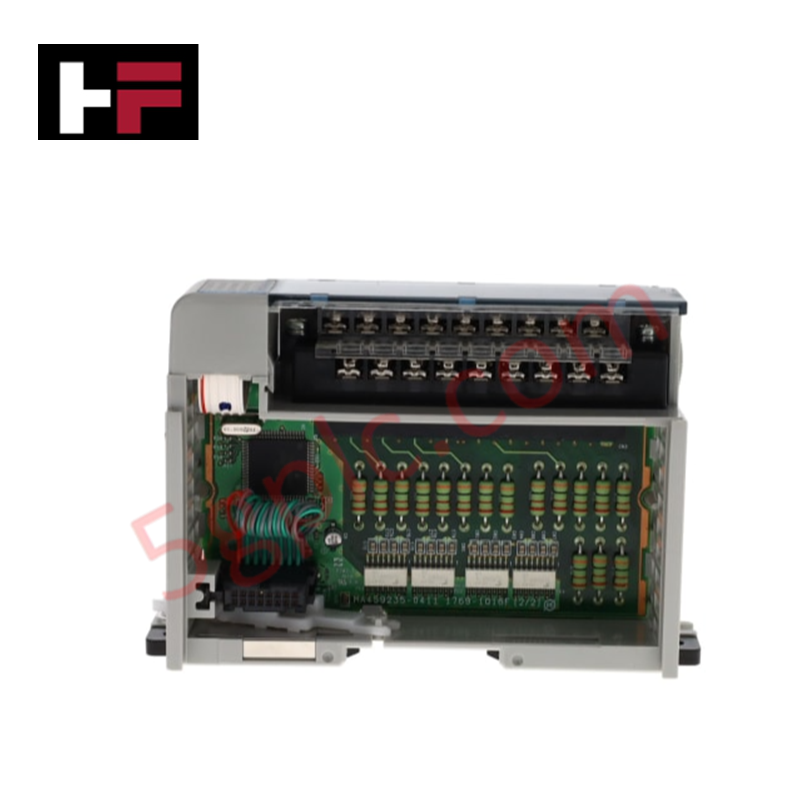
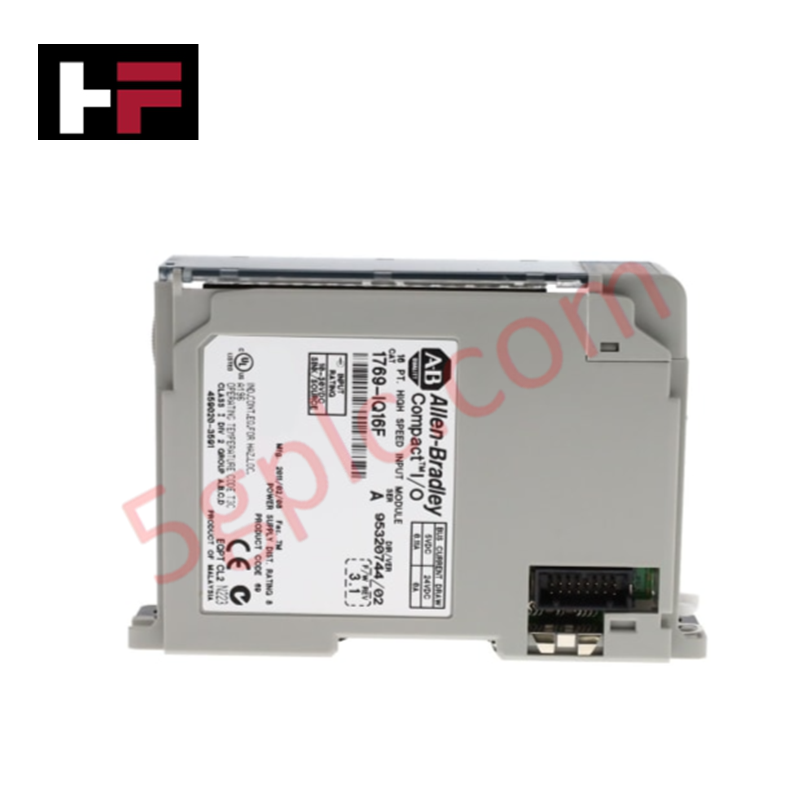
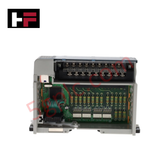
The Allen Bradley 1769-IQ16F functions as a high-speed discrete input interface for the CompactLogix platform. This module captures rapid digital signals from high-frequency sensors, encoders, and switches that standard input modules might miss. We supply this unit as 100% Brand New original stock, ensuring the timing accuracy and logic speeds required for sophisticated motion control and high-speed counting applications.
Technical Specifications
The 1769-IQ16F utilizes advanced filtering and high-speed circuitry to process 16 independent digital points.
| Feature | Specification |
| Manufacturer | Allen Bradley (Rockwell Automation) |
| Module Type | High-Speed Digital DC Input |
| Number of Inputs | 16 Points |
| Voltage Category | 24V DC Sink/Source |
| Operating Voltage Range | 10–30V DC / 0–30V AC |
| Hardware Series | Series A and B |
| Distance Rating | 8 Modules (Max from Power Supply) |
| Wire Type | Copper-90°C (194°F) |
| Wire Size (Solid) | 22–14 AWG |
| Replacement Terminal Block | 1769-RTBN18 |
| Weight | 0.44 lbs (0.20 kg) |
Engineering Advantages
-
High-Frequency Signal Capture: The "F" designation signifies "Fast." This module offers significantly shorter input delay times compared to standard DC modules. This capability allows the CompactLogix controller to respond nearly instantaneously to high-speed trigger events on the factory floor.
-
Flexible Wiring Architecture: The 1769-IQ16F supports both sink and source wiring configurations. This versatility simplifies hardware integration by allowing the module to interface with various sensor types (NPN or PNP) without requiring interposing relays or signal converters.
-
Simplified Maintenance: The 1769-RTBN18 removable terminal block allows technicians to replace the module without disconnecting individual field wires. This feature reduces Mean Time to Repair (MTTR) and prevents wiring errors during hardware swaps.
-
Power Distribution Efficiency: With a distance rating of 8 modules, the 1769-IQ16F offers flexibility in chassis layout. It maintains signal integrity even when positioned furthest from the system power supply, provided the total bus current remains within specified limits.
FAQs
-
What is the primary difference between the 1769-IQ16 and the 1769-IQ16F?
The 1769-IQ16F features specialized high-speed circuitry and significantly lower input filter times. While a standard IQ16 handles general-purpose switches, the IQ16F targets high-speed applications like product sensing on fast-moving conveyors or interface with high-frequency pulse outputs.
-
Which wire gauge should I use for field connections?
The 1769-RTBN18 terminal block accepts solid or stranded copper wire between 22 and 14 AWG. We recommend using 90°C rated copper wire to ensure thermal stability and long-term connection integrity within the control cabinet.
-
Can I use this module with 24V AC signals?
Yes. The technical specifications indicate a working voltage rating up to 30V AC. However, most high-speed applications utilize 24V DC to minimize signal latency and electrical noise.
-
Does the module require a separate power supply?
The module draws its operating power from the CompactLogix backplane. However, you must provide an external 24V DC power source to energize the field-side sensors and the input circuits connected to the 1769-IQ16F.
Additional Information
- 100% Genuine Parts: All products are original and authentic, ensuring reliable industrial performance.
- 30-Day Refund Guarantee: Return any in-stock item within 30 days in original, unopened packaging for a full refund (excluding shipping and fees).
- 12-Month Warranty: Covers defects in materials or workmanship; excludes misuse, normal wear, or unauthorized modifications.
- Worldwide Shipping: We ship via USPS, UPS, FedEx, and DHL. Delivery times vary by country and may be subject to customs or import fees.
- Support & Contact: Technical and warranty assistance is available anytime. Contact us here: Contact.
- Purchase Guidance: Check product specifications and compatibility carefully before ordering to ensure proper application.
Tech & Buying Guide

Mastering the Siemens PLC Scan Cycle: How the CPU Executes Automation Programs
Industrial automation relies heavily on programmable logic controllers (PLCs) to manage complex manufacturing processes. Many engineers dive straight into programming without mastering the underlying architecture. However, understanding how a PLC CPU executes a program ensures reliable system design. Therefore, mastering the scan cycle optimizes both performance and troubleshooting in modern control systems.

How to Connect to Siemens S7 PLCs: 5 Essential Communication Methods
Establishing a reliable hardware link between a programming terminal and a Siemens SIMATIC controller is essential for engineering workflows. Field engineers rely on distinct physical layers, ranging from legacy serial connections to high-speed Industrial Ethernet protocols. Modern factory automation environments prioritize fast data transfer and seamless driver integration. Selecting the correct connection method simplifies program downloads, online monitoring, and system troubleshooting in complex control systems.

Will PLCs Become Obsolete? The Future of Control Systems in Industry 4.0
Modern manufacturing is undergoing a rapid technological transformation driven by Industry 4.0 innovations. Technologies like Artificial Intelligence (AI), Machine Learning (ML), and the Industrial Internet of Things (IIoT) are dominating discussions across the factory automation sector. Consequently, many engineers wonder if these advanced digital tools will eventually replace traditional Programmable Logic Controllers (PLCs). However, evaluating the core physics of industrial operations reveals a very different reality for control systems.