Product Details
Product Overview
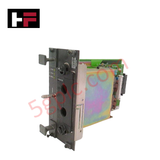
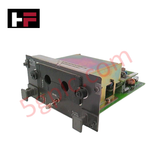
The Yokogawa AIP521 Control Bus Coupler is a legacy interface module engineered for the CENTUM CS Distributed Control System (DCS), designed to facilitate high-speed data exchange between the Field Control Station (FCS) and remote I/O or subsystem components. In aging industrial infrastructures where maintaining continuity of control is critical, this module solves the challenge of hardware obsolescence by providing a reliable bridge for the proprietary Control Bus architecture. Although officially discontinued by the manufacturer, the AIP521 remains an essential component for plants extending the lifecycle of their CENTUM CS installations, ensuring deterministic communication and system integrity where modern replacements are not directly compatible without significant architectural changes.
Technical Specifications
|
Parameter |
Specification |
|---|---|
|
Model Number |
AIP521 |
|
Manufacturer |
Yokogawa Electric Corporation |
|
Product Type |
Control Bus Coupler Module |
|
System Compatibility |
CENTUM CS (Legacy DCS Architecture) |
|
Status |
Discontinued by Manufacturer (Available as New Old Stock/Refurbished) |
|
Application |
Industrial Process Control, Machine Control |
|
Form Factor |
Industrial Computer Board / Backplane Module |
|
Dimensions |
15.2 cm (L) x 5.1 cm (W) x 22.9 cm (H) |
|
Unit Weight |
1.06 lbs (0.48 kg) |
|
Bus Interface |
Proprietary Yokogawa Control Bus |
|
Mounting Style |
Direct Backplane Slot Mount |
|
Operating Environment |
Industrial Control Room (Controlled Temperature/Humidity) |
|
Primary Function |
Data coupling between FCS and local/remote bus segments |
Model Code Decomposition
Yokogawa’s legacy CENTUM CS modules follow a fixed functional naming convention. Unlike sensor assemblies with variable length suffixes, the AIP521 is a specific logic board where the part number itself defines the complete electrical and mechanical specification.
Part Number: AIP521
-
AI: The series prefix identifying the hardware family within the Yokogawa CENTUM CS architecture, covering standard I/O, communication, and coupling units.
-
P: Denotes the "Processor" or "Interface" functional category. In this context, it indicates a smart coupling unit responsible for managing bus arbitration and data packet handling.
-
521: The unique designator for the Control Bus Coupler.
-
The "5" series typically relates to communication and network interface modules within the CENTUM CS line.
-
The "21" sequence specifically identifies the Control Bus protocol implementation and the physical form factor required for the legacy FCS chassis.
-
Suffix Logic: The base part number AIP521 does not utilize standard variable alphanumeric suffixes (like -S1 or -R1) in general procurement catalogs for this specific legacy item. The unit was manufactured to a single, fixed specification for the CENTUM CS platform. Any minor internal revisions during its production life were managed via Yokogawa’s internal engineering change notices and do not alter the external part number used for system mapping or replacement procurement.
Installation Recommendations and Wiring Guidelines
Installing the AIP521 requires careful attention to compatibility with legacy CENTUM CS backplanes and proper handling of discontinued hardware.
-
System Verification: Before installation, confirm that the target chassis is a Yokogawa CENTUM CS Field Control Station. This module is not compatible with CENTUM VP or CS 3000 backplanes due to differences in pin-out and bus voltage levels.
-
Static Discharge Protection: As this is a sensitive computer board, always wear an ESD (Electrostatic Discharge) wrist strap when handling the module. Legacy components may have older semiconductor technologies that are more susceptible to static damage.
-
Backplane Inspection: Inspect the target slot on the CENTUM CS backplane for bent pins or corrosion before insertion. Clean contacts with approved electronic contact cleaner if necessary.
-
Physical Insertion: Align the AIP521 guide rails with the chassis slot. Slide the module in firmly and evenly until the rear connector seats fully. You should feel a distinct resistance when the connectors engage. Secure the front mounting screws or locking levers immediately to ensure a solid ground connection and prevent vibration loosening.
-
Power-Up Sequence: After installation, power up the FCS station. Monitor the system diagnostic LEDs on the front panel. A steady green light typically indicates successful bus initialization, while amber or red lights suggest a configuration mismatch or hardware fault.
-
Configuration Loading: Ensure the system configuration loaded into the FCS matches the hardware layout, specifically acknowledging the presence of the AIP521 coupler in the assigned slot. Mismatched configuration files can cause the station to halt during boot.
Frequently Asked Questions (FAQ)
Q: Is the Yokogawa AIP521 still being manufactured?
A: No, the AIP521 has been officially discontinued by Yokogawa. It is now only available through specialized suppliers as New Old Stock (NOS) or factory-refurbished units. We supply verified units suitable for critical replacement needs.
Q: Can I use the AIP521 in a CENTUM VP system?
A: No. The AIP521 is designed exclusively for the legacy CENTUM CS architecture. CENTUM VP systems use different bus couplers (such as the AIP50x or AIP55x series). Attempting to install an AIP521 in a VP rack will result in physical incompatibility and potential hardware damage.
Q: What is the lead time for shipping this discontinued item?
A: We maintain a strategic inventory of discontinued Yokogawa parts like the AIP521. Orders are typically processed and shipped via DHL or FedEx within 24 to 48 hours, ensuring minimal downtime for your legacy system.
Q: Does this module come with a warranty?
A: Yes, despite being a discontinued item, we provide a comprehensive warranty (typically 1 year) on all AIP521 units to guarantee functionality and reliability upon arrival.
Q: How do I know if my AIP521 needs replacement?
A: Common signs of failure include intermittent communication errors on the Control Bus, the FCS station failing to boot with "Bus Error" messages, or diagnostic LEDs indicating a coupler fault. If specific I/O racks connected via this coupler are dropping offline, the AIP521 should be inspected.
Additional Information
- 100% Genuine Parts: All products are original and authentic, ensuring reliable industrial performance.
- 30-Day Refund Guarantee: Return any in-stock item within 30 days in original, unopened packaging for a full refund (excluding shipping and fees).
- 12-Month Warranty: Covers defects in materials or workmanship; excludes misuse, normal wear, or unauthorized modifications.
- Worldwide Shipping: We ship via USPS, UPS, FedEx, and DHL. Delivery times vary by country and may be subject to customs or import fees.
- Support & Contact: Technical and warranty assistance is available anytime. Contact us here: Contact.
- Purchase Guidance: Check product specifications and compatibility carefully before ordering to ensure proper application.


Tech & Buying Guide

Voice-Activated Industrial Automation: Integrating Speech Control into PLC and DCS Architectures
Industrial automation integrates speech recognition, IIoT protocols, and NLP with PLCs and DCS to streamline operations. By leveraging advanced edge computing, engineers enable real-time, hands-free control—allowing personnel to manage smart factory processes safely away from hazardous equipment.

Modern Industrial Automation: Transforming Safety and Efficiency in Mining Operations
Industrial automation has evolved from a simple manufacturing tool into the operational backbone of high-risk sectors. Modern mining operations increasingly rely on advanced control systems, programmable logic controllers (PLCs), distributed control systems (DCS), and artificial intelligence to address deep-underground hazards. By replacing manual labor in high-risk zones, factory automation technologies protect personnel while significantly boosting operational throughput.