










Product Details
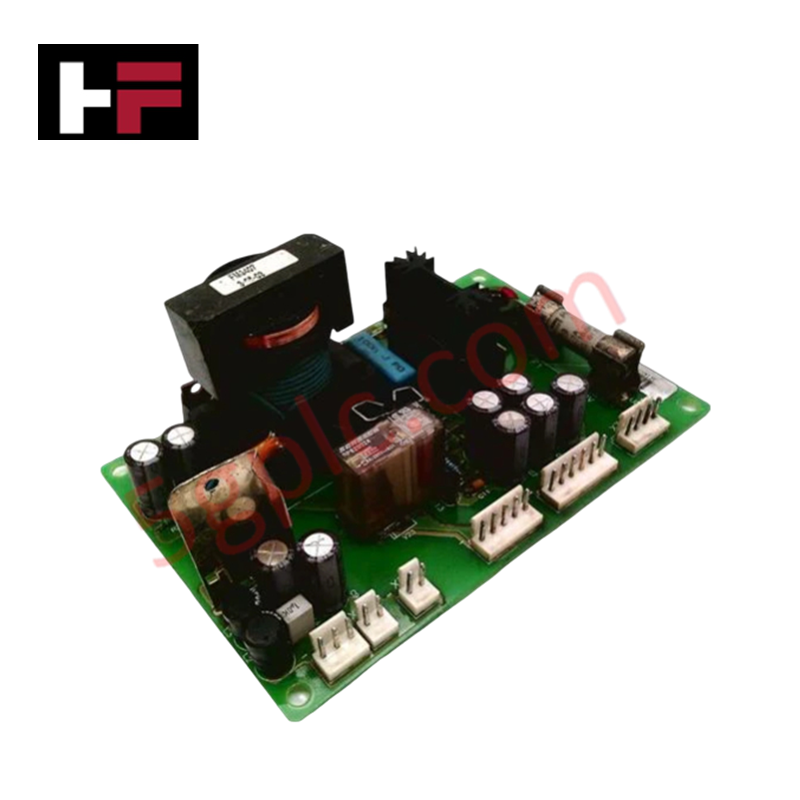
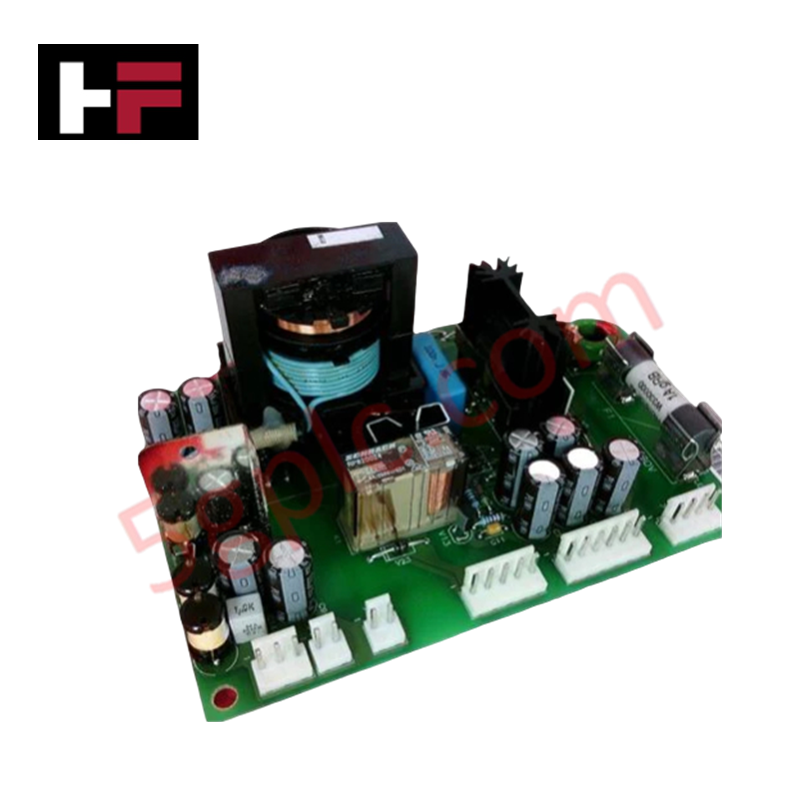
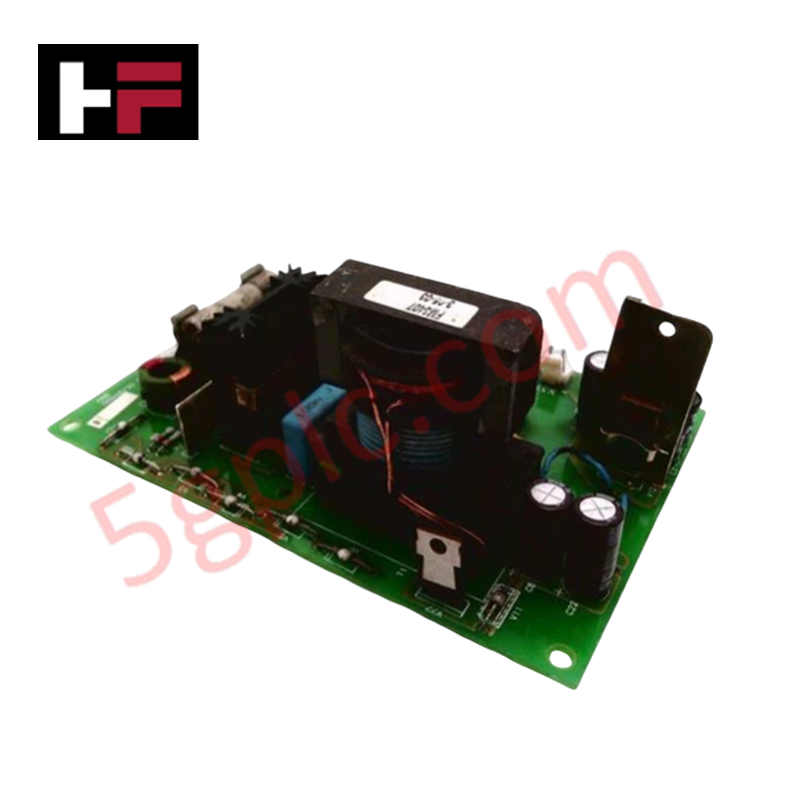
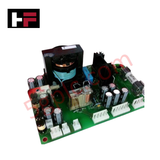
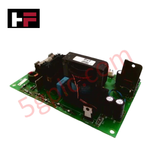
The ABB NPOW-62, also cataloged as the NPOW-62 PC Board Power Supply, operates as a dedicated hardware component for internal bus rectification and voltage regulation within industrial control networks.
Hardware Specifications
| Parameter | Specification |
|---|---|
| Model | NPOW-62 |
| Brand | ABB |
| Origin | Sweden |
| Weight | 0.27 kg (0.60 lbs) |
| Dimensions | Standard PC board expansion slot form factor |
| Operating Temp | 0 deg C to +55 deg C nominal |
| Power Consumption | Dependent on downstream I/O load (1 A maximum output) |
| Voltage Rating | 660 V isolation barrier threshold |
| Mounting | Mainframe rack slot or add-on chassis position |
Firmware Flash Compatibility and I/O Density Scaling
As an add-on power supply component, the NPOW-62 interfaces directly with the central rack backplane bus structure. During extensive I/O density scaling expansions, this module delivers up to 1 A of regulated DC current under a 660 V galvanic isolation barrier to protect adjacent communication modules and processing units. The physical circuitry minimizes voltage ripple and harmonic distortions induced by high-frequency backplane bus switching. During firmware flash updates or configuration reloads, the power supply maintains steady bias voltages to prevent non-volatile memory corruption or communication arbitration faults caused by transient voltage dips.
Frequently Asked Questions
Q: Does the NPOW-62 power module support hot-swap extraction while the backplane bus is live?
A: This module is an add-on board component and does not feature staggered pre-charge grounding pins. Live mechanical insertion or extraction under active backplane power is strictly prohibited, as it can cause transient arcs across the 660 V isolation barrier, disrupting backplane bus communication velocity and causing master controller faults.
Q: How does the internal protection loop respond when the load current reaches the 1 A threshold?
A: The NPOW-62 integrates hardware-based overcurrent limiting circuitry. If the cumulative load from expanded I/O density exceeds 1 A, the module initiates a constant-current clamp or hiccup protection sequence while asserting an error status word to the master controller over the bus line.
Field Installation Guidelines
- Mechanical Board Alignment: In a completely de-energized state, align the card edges of the NPOW-62 with the target expansion slot guides on the subrack assembly. Push evenly until the high-density backplane pins seat completely into the receiver socket, and secure any local mounting screws to absorb mechanical vibration.
- Electrical Isolation and Earthing: Given the 660 V overvoltage isolation rating, connect the chassis ground bus directly to a low-impedance master instrument earth bar. Do not route field signal shields together with the power supply power return lines to prevent electrical noise injection.
- High-Voltage Separation and Routing: Route external power feeds away from low-voltage DC lines and communication trunks by a minimum clearance of 300 mm. Utilize separate metallic wireways to prevent high-voltage capacitive coupling from degrading deterministic network data links.
- Thermal Dissipation Management: Maintain clear vertical convection paths inside the cabinet enclosure. Inspect the card surfaces periodically to prevent dust accumulation from pushing operational temperatures beyond the +55 deg C physical limit.
Additional Information
- 100% Genuine Parts: All products are original and authentic, ensuring reliable industrial performance.
- 30-Day Refund Guarantee: Return any in-stock item within 30 days in original, unopened packaging for a full refund (excluding shipping and fees).
- 12-Month Warranty: Covers defects in materials or workmanship; excludes misuse, normal wear, or unauthorized modifications.
- Worldwide Shipping: We ship via USPS, UPS, FedEx, and DHL. Delivery times vary by country and may be subject to customs or import fees.
- Support & Contact: Technical and warranty assistance is available anytime. Contact us here: Contact.
- Purchase Guidance: Check product specifications and compatibility carefully before ordering to ensure proper application.






Tech & Buying Guide

Redefining Control Systems: The Rise of Flexible I/O Modules in Industrial Automation
Conventional input-output architectures often limit engineering agility and inflate long-term inventory costs. Today, Flexible Input/Output Modules (FIOM) are transforming how control system engineers design, commission, and maintain automation infrastructure. By allowing individual channel software configuration, FIOM technology bridges the gap between rigid hardware design and dynamic plant requirements.

Understanding Modern SCADA Systems: Architecture, Communication Topologies, and Industrial Applications
Supervisory Control and Data Acquisition (SCADA) systems form the digital backbone of modern industrial automation. They collect critical field data, transmit signals across vast distances, and empower plant operators with real-time process visibility. Across modern infrastructures, SCADA solutions streamline centralized control and maintain continuous operational uptime.

Understanding OPC Servers in Modern Industrial Automation: Principles, Architecture, and Applications
In industrial automation, connecting physical hardware with high-level software remains a primary operational challenge. Factories utilize programmable logic controllers (PLCs), distributed control systems (DCS), human-machine interfaces (HMIs), and smart sensors from diverse vendors. These devices often speak different proprietary protocols. Open Platform Communications (OPC) servers solve this interoperability challenge by standardizing how data flows across factory networks.