










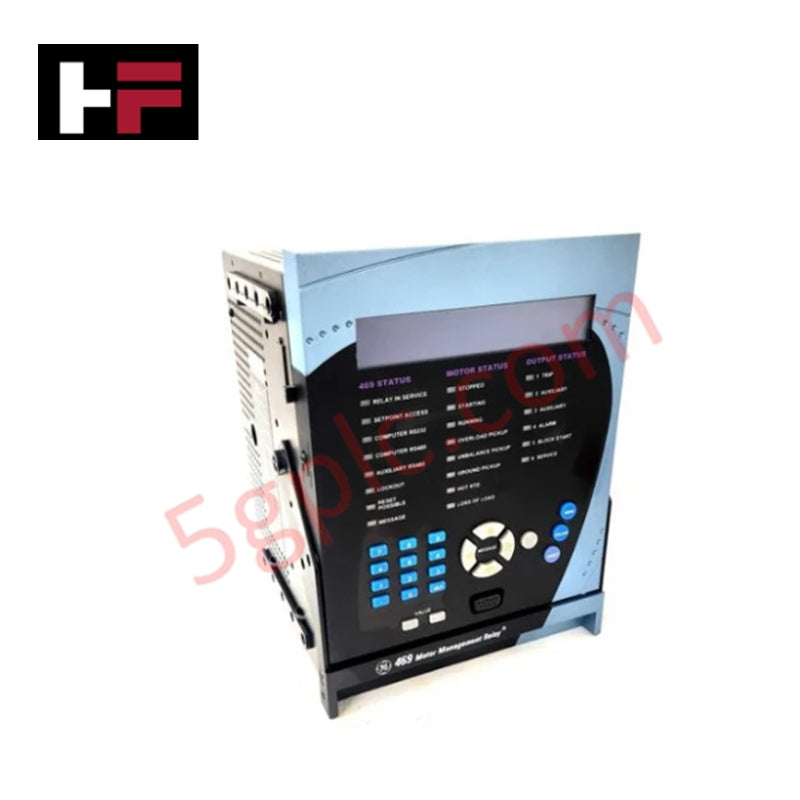
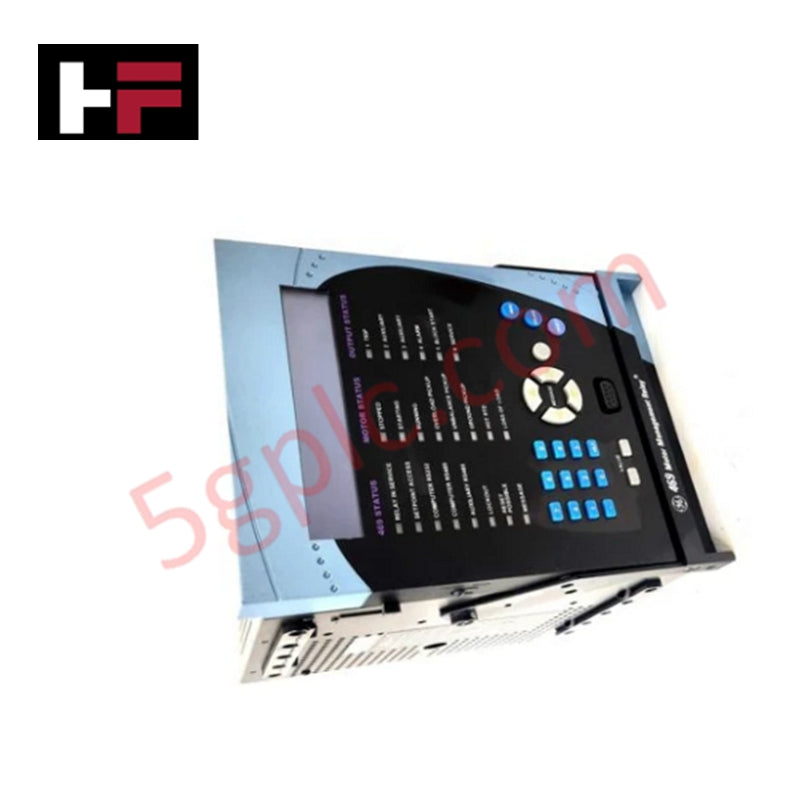
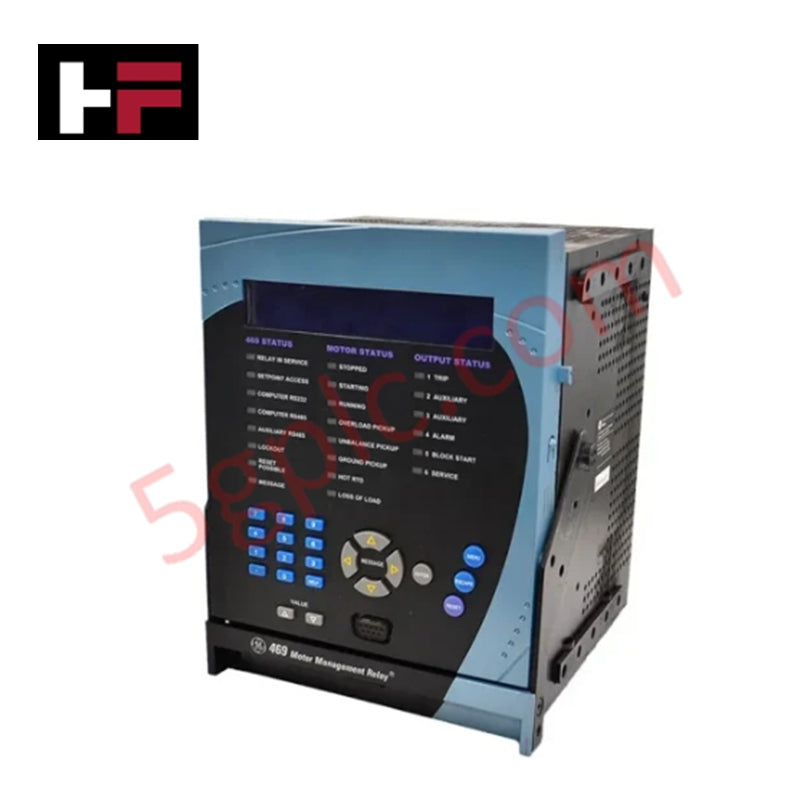
Product Details
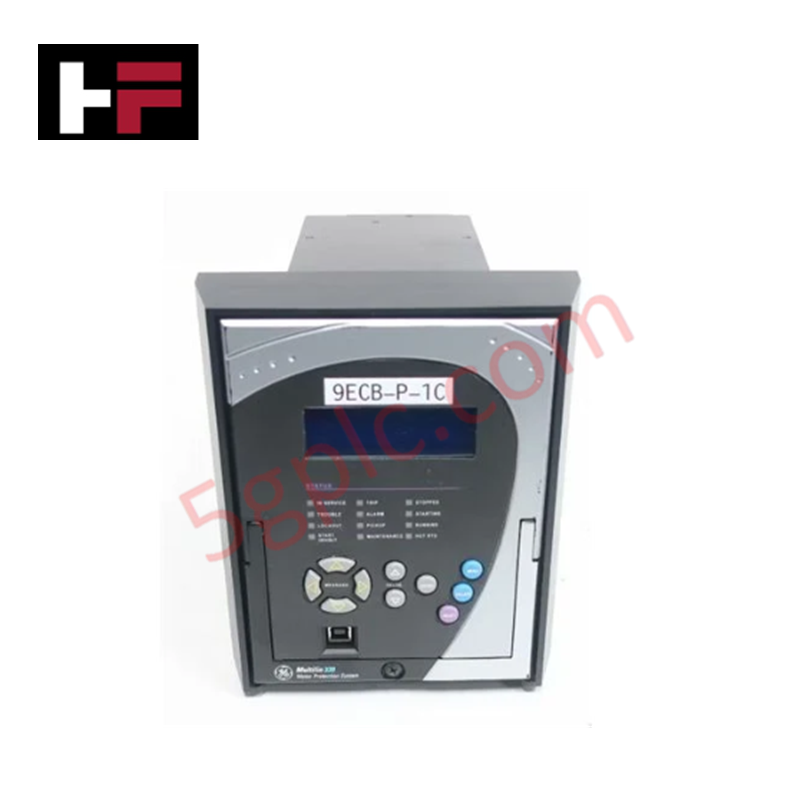
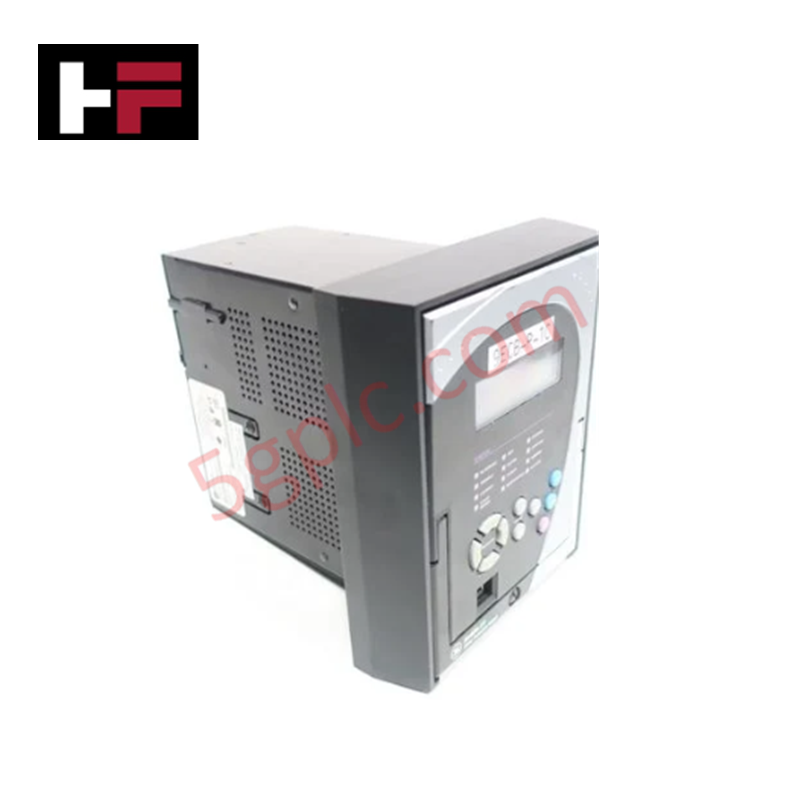
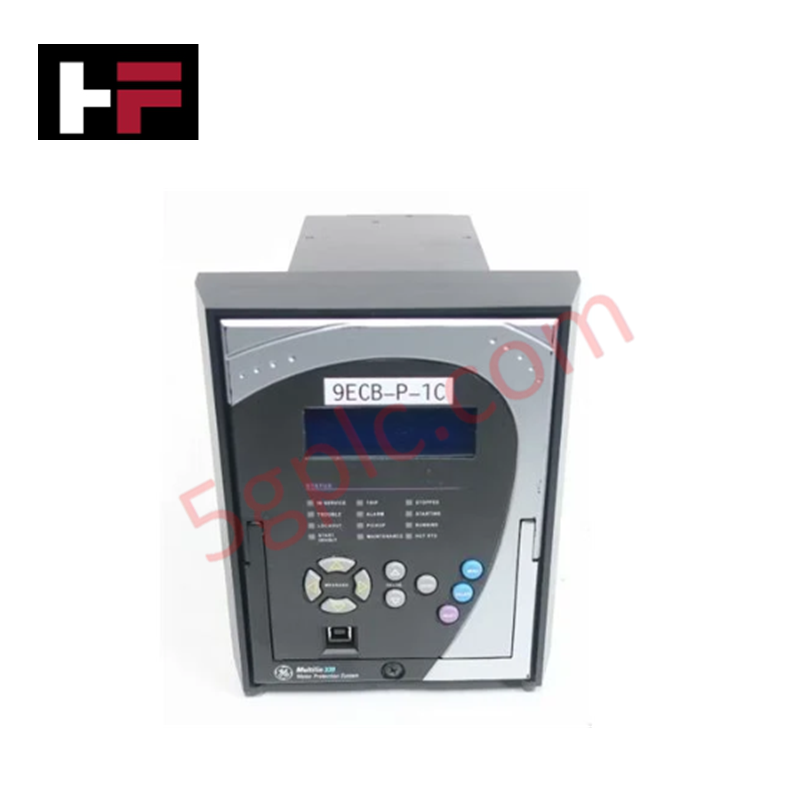
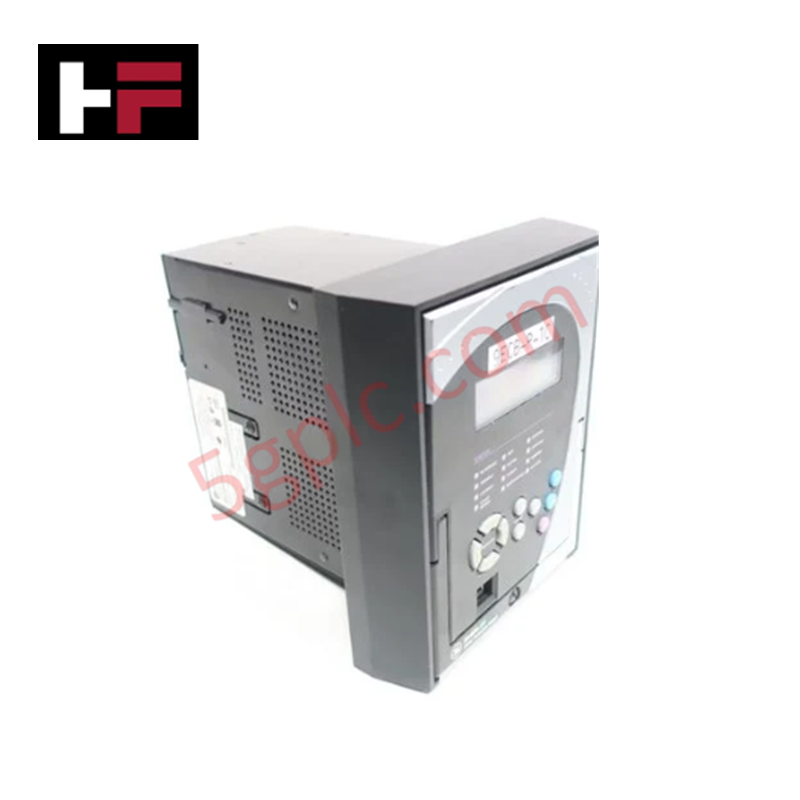
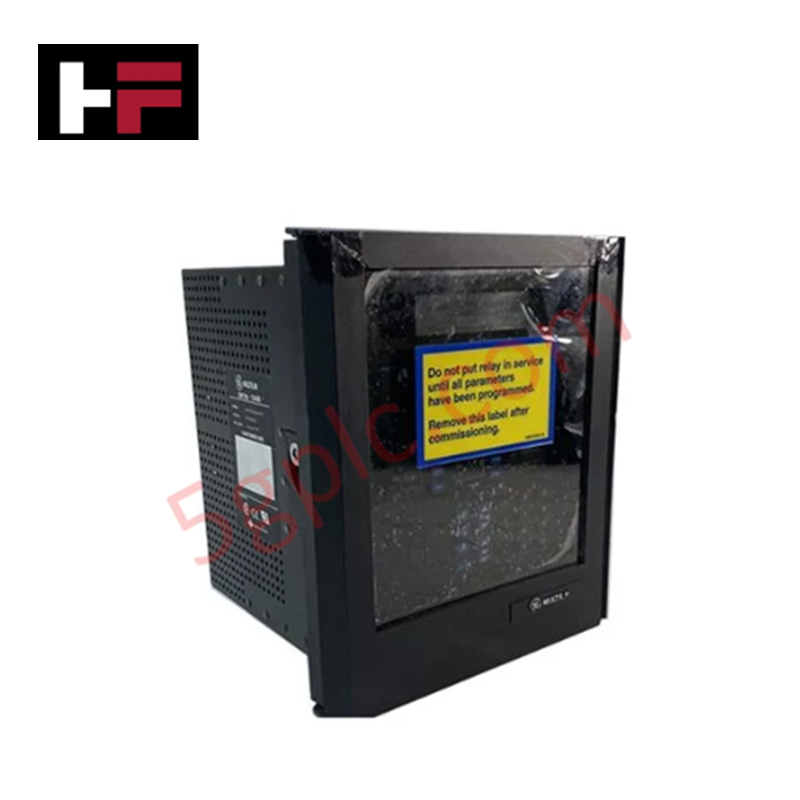
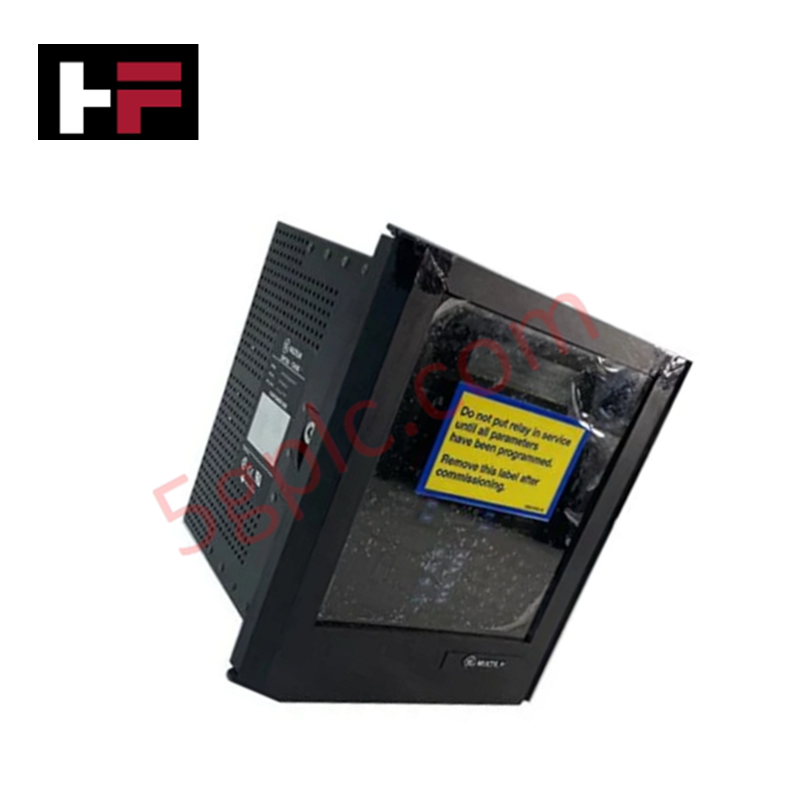
The GE 469-P5-HI-A20-T, also cataloged as the 469 Motor Management Relay, operates as a dedicated hardware component for protection, control, and diagnostic tracking within electrical substation and motor control center networks. The device reads current, voltage, and multiple Resistance Temperature Detector (RTD) inputs to execute protective profiling, including voltage-dependent overload curves, torque metering, and broken rotor bar detection. Hardware features include a draw-out construction to minimize replacement latency and an integrated event recorder.
Hardware Specifications
| Parameter | Specification |
|---|---|
| Model | 469-P5-HI-A20-T |
| Brand | GE Multilin |
| Origin | Technical specifications determine factory origin |
| Weight | Physical enclosure mass varies by mounting configuration |
| Dimensions | Standard 469 series panel cutout dimensions apply |
| Operating Temp | Industrial grade classification |
| Power Consumption | Control supply dependent |
| Thermal Inputs | 12 RTD inputs for stator thermal protection |
| Event Recording | Cyclic log of the last 256 events (time, cause, date, parameters) |
| Communication Ports | RS232, RS485 (Optional: Ethernet, DeviceNet) |
| Protocol Support | Modbus RTU, Modbus TCP/IP, DeviceNet |
| Metering Variables | A, V, W, var, VA, PF, Hz, Wh, varh, demand, torque, temperature |
| Physical Structure | Draw-out construction architecture |
Firmware Flash Compatibility and Deterministic Signal Processing
The internal microprocessor architecture maintains synchronous code execution, utilizing specialized memory blocks to guarantee firmware flash compatibility across standard motor protection configurations. Input monitoring runs on a strict internal clock to provide deterministic measurement tracking of thermal and electrical variables. The I/O backplane processing loops prevent runtime jitter during concurrent tracking of the 12 RTD inputs and active communication matrices over Modbus or DeviceNet networks.
Frequently Asked Questions
Q: Does the draw-out construction support live hot-swapping under load?
A: No. Although the draw-out design facilitates rapid mechanical replacement, the primary control power and secondary current transformer (CT) circuits must be fully isolated prior to extracting the relay chassis to prevent high-voltage transient arcing or CT open-circuit conditions.
Q: How does the internal event recorder behave once the 256-event threshold is reached?
A: The event logger utilizes a first-in, first-out (FIFO) circular buffer matrix. When a new system event is registered beyond the 256-limit, the oldest record is automatically overwritten while maintaining absolute timestamp and system parameter integrity.
Field Installation Guidelines
- Grounding Requirements: Connect a low-impedance copper conductor from the rear chassis grounding stud directly to the main switchgear earth bus bar before applying auxiliary power.
- Shielding Protocol: Terminate the external shielding braid of all RTD and RS485 communication lines at the enclosure side only. Grounding both ends of the shield is prohibited to eliminate potential ground loop currents.
- Cable Separation: Route all high-voltage power wiring and contact output circuits through separate metal conduits away from low-voltage analog and communication signal wiring to reduce inductive coupling.
Additional Information
- 100% Genuine Parts: All products are original and authentic, ensuring reliable industrial performance.
- 30-Day Refund Guarantee: Return any in-stock item within 30 days in original, unopened packaging for a full refund (excluding shipping and fees).
- 12-Month Warranty: Covers defects in materials or workmanship; excludes misuse, normal wear, or unauthorized modifications.
- Worldwide Shipping: We ship via USPS, UPS, FedEx, and DHL. Delivery times vary by country and may be subject to customs or import fees.
- Support & Contact: Technical and warranty assistance is available anytime. Contact us here: Contact.
- Purchase Guidance: Check product specifications and compatibility carefully before ordering to ensure proper application.


Tech & Buying Guide

Demystifying the DDE Protocol in Legacy Industrial Automation Systems
Modern control systems rely heavily on seamless interprocess communication to exchange operational data between software programs. Microsoft first introduced the Dynamic Data Exchange (DDE) protocol in 1987 to enable real-time data sharing. In factory automation, DDE served as an early bridge between control software and Windows desktop applications. Therefore, understanding DDE mechanics provides crucial insights into how legacy industrial networks established software-level connectivity.

Demystifying CPU Communication Ports in Siemens PLC Architectures
Industrial automation relies heavily on robust data exchange between devices. Without seamless connectivity, field instruments, network switches, human-machine interfaces, and programmable logic controllers cannot coordinate effectively. Therefore, understanding the various CPU communication ports available in Siemens hardware ensures efficient factory automation design and seamless system integration.

Mastering the Siemens PLC Scan Cycle: How the CPU Executes Automation Programs
Industrial automation relies heavily on programmable logic controllers (PLCs) to manage complex manufacturing processes. Many engineers dive straight into programming without mastering the underlying architecture. However, understanding how a PLC CPU executes a program ensures reliable system design. Therefore, mastering the scan cycle optimizes both performance and troubleshooting in modern control systems.