










Product Details
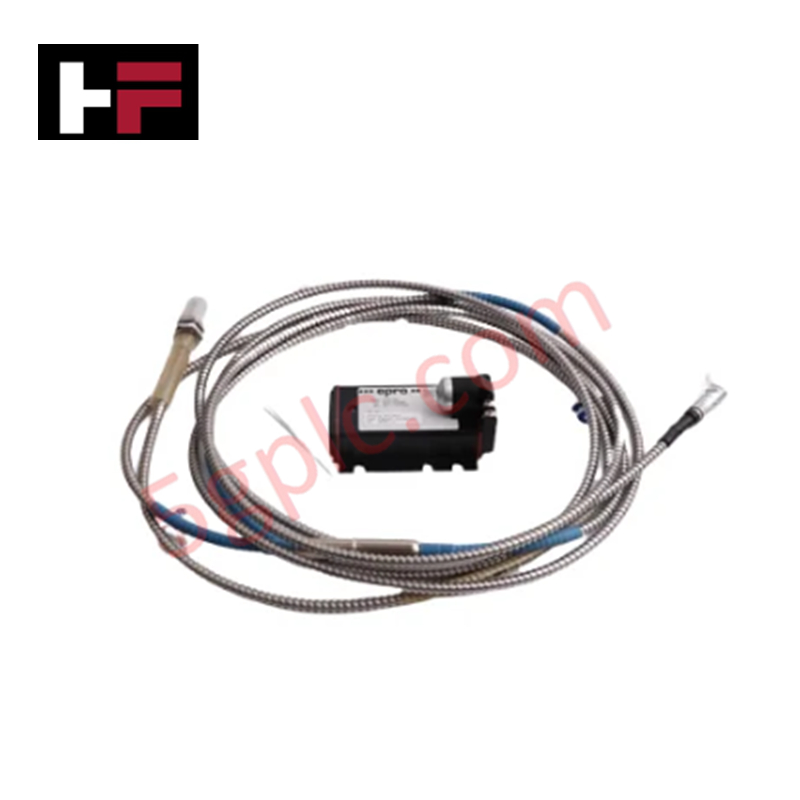
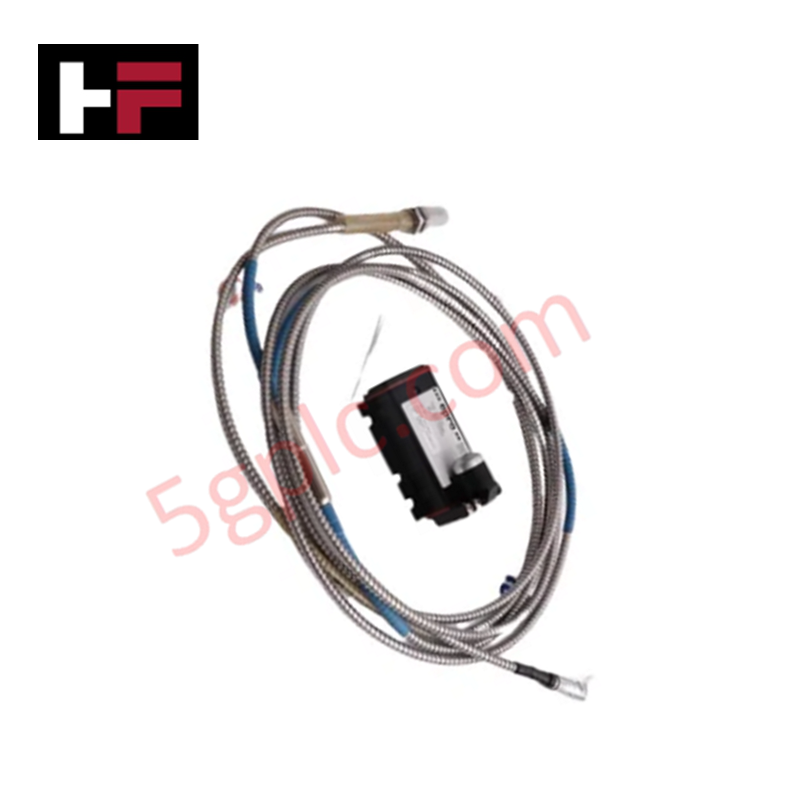
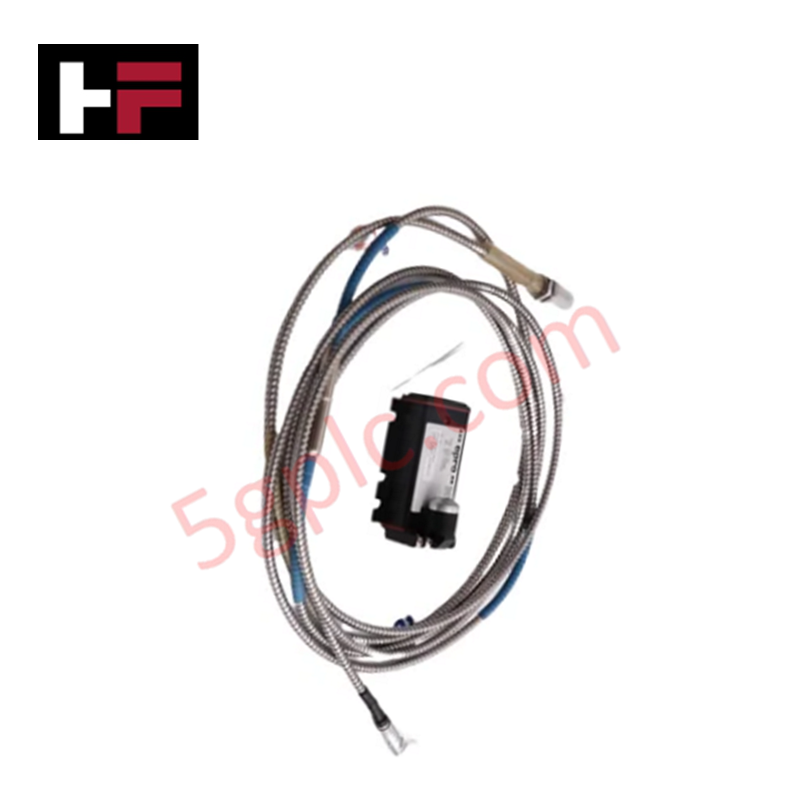
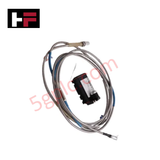
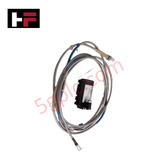
Configured for high-frequency displacement measurement in turbomachinery monitoring systems, the Emerson Epro PR6423/010-000-CN (PR6423/010-000-CN) transducer paired with the CON021 signal converter provides direct physical/electrical execution.
Hardware Specifications
| Parameter | Specification |
|---|---|
| Model | PR6423/010-000-CN + CON021 |
| Brand | Emerson Epro |
| Origin | Germany |
| Weight | Approx. 0.25 kg (Combined) |
| Dimensions | Standard 8 mm probe housing and converter geometry |
| Operating Temp | -35 deg C to +200 deg C (Sensor) |
| Power Consumption | Nominal excitation required |
| Sensor Type | 8 mm Eddy Current Non-contact Probe |
Gap Voltage Validation (-10 VDC targets)
The system utilizes an oscillator circuit to drive the transducer probe, creating an electromagnetic field for displacement detection. To ensure accurate linearization, the system necessitates precise gap voltage validation during commissioning. The converter centers its output characteristic around a nominal target of -10 VDC, representing the mid-point of the physical measurement gap. Maintenance of this -10 VDC baseline is mandatory for accurate signal tracking; significant deviations indicate mechanical misalignment, transducer saturation, or degradation of the conductive target surface.
Frequently Asked Questions
Q: Does the PR6423 series support hot-swap replacement of the CON021 converter?
A: Yes, the CON021 converter is designed for installation within monitoring racks that support hot-swapping functionality without requiring a full system shutdown, provided the rack backplane infrastructure is configured for such operations.
Q: How does the probe tip material impact measurement accuracy?
A: The probe tip is constructed for stability in harsh environments. Measurement accuracy relies on the conductive properties of the target shaft; ensure the target material composition matches the calibration specifications of the converter to prevent non-linearity errors.
Field Installation Guidelines
- Mount the transducer in a rigid, vibration-isolated bracket to minimize extraneous mechanical noise and prevent housing fatigue.
- Ensure the measurement target surface is clean and free of non-conductive coatings to maintain the required electrical conductivity.
- Set the nominal air gap using a non-metallic feeler gauge to prevent contact damage to the sensor tip during operation.
- Route signal cabling through grounded metallic conduit, keeping lines physically separated from high-current AC power lines to mitigate electromagnetic interference.
- Terminate the signal shield at the monitoring system (DCS/TSI) rack only to prevent ground-loop current injection into the converter circuit.
Additional Information
- 100% Genuine Parts: All products are original and authentic, ensuring reliable industrial performance.
- 30-Day Refund Guarantee: Return any in-stock item within 30 days in original, unopened packaging for a full refund (excluding shipping and fees).
- 12-Month Warranty: Covers defects in materials or workmanship; excludes misuse, normal wear, or unauthorized modifications.
- Worldwide Shipping: We ship via USPS, UPS, FedEx, and DHL. Delivery times vary by country and may be subject to customs or import fees.
- Support & Contact: Technical and warranty assistance is available anytime. Contact us here: Contact.
- Purchase Guidance: Check product specifications and compatibility carefully before ordering to ensure proper application.
Tech & Buying Guide

Executing a PLC System Site Acceptance Test (SAT): The Definitive Engineering Guide
The transition of a Programmable Logic Controller (PLC) cabinet from a controlled factory floor to a volatile plant environment represents a critical milestone in factory automation. While a Factory Acceptance Test (FAT) validates standalone hardware compliance under ideal conditions, it cannot replicate real-world process dynamics. Therefore, deploying an industrial automation system requires a rigorous Site Acceptance Test (SAT) to verify total loop integrity, field wiring wiring metrics, and process control parameters before final customer handover.

Advanced Integration: Master Protocol for VFD Commissioning and Testing
Deploying variable frequency drives (VFDs) requires precise execution during the initial commissioning phase. Junior automation engineers often find the first power-up sequence intimidating. However, following a rigorous engineering framework ensures equipment safety and system reliability. Proper startup procedures protect both the drive electronics and the connected motor.

Optimizing Factory Automation: The Definitive Guide to VFD Preventive Maintenance
Variable Frequency Drives (VFDs) serve as critical assets in modern industrial automation. These power electronic devices regulate electric motors by adjusting the supplied frequency and voltage. Consequently, industries utilize VFDs to reduce energy consumption and optimize process control. Major manufacturers like Siemens, ABB, and Yaskawa design highly efficient drives. However, sustained efficiency requires a rigorous preventive maintenance program.