












Product Details
Module Overview
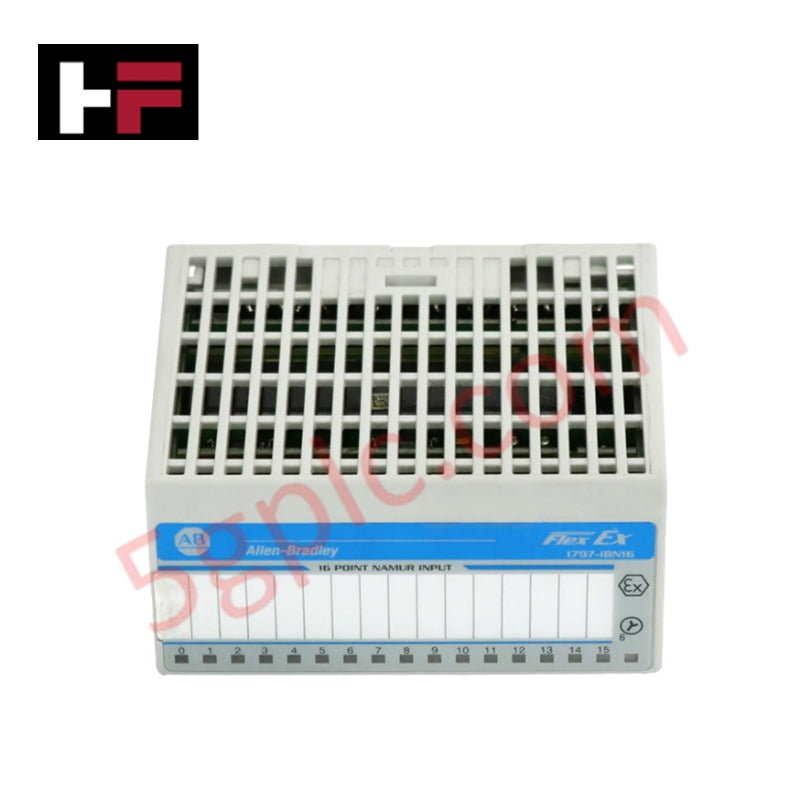
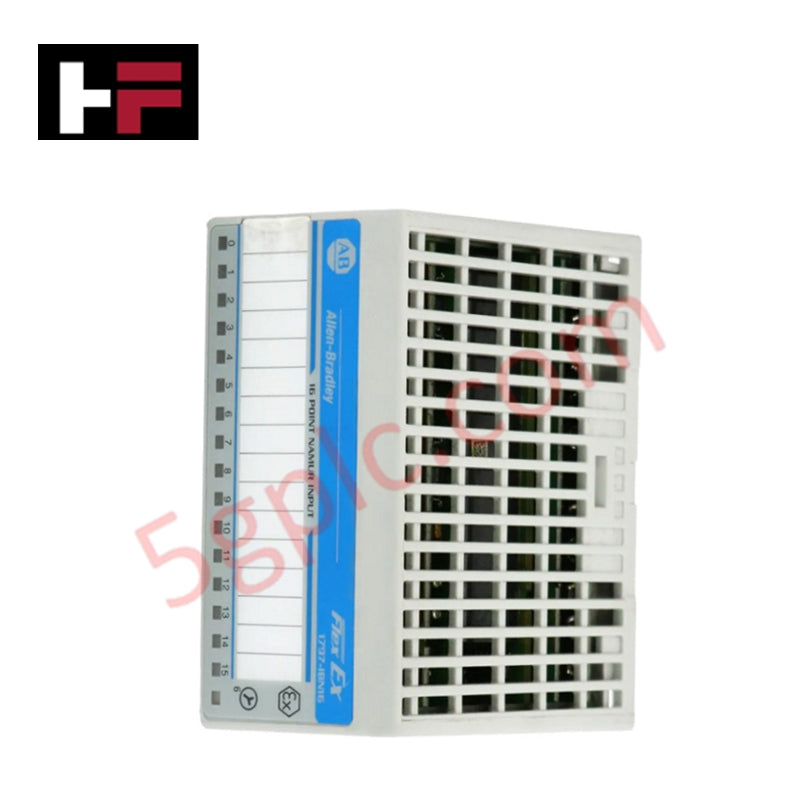
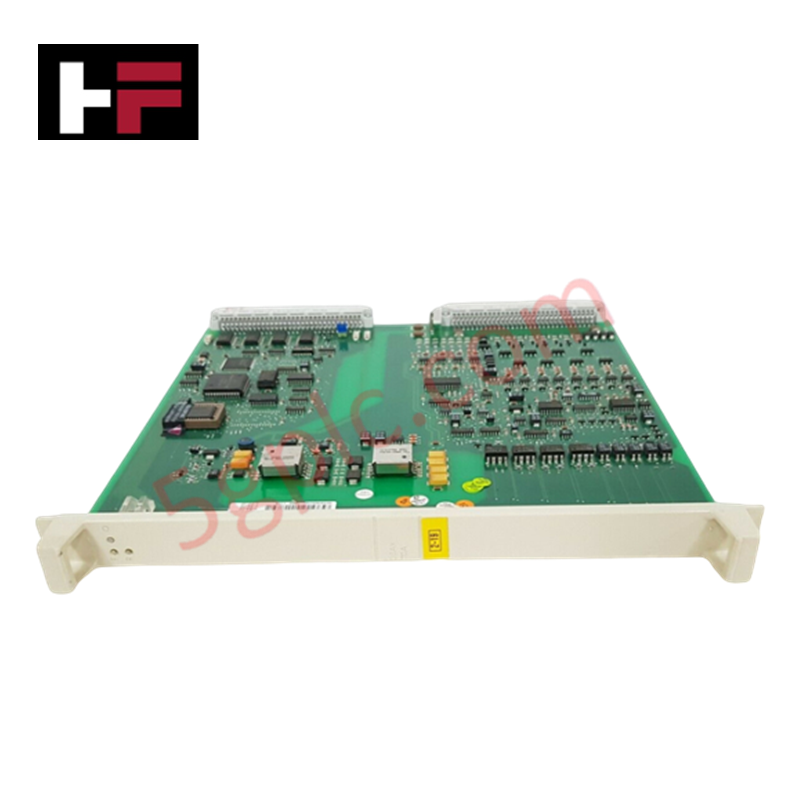
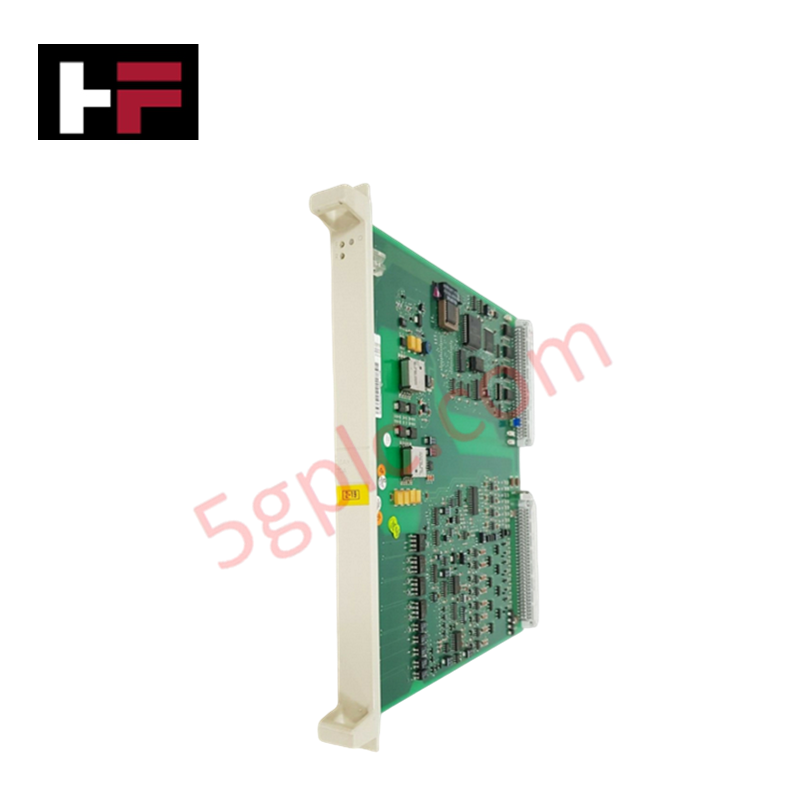
The 1797-IBN16 is a high-density, intrinsically safe (IS) digital input module specifically engineered for hazardous environments. Part of the Allen-Bradley FLEX Ex I/O family, this module is designed to interface directly with up to 16 NAMUR-compatible proximity sensors or dry contact switches located in Zone 1 or Zone 2 (Class I, II, III, Division 1) areas. By integrating intrinsic safety barriers directly into the I/O hardware, the 1797-IBN16 eliminates the need for external isolation barriers, significantly reducing cabinet space and wiring complexity. It provides advanced diagnostics, including open-circuit and short-circuit detection, to ensure maximum uptime in critical process applications such as chemical refining and oil and gas production.
Detailed Engineering Specifications
The 1797-IBN16 is a non-isolated, sinking input module that adheres to strict international explosion protection standards.
-
Number of Inputs: 16 Channels (Non-isolated, Sinking)
-
Input Type: NAMUR (IEC 60947-5-6) compatible
-
Intrinsic Safety Ratings: * Ex ia IIB/IIC T4 / AEx ia IIC T4
-
Class I, II, III, Division 1, Groups A–G T4
-
On-State Current: > 2.1 mA
-
Off-State Current: < 1.2 mA
-
Hysteresis: 0.2 mA
-
Maximum Load Voltage: 7.5V DC
-
Input Frequency: 1000 Hz (Max)
-
Input Pulse Width: > 500 µs (On or Off)
-
Selectable Filter Times: 1 ms, 2 ms, 3 ms, 5 ms, 9 ms, 17 ms, or 33 ms
-
Indicators: * 16 Yellow (Status)
-
16 Red (Fault/Wire-off/Short-circuit)
-
1 Green (Module Power)
-
Power Dissipation: 2.8 Watts
-
Thermal Dissipation: 9.6 BTU/hr (Max)
-
Physical Weight: 0.81 lbs (0.37 kg)
NAMUR Diagnostics and Fault Detection
The defining feature of the 1797-IBN16 is its adherence to the NAMUR sensor standard. This allows the module to distinguish between four distinct line states:
-
OFF: Normal state where current is between 1.2 mA and 2.1 mA.
-
ON: Normal state where current is above 2.1 mA.
-
Short-Circuit: Detected when the circuit resistance drops too low (current > 6 mA).
-
Open-Circuit (Wire-Off): Detected when the circuit resistance is too high (current < 0.15 mA).
If a fault is detected, the corresponding red LED illuminates, and a diagnostic bit is sent to the Logix controller, allowing for immediate identification of field wiring issues without manual troubleshooting.
Installation and Hazardous Area Wiring
The 1797-IBN16 must be used with a specific FLEX Ex terminal base, either the 1797-TB3 (screw) or 1797-TB3S (spring-clamp). Because this is an intrinsically safe module, it must be installed in a protected environment (like a NEMA 4X enclosure) and powered by an approved 1797-PS series IS power supply. Maintenance personnel can safely perform "Removal and Insertion Under Power" (RIUP) even in hazardous areas, provided the system was designed following the specific FLEX Ex entity parameters.
Technical FAQ
Can I use standard "dry contact" limit switches with this module?
Yes, but to maintain the line-monitoring diagnostics (Open/Short circuit), you must install two resistors at the switch: one in series and one in parallel. This mimics the impedance of a NAMUR sensor.
What is the maximum wire length for sensors connected to the 1797-IBN16?
The distance is limited primarily by the capacitance and inductance of the cable to maintain intrinsic safety. Generally, distances up to 1,000 feet are achievable with standard 12 AWG (4 $mm^2$) instrument cable, but a formal IS entity calculation should be performed.
Does this module require an external barrier?
No. The 1797-IBN16 is an "associated apparatus" that contains its own internal IS limiting circuitry. It is designed to be the barrier between the safe-area backplane and the hazardous-area field sensors.
Additional Information
- 100% Genuine Parts: All products are original and authentic, ensuring reliable industrial performance.
- 30-Day Refund Guarantee: Return any in-stock item within 30 days in original, unopened packaging for a full refund (excluding shipping and fees).
- 12-Month Warranty: Covers defects in materials or workmanship; excludes misuse, normal wear, or unauthorized modifications.
- Worldwide Shipping: We ship via USPS, UPS, FedEx, and DHL. Delivery times vary by country and may be subject to customs or import fees.
- Support & Contact: Technical and warranty assistance is available anytime. Contact us here: Contact.
- Purchase Guidance: Check product specifications and compatibility carefully before ordering to ensure proper application.
Tech & Buying Guide

Mastering the Factory Acceptance Test (FAT) for PLC Control Panels: An Expert Guide
The Factory Acceptance Test (FAT) is a vital milestone in industrial automation that ensures custom PLC panels meet exact design specifications before dispatch. This guide outlines the step-by-step FAT procedure and key industry best practices to prevent costly site delays and ensure long-term operational success.

Redundant Automation Systems: Ensuring Continuous Uptime in Critical Control Infrastructure
System reliability directly determines operational profitability across high stakes process industries. Modern industrial automation platforms must eliminate single points of failure to prevent catastrophic shutdowns. Deploying fault tolerant architecture safeguards complex facilities against unexpected hardware glitches, network disruptions, and maintenance outages.

Understanding Types of Noise in Electronic Circuits and Control Systems
Signal integrity directly determines measurement accuracy and loop stability across industrial automation environments. Electronic noise introduces unwanted stochastic interference into analog loops, sensor feedback lines, and digital fieldbus networks. Understanding how intrinsic electronic noise and external electromagnetic interference manifest allows control engineers to optimize signal conditioning and shield sensitive instrumentation effectively.