










Product Details
Product Overview
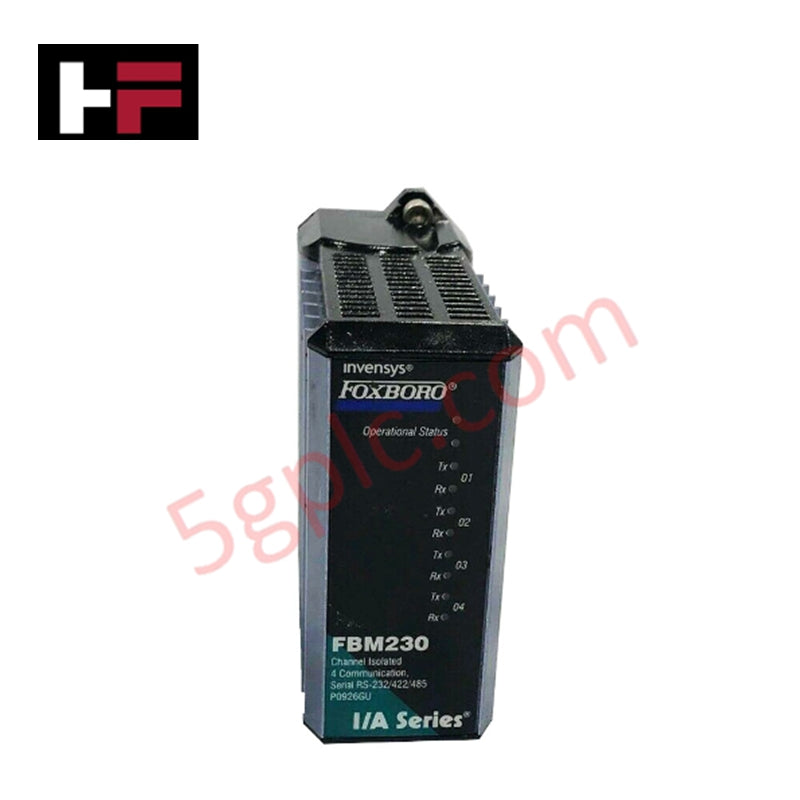
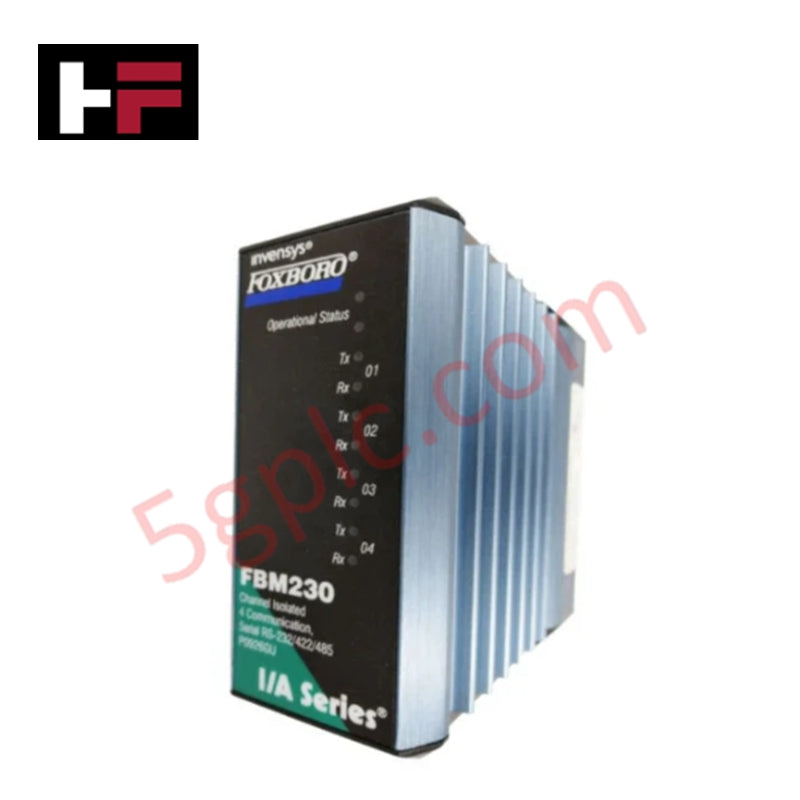
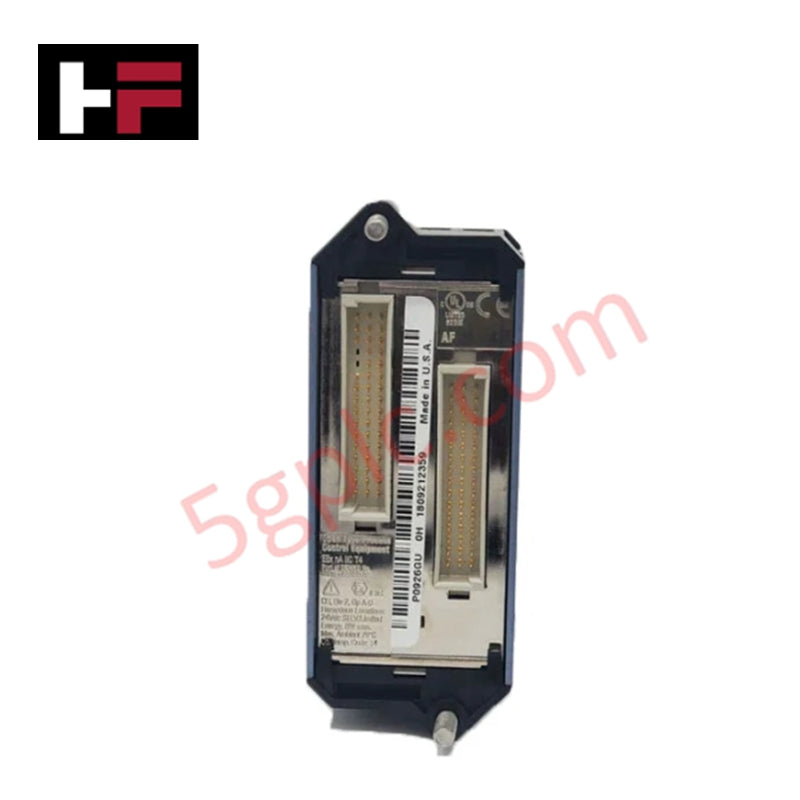
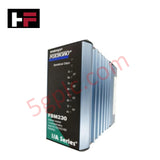
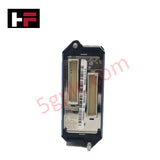
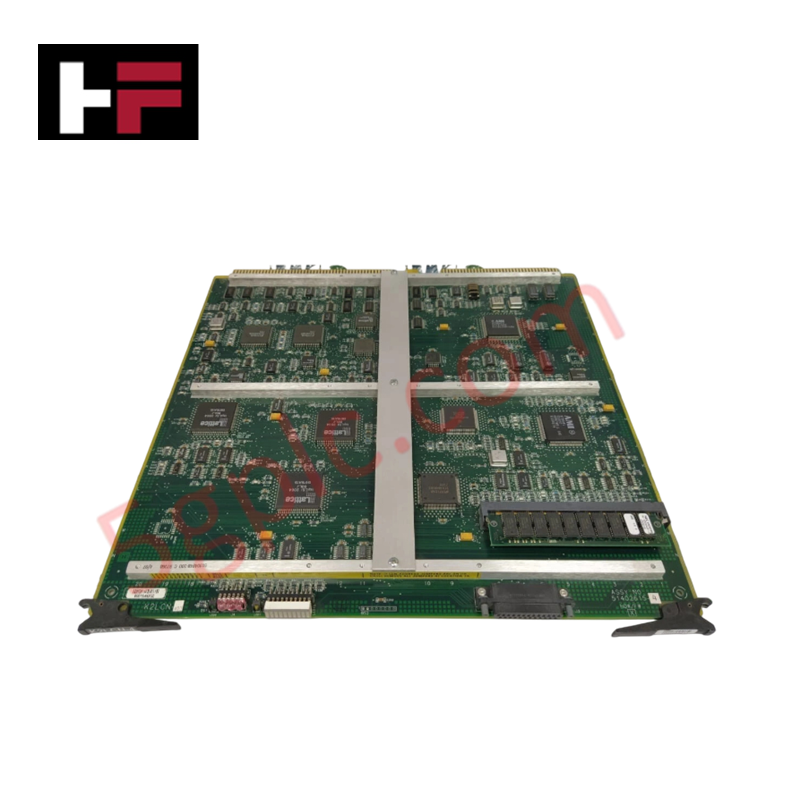
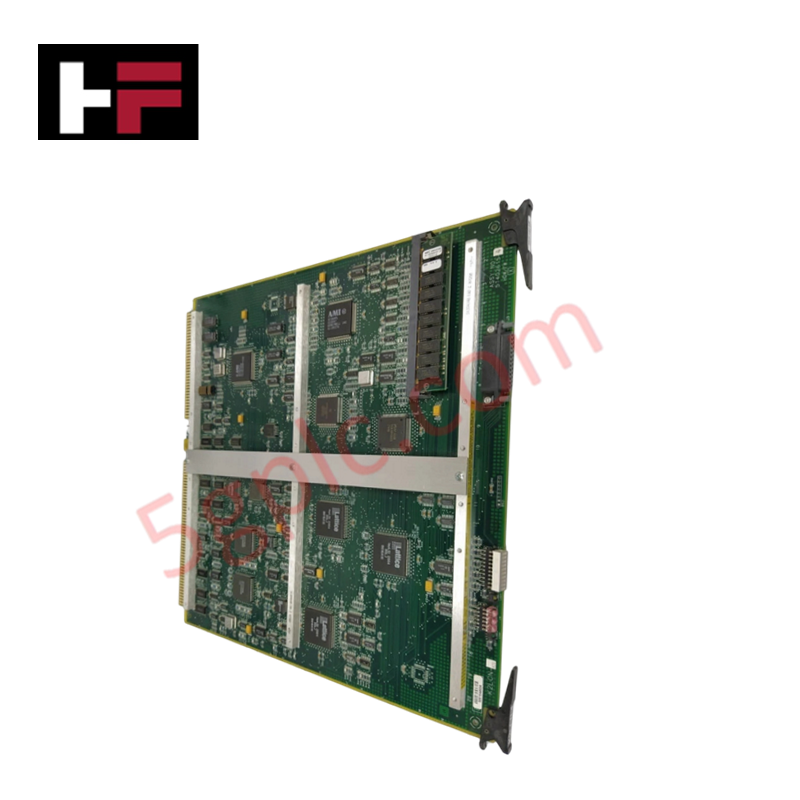
The Foxboro FBM230 (P0926GU) serves as a high-performance intelligent interface for serial communication within the Foxboro I/A Series and Foxboro Evo systems. This module provides four independent ports that integrate data from third-party field devices—such as PLCs, motor or power controllers, and analytical instruments—directly into the Foxboro control database. We supply this unit as 100% Brand New and Original, ensuring your critical data links operate with factory-certified precision and zero previous field wear.
Technical Specifications
| Feature | Specification Details |
| Manufacturer | Foxboro (Schneider Electric) |
| Model / Part Number | FBM230 / P0926GU |
| Communication Ports | 4 ports (Individually software configurable) |
| Interface Standards | RS-232, RS-422, or RS-485 |
| Capacity | Supports up to 2000 DCI block connections |
| Device Support | Up to 64 RS-485 devices; Up to 4 RS-232/422 devices |
| Operating Temperature | -20 to +70°C (-4 to +158°F) |
| Environmental Rating | Class G3 (Harsh environments) |
| Power Consumption | 7W (Maximum) |
| Dimensions (Module) | 102 mm x 45 mm x 104 mm |
| Mass | Approximately 284 g (10 oz) |
Engineering Advantages
The FBM230 P0926GU solves complex integration challenges in diverse industrial topologies:
-
Eliminates Protocol Bottlenecks: The module supports downloadable I/O software drivers from an extensive library. This flexibility allows engineers to interface with a vast array of proprietary and standard protocols without changing hardware.
-
Simplifies Multi-Standard Networking: Software-selectable port configurations (RS-232/422/485) allow one FBM230 to manage multiple communication standards simultaneously. This reduces the need for external converters and minimizes spare parts inventory.
-
Resists Atmospheric Corrosion: Engineered for Class G3 (harsh) environments, the FBM230 withstands corrosive gases and high humidity ($5\%$ to $95\%$ non-condensing). This durability makes it ideal for wastewater treatment plants and chemical refineries where standard electronics often fail.
-
Extends Signal Reach: The module maintains reliable RS-422 and RS-485 communication over distances up to $1200\text{ m}$ ($3937\text{ ft}$). It utilizes a redundant $2\text{ Mbps}$ module Fieldbus to communicate with FCP270 or FCP280 processors, ensuring failsafe data flow.
-
Optimized High-Density Integration: Supporting up to $2000$ DCI blocks, the FBM230 handles high-volume data traffic from complex motor control centers (MCCs) while occupying only $45\text{ mm}$ of baseplate width.
FAQs
-
Can I configure individual ports for different standards on the same module?
Yes. You configure each of the four ports independently via software. For example, Port 1 can operate as RS-232 while Port 2 runs an RS-485 multidrop network.
-
Is this module compatible with the latest FCP280 processors?
Absolutely. The FBM230 integrates seamlessly with FCP270 and FCP280 control processors, as well as FCM100E/ET fieldbus communication modules, via the redundant Fieldbus.
-
What is the condition of this hardware?
We guarantee this unit is 100% Brand New. It ships in its original factory packaging with intact security seals, protecting the internal circuitry from the degradation found in used or refurbished "surplus" units.
-
Does the module require a specific termination assembly?
The FBM230 requires a compatible termination assembly (TA), such as the Ring Lug (P0926PA) or Compression Screw (RH926GH). We recommend using Type 5 termination cables to ensure signal integrity across the specified temperature range.
Additional Information
- 100% Genuine Parts: All products are original and authentic, ensuring reliable industrial performance.
- 30-Day Refund Guarantee: Return any in-stock item within 30 days in original, unopened packaging for a full refund (excluding shipping and fees).
- 12-Month Warranty: Covers defects in materials or workmanship; excludes misuse, normal wear, or unauthorized modifications.
- Worldwide Shipping: We ship via USPS, UPS, FedEx, and DHL. Delivery times vary by country and may be subject to customs or import fees.
- Support & Contact: Technical and warranty assistance is available anytime. Contact us here: Contact.
- Purchase Guidance: Check product specifications and compatibility carefully before ordering to ensure proper application.






Tech & Buying Guide

Understanding Marshalling Cabinets in Industrial Control Systems Architecture
Industrial control system deployments rely on structured signal distribution to bridge field instrumentation with central processing hardware. A marshalling cabinet serves as the vital intermediate connection point between heavy field home-run multi-pair cables and delicate input/output (I/O) modules housed inside Programmable Logic Controller (PLC) or Distributed Control System (DCS) enclosures. By segregating field cable terminations from control hardware, engineers maintain system flexibility, safeguard controller components, and streamline commissioning workflows.

FAT vs SAT in Industrial Control Systems: Key Differences and Execution Guide
Industrial control system deployment relies on strict verification protocols to guarantee operational safety, system stability, and regulatory compliance. Commissioning complex Programmable Logic Controller (PLC) racks, Distributed Control Systems (DCS), and Safety Instrumented Systems (SIS) requires two critical milestones: the Factory Acceptance Test (FAT) and the Site Acceptance Test (SAT). Both procedures validate that system automation meets design specifications, but they occur at different stages of project execution and target distinct operational risks.

Hub vs Switch vs Router in Industrial Automation Architecture
Modern factory automation relies on reliable industrial networking infrastructure to exchange real-time field data across operational technology systems. Engineers often encounter networking hardware like hubs, switches, and routers when integrating Programmable Logic Controllers, Distributed Control Systems, and SCADA monitoring nodes. Although these devices share physical ports, they operate at different layers of the Open Systems Interconnection reference model and deliver distinct traffic management capabilities.