












Product Details
Product Overview
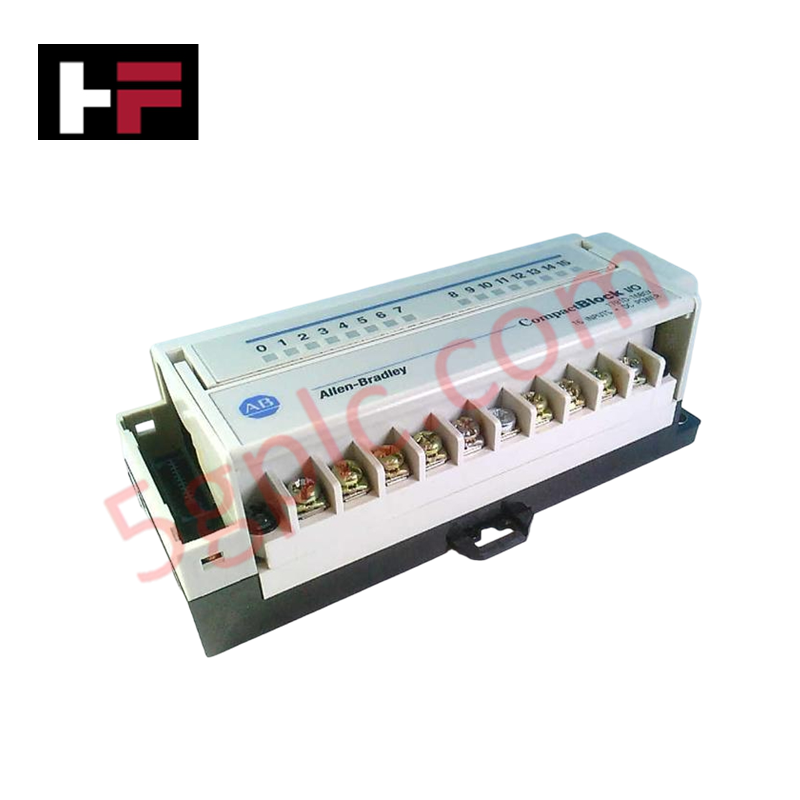
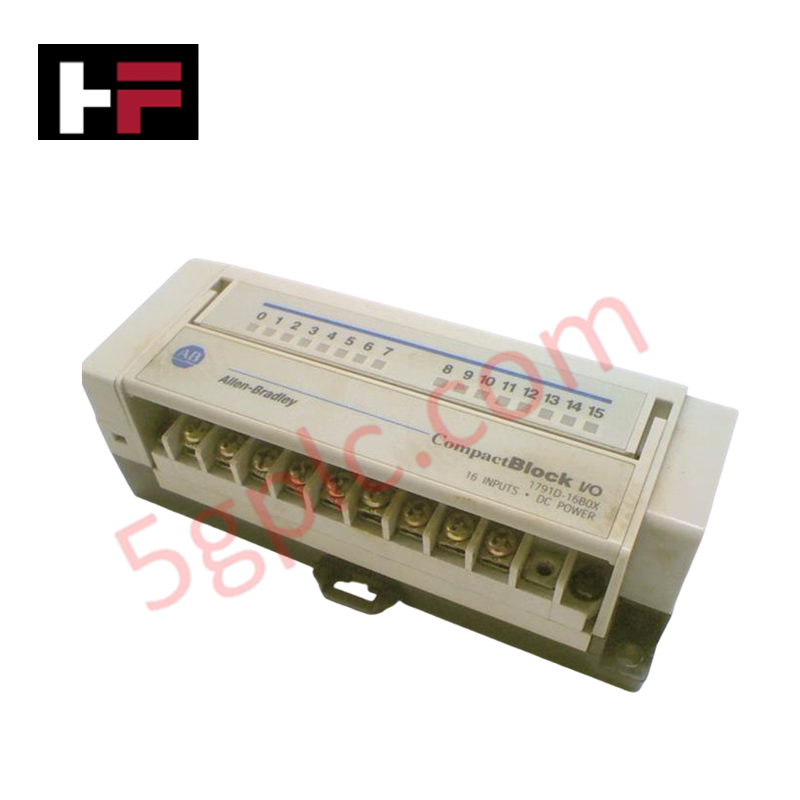
The Allen Bradley 1791D-16B0X belongs to the CompactBlock I/O series, providing a high-density, space-saving solution for distributed control via DeviceNet. This discrete input module features 16 sinking-type input points designed to interface with 24V DC field devices like limit switches, proximity sensors, and pushbuttons. By placing I/O closer to the field devices, this module reduces wiring costs and simplifies troubleshooting in complex automation cells. We supply this unit in 100% Brand New and Original condition to ensure your network maintains peak communication integrity and logic accuracy.
Technical Specifications
The 1791D-16B0X utilizes high-speed circuitry to process digital signals across the following parameters:
| Feature | Specification |
| Manufacturer | Allen Bradley (Rockwell Automation) |
| Inputs per Block | 16 Points |
| Input Type | Sinking (24V DC Nominal) |
| Voltage Range | 10–30V DC |
| On-state Voltage | 10V DC Min |
| Off-state Voltage | 5V DC Max |
| On-state Current | 11.0mA @ 30V Max; 2.0mA @ 10V Min |
| I/O Exchange Modes | Poll, Cyclic, Change of State (CoS) |
| Protection Rating | IEC IP20 |
| Communication Rate | 125Kbps, 250Kbps, 500Kbps (Auto-detect) |
| Weight | 0.56 lbs (0.26 kg) |
Engineering Advantages
The 1791D-16B0X addresses critical integration challenges in distributed DeviceNet architectures:
-
High-Density Compact Footprint: The CompactBlock design integrates 16 channels into a small form factor, allowing for installation in shallow enclosures or directly on machine frames where cabinet space is at a premium.
-
Optimized Data Efficiency: This module supports "Change of State" (CoS) data exchange. Instead of constantly polling every point, the module only updates the controller when an input actually changes. This technical feature reduces network traffic and frees up bandwidth for other critical DeviceNet traffic.
-
Comprehensive Visual Diagnostics: Three distinct LED tiers provide instant hardware status. The Mod/Net LEDs monitor network health, the Logic LED tracks internal module status, and individual yellow I/O LEDs pinpoint exactly which field device is active, drastically reducing downtime during fault tracing.
-
Versatile Media Support: The hardware supports both Thick and Flat DeviceNet media. It maintains reliable communication at distances up to 500 meters (at 125Kbps), providing engineers with maximum flexibility for large-scale plant floor layouts.
-
Robust Input Filtering: The circuitry handles a wide input range (10-30V DC) and features precise off-state current thresholds (1.5mA). This prevents "ghost" signals caused by leakage current from long cable runs or high-impedance sensors.
FAQs
-
How do I set the DeviceNet Node Address for the 1791D-16B0X?
You set the node address (MAC ID) and communication rate via the hardware switches located on the module or through software commissioning tools like RSNetWorx for DeviceNet.
-
What is the difference between Sinking and Sourcing inputs?
The 1791D-16B0X is a sinking module, meaning the input point "sinks" current from the field device to the common. You must pair this module with sourcing (PNP) sensors or dry contact switches connected to the positive supply.
-
Does this module support analog signals?
No. The 1791D-16B0X is strictly a discrete (digital) input module. It only processes ON/OFF signals. For analog requirements, you must select a specific 1791D analog block.
-
How can I be sure the product is Brand New?
We guarantee the 1791D-16B0X is 100% Brand New. Every unit ships in its original Allen Bradley factory-sealed box, complete with the authentic UPC (612598185733) and manufacturer-applied quality control labels.
Additional Information
- 100% Genuine Parts: All products are original and authentic, ensuring reliable industrial performance.
- 30-Day Refund Guarantee: Return any in-stock item within 30 days in original, unopened packaging for a full refund (excluding shipping and fees).
- 12-Month Warranty: Covers defects in materials or workmanship; excludes misuse, normal wear, or unauthorized modifications.
- Worldwide Shipping: We ship via USPS, UPS, FedEx, and DHL. Delivery times vary by country and may be subject to customs or import fees.
- Support & Contact: Technical and warranty assistance is available anytime. Contact us here: Contact.
- Purchase Guidance: Check product specifications and compatibility carefully before ordering to ensure proper application.






Tech & Buying Guide

Understanding Marshalling Cabinets in Industrial Control Systems Architecture
Industrial control system deployments rely on structured signal distribution to bridge field instrumentation with central processing hardware. A marshalling cabinet serves as the vital intermediate connection point between heavy field home-run multi-pair cables and delicate input/output (I/O) modules housed inside Programmable Logic Controller (PLC) or Distributed Control System (DCS) enclosures. By segregating field cable terminations from control hardware, engineers maintain system flexibility, safeguard controller components, and streamline commissioning workflows.

FAT vs SAT in Industrial Control Systems: Key Differences and Execution Guide
Industrial control system deployment relies on strict verification protocols to guarantee operational safety, system stability, and regulatory compliance. Commissioning complex Programmable Logic Controller (PLC) racks, Distributed Control Systems (DCS), and Safety Instrumented Systems (SIS) requires two critical milestones: the Factory Acceptance Test (FAT) and the Site Acceptance Test (SAT). Both procedures validate that system automation meets design specifications, but they occur at different stages of project execution and target distinct operational risks.

Hub vs Switch vs Router in Industrial Automation Architecture
Modern factory automation relies on reliable industrial networking infrastructure to exchange real-time field data across operational technology systems. Engineers often encounter networking hardware like hubs, switches, and routers when integrating Programmable Logic Controllers, Distributed Control Systems, and SCADA monitoring nodes. Although these devices share physical ports, they operate at different layers of the Open Systems Interconnection reference model and deliver distinct traffic management capabilities.