












Product Details
Product Overview
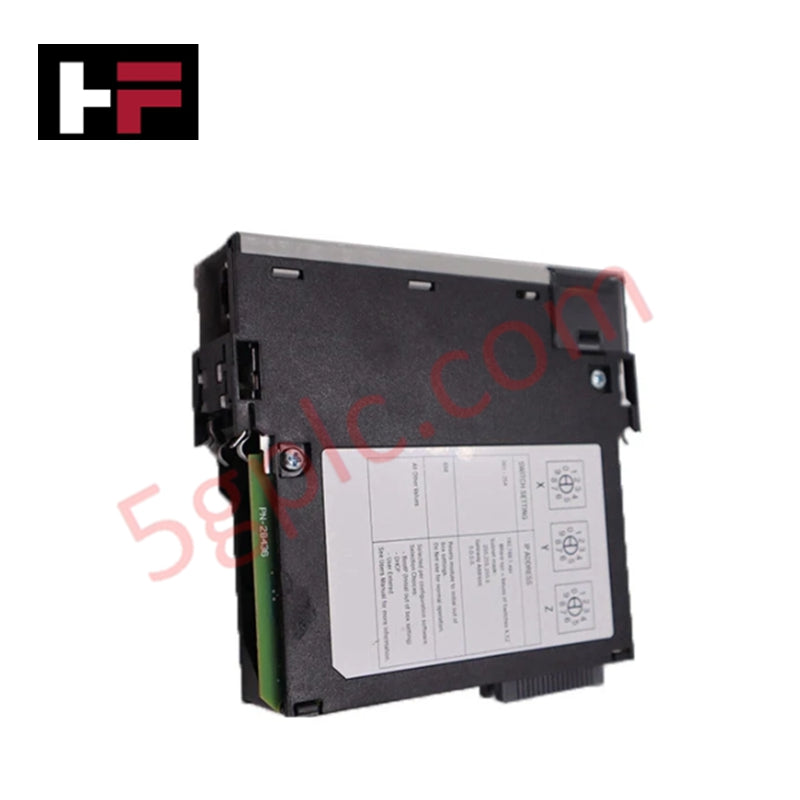
The Allen-Bradley 1756-EN2TR functions as a high-performance communication interface for the ControlLogix platform. This dual-port EtherNet/IP module enables real-time data exchange between controllers, I/O devices, and HMI systems. It supports high-speed industrial networking protocols and provides the necessary bandwidth for complex, distributed automation architectures. We supply this module as 100% Brand New and Original, ensuring your critical control system operates with factory-certified networking stability.
Technical Specifications
The 1756-EN2TR manages high-volume data traffic while maintaining low thermal overhead within the ControlLogix chassis.
-
Manufacturer: Allen-Bradley / Rockwell Automation
-
Product Line: ControlLogix
-
Module Type: EtherNet/IP Communication (Dual-Port)
-
TCP Connections: 128 Maximum
-
I/O Packet Rate: 25,000 Packets per second
-
HMI/MSG Packet Rate: 2,000 Packets per second
-
Ethernet Speed: 10/100 Mbps (Auto-negotiation)
-
Backplane Current Draw: 1 Amp @ 5.1V DC; 3 mA @ 24V DC
-
Power Dissipation: 5.1 Watts
-
Thermal Dissipation: 17.4 BTU per Hour
-
Socket Services: Supported
Engineering Advantages
-
Native Device Level Ring (DLR) Support: The dual-port design allows the module to act as a node in a Device Level Ring topology. This architecture ensures network resiliency; if a single cable fault occurs, the ring automatically redirects traffic in milliseconds, preventing system downtime.
-
High-Density Connectivity: This module supports up to 128 simultaneous TCP connections. It easily manages large-scale deployments involving numerous HMI stations, remote I/O racks, and peer-to-peer controller communications without performance degradation.
-
Optimized I/O Throughput: The 1756-EN2TR handles an I/O packet rate of 25,000 packets per second. This capacity solves bottleneck issues in high-speed motion control or complex manufacturing lines where rapid data refresh rates remain critical.
-
Simplified Troubleshooting and Maintenance: Integrated web-based diagnostics and port status LEDs provide immediate feedback on network health. Maintenance teams can identify port-specific errors or cabling issues at a glance, reducing Mean Time to Repair (MTTR).
FAQs
-
Does the 1756-EN2TR require a specific slot in the ControlLogix chassis?
No. You can install the 1756-EN2TR in any available slot in a 1756 I/O chassis. However, ensure your power supply provides sufficient 5.1V current (1 Amp) to support this module along with other installed cards.
-
What is the advantage of the "TR" version over a standard "EN2T"?
The "TR" (Two-port/Ring) designation indicates the presence of two RJ45 ports and an integrated switch. Unlike the single-port EN2T, the EN2TR supports DLR topologies and daisy-chaining, which significantly reduces the need for external Ethernet switches in the field.
-
Can I use the 1756-EN2TR for messaging to third-party devices?
Yes. The module supports Socket Services, allowing you to establish custom Ethernet communications with non-Rockwell devices such as barcode scanners, printers, or vision systems using standard TCP/UDP protocols.
-
Is this module a direct replacement for older 1756-ENBT modules?
Yes. The 1756-EN2TR offers significantly higher connection capacity and packet rates than the legacy 1756-ENBT. When replacing an ENBT, you may need to update the I/O configuration in Studio 5000 to match the new hardware's capabilities.
Additional Information
- 100% Genuine Parts: All products are original and authentic, ensuring reliable industrial performance.
- 30-Day Refund Guarantee: Return any in-stock item within 30 days in original, unopened packaging for a full refund (excluding shipping and fees).
- 12-Month Warranty: Covers defects in materials or workmanship; excludes misuse, normal wear, or unauthorized modifications.
- Worldwide Shipping: We ship via USPS, UPS, FedEx, and DHL. Delivery times vary by country and may be subject to customs or import fees.
- Support & Contact: Technical and warranty assistance is available anytime. Contact us here: Contact.
- Purchase Guidance: Check product specifications and compatibility carefully before ordering to ensure proper application.






Tech & Buying Guide

Understanding Marshalling Cabinets in Industrial Control Systems Architecture
Industrial control system deployments rely on structured signal distribution to bridge field instrumentation with central processing hardware. A marshalling cabinet serves as the vital intermediate connection point between heavy field home-run multi-pair cables and delicate input/output (I/O) modules housed inside Programmable Logic Controller (PLC) or Distributed Control System (DCS) enclosures. By segregating field cable terminations from control hardware, engineers maintain system flexibility, safeguard controller components, and streamline commissioning workflows.

FAT vs SAT in Industrial Control Systems: Key Differences and Execution Guide
Industrial control system deployment relies on strict verification protocols to guarantee operational safety, system stability, and regulatory compliance. Commissioning complex Programmable Logic Controller (PLC) racks, Distributed Control Systems (DCS), and Safety Instrumented Systems (SIS) requires two critical milestones: the Factory Acceptance Test (FAT) and the Site Acceptance Test (SAT). Both procedures validate that system automation meets design specifications, but they occur at different stages of project execution and target distinct operational risks.

Hub vs Switch vs Router in Industrial Automation Architecture
Modern factory automation relies on reliable industrial networking infrastructure to exchange real-time field data across operational technology systems. Engineers often encounter networking hardware like hubs, switches, and routers when integrating Programmable Logic Controllers, Distributed Control Systems, and SCADA monitoring nodes. Although these devices share physical ports, they operate at different layers of the Open Systems Interconnection reference model and deliver distinct traffic management capabilities.