












Product Details
Overview
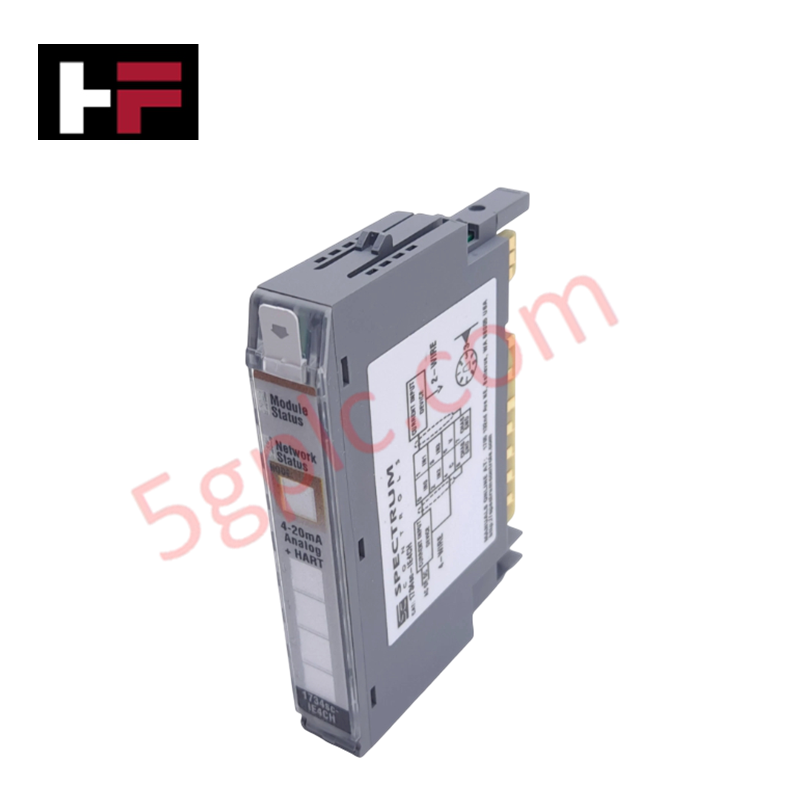
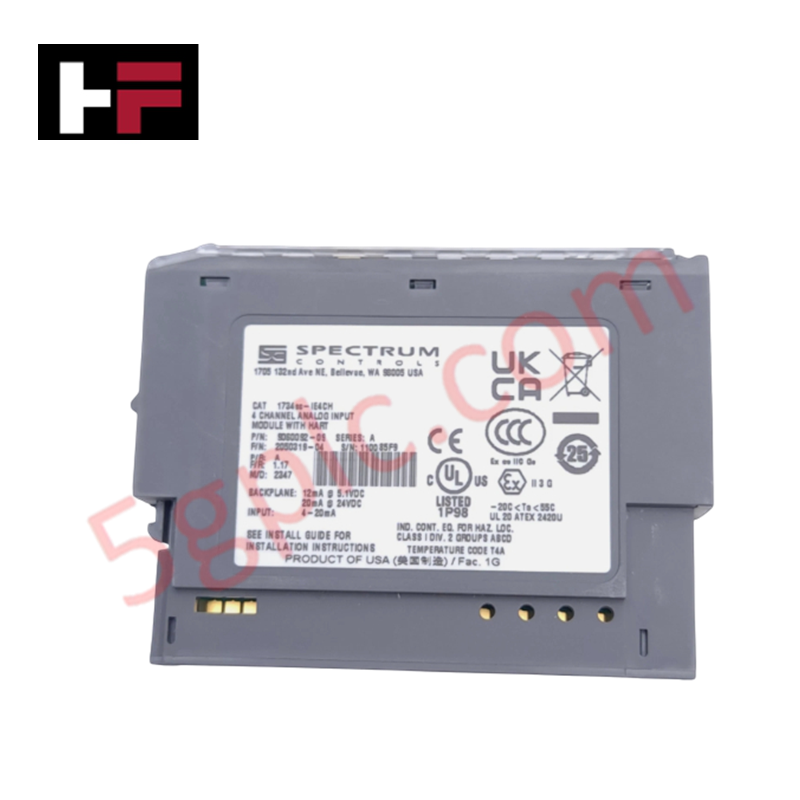
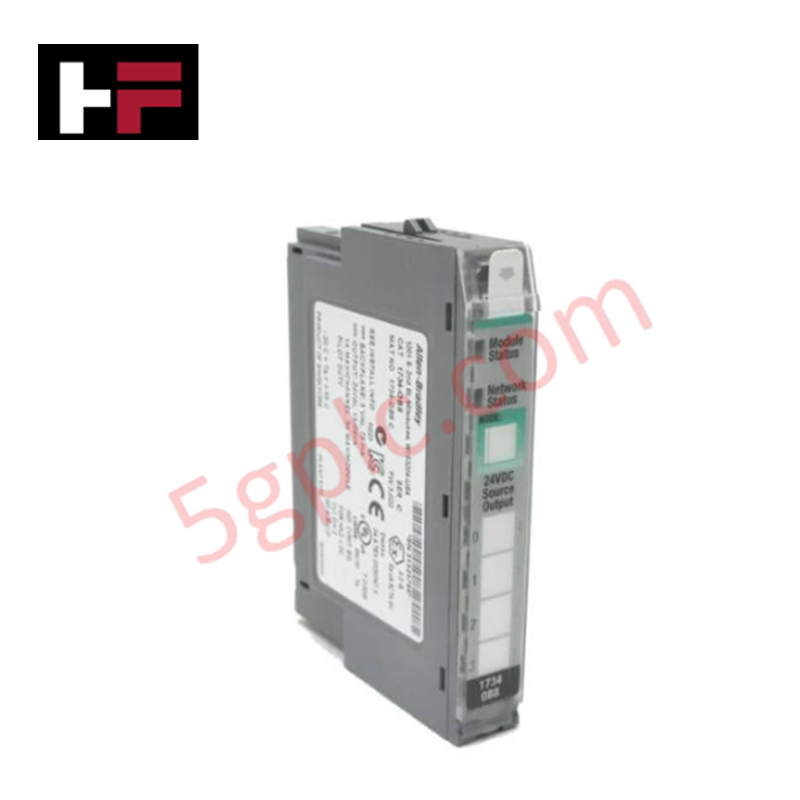
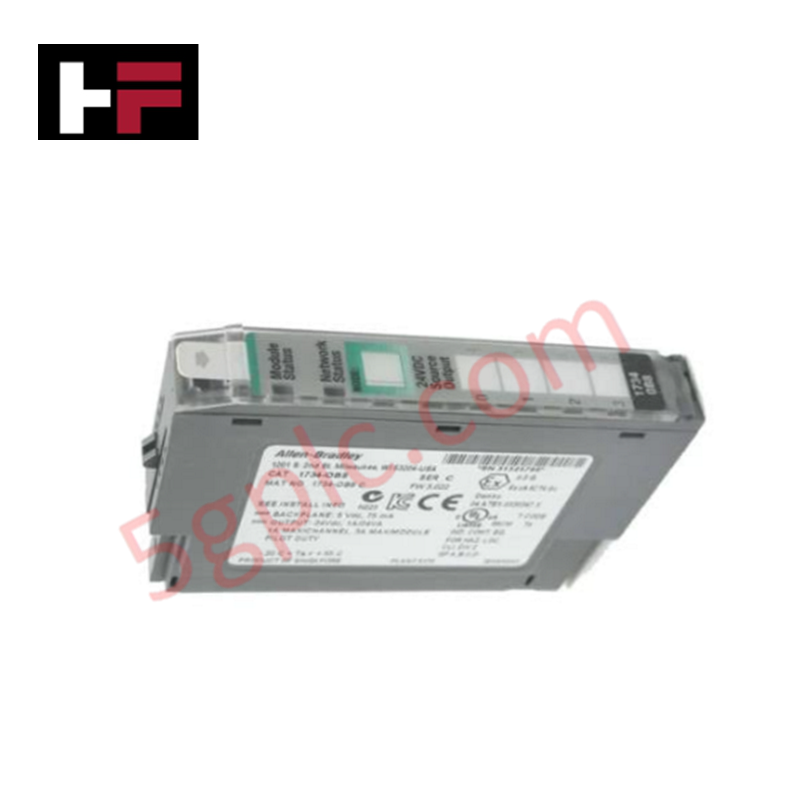
The Allen-Bradley 1734-OE2C is a two-channel analog current output module designed for the POINT I/O distributed I/O system. It enables precise analog signal generation for controlling actuators, drives, and other field devices that require current-based analog signals. With flexible configuration options, high accuracy, and compact size, it’s ideal for scalable automation applications that demand efficient analog control.
Key Features
-
Two single-ended analog output channels, supporting 0–20 mA and 4–20 mA ranges
-
High precision output with ±0.1% full-scale accuracy at 25°C
-
Modular POINT I/O design, allowing seamless integration with other POINT modules
-
Built-in status LEDs for module, network, and output diagnostics
-
DIN-rail mountable, supports 1734-TB, 1734-TBS, 1734-TB3, and 1734-TB3S base assemblies
-
Compatible with POINT I/O adapters for various network protocols (EtherNet/IP, DeviceNet, ControlNet, etc.)
Technical Specifications
-
Manufacturer: Allen-Bradley / Rockwell Automation
-
Model Number: 1734-OE2C
-
Product Type: POINT I/O Analog Output Module
-
Number of Outputs: 2 single-ended, current
-
Output Range: 0–20 mA / 4–20 mA (configurable)
-
Resolution: 13 bits
-
Accuracy: ±0.1% Full Scale at 25°C
-
Response Time: < 2 ms per channel
-
Voltage Supply: 24 V DC nominal (10–28.8 V range)
-
POINTBus Current Draw: 75 mA @ 5 V DC
-
Power Dissipation: 0.6 W typical
-
Isolation Voltage: 50 V continuous, reinforced insulation
-
Indicators:
-
1 × Module Status (green/red)
-
1 × Network Status (green/red)
-
2 × Output Status (green/red)
-
Mounting Base: 1734-TB, 1734-TBS, 1734-TB3, 1734-TB3S
-
Dimensions (H×W×D): 7.55 × 1.2 × 5.6 cm
-
Weight: Approx. 60 g
Performance and Reliability
The 1734-OE2C delivers precise analog current signals for process control, ensuring stability and repeatability even in electrically noisy environments. Its modular structure simplifies installation, maintenance, and future system expansion without rewiring the control cabinet.
Applications
-
Process control for flow, level, and pressure systems
-
Analog control of drives, valves, and actuators
-
Distributed I/O in machine automation systems
-
Integration with CompactLogix and ControlLogix controllers
FAQ
Q1: What types of output signals does the 1734-OE2C support?
A1: It supports configurable 0–20 mA and 4–20 mA analog current outputs.
Q2: Can it be used with voltage-based devices?
A2: No. The module is designed specifically for current signal outputs.
Q3: Which wiring bases are compatible?
A3: It works with 1734-TB, 1734-TBS, 1734-TB3, and 1734-TB3S base assemblies.
Q4: Does it include isolation between channels?
A4: No, the outputs are non-isolated single-ended channels.
Additional Information
- 100% Genuine Parts: All products are original and authentic, ensuring reliable industrial performance.
- 30-Day Refund Guarantee: Return any in-stock item within 30 days in original, unopened packaging for a full refund (excluding shipping and fees).
- 12-Month Warranty: Covers defects in materials or workmanship; excludes misuse, normal wear, or unauthorized modifications.
- Worldwide Shipping: We ship via USPS, UPS, FedEx, and DHL. Delivery times vary by country and may be subject to customs or import fees.
- Support & Contact: Technical and warranty assistance is available anytime. Contact us here: Contact.
- Purchase Guidance: Check product specifications and compatibility carefully before ordering to ensure proper application.


Tech & Buying Guide

Spatial Computing in Industrial Automation: Elevating PLC and DCS Operations with AR and VR
Industry 4.0 integrates digital intelligence into field operations, transforming factory automation landscapes worldwide. Spatial technologies—specifically Augmented Reality (AR) and Virtual Reality (VR)—redefine how engineers interact with industrial control systems. By bridging computer-generated CAD models with real-time operational technology (OT) data, immersive displays enable intuitive monitoring, rapid diagnostics, and safer maintenance across complex processing facilities.

Master Acceptance Testing: Understanding FAT and SAT in Industrial Control Systems
Factory Acceptance Testing (FAT) and Site Acceptance Testing (SAT) serve as critical quality assurance gateways in complex industrial control systems. Both procedures verify that programmable logic controllers (PLCs), distributed control systems (DCS), and associated field devices meet strict functional specifications. However, executing these tests effectively requires clear delineation between off-site staging and final field commissioning.

Industrial Networking Essentials: Demystifying Hubs, Switches, and Routers in Control Systems
Industrial automation relies heavily on robust networking infrastructure to connect programmable logic controllers (PLCs), distributed control systems (DCS), and human-machine interfaces (HMIs). Modern factory automation environments generate vast amounts of real-time operational data across deterministic networks. Understanding the structural differences between hubs, switches, and routers ensures optimal traffic segmentation, minimizes latency, and maintains high network availability.