










Product Details
Product Overview
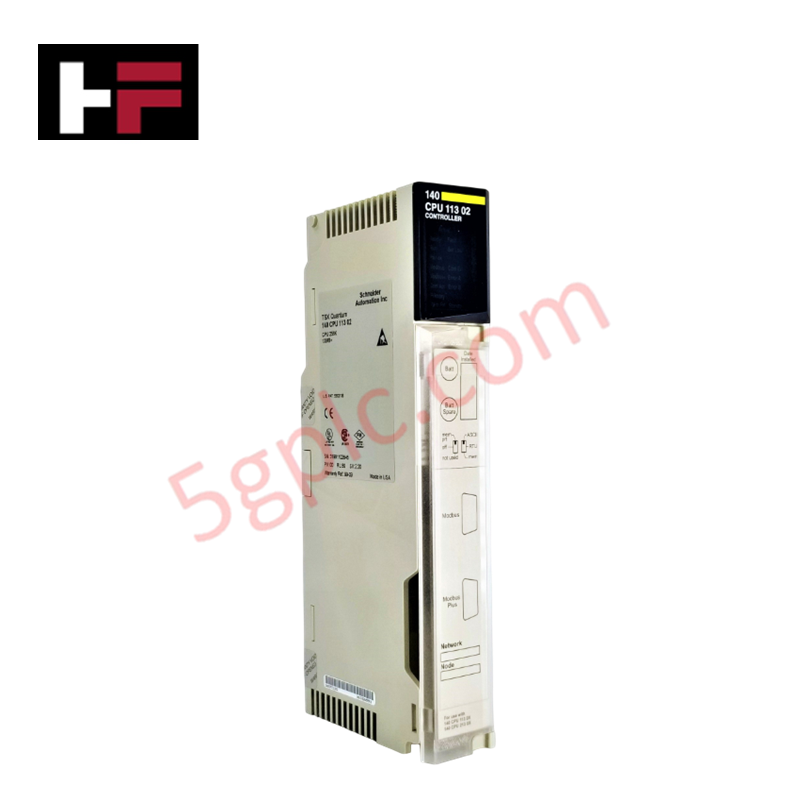
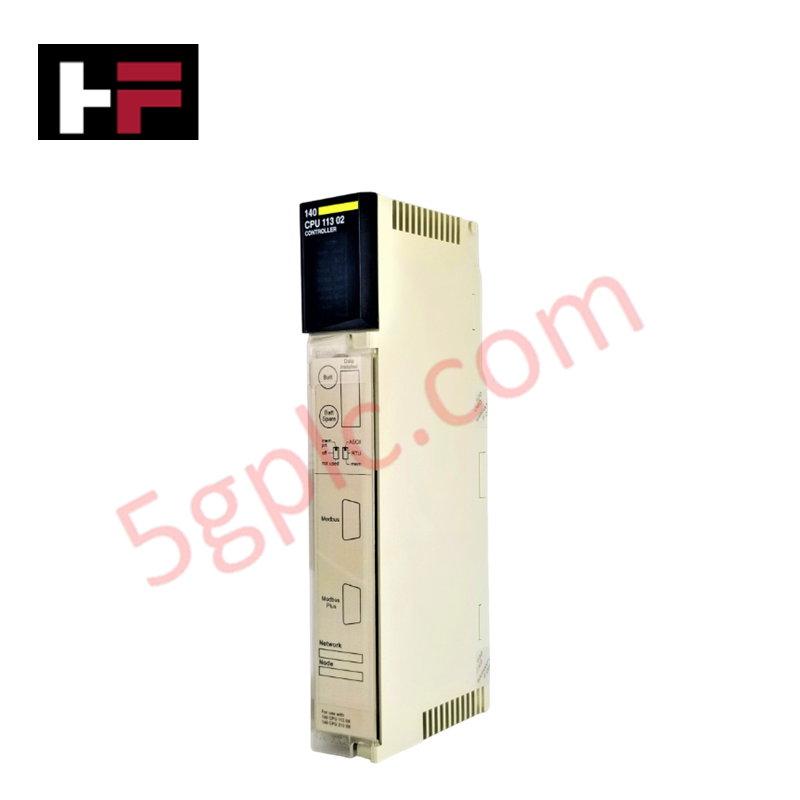
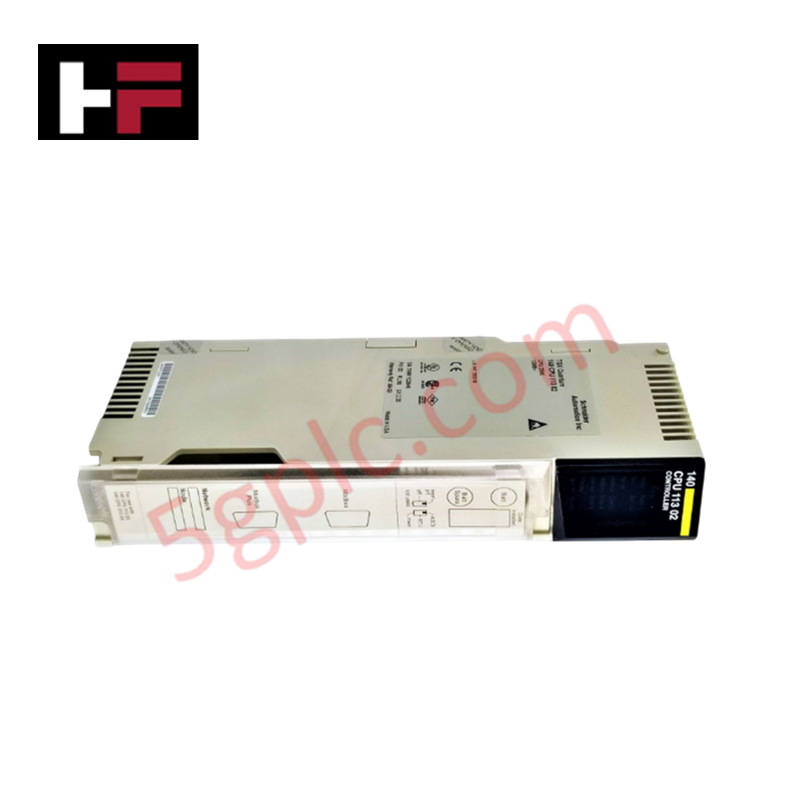
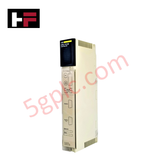
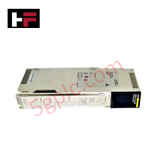
The Schneider Electric 140CPU11302 executes primary logic calculation, communication orchestration, and system diagnostics within the Modicon Quantum automation platform. This standard-format central processing unit utilizes a dedicated 20 MHz 80186 micro-architecture to coordinate real-time machine execution and continuous process loop control. By integrating native Modbus and Modbus Plus communication paths, this controller module serves as the primary intelligence hub for critical utility control, water treatment plants, and manufacturing lines running ProWORX 32 or Concept programming environments.
Technical Specifications
| Parameter | Technical Specification Value |
| Manufacturer | Schneider Electric |
| Model | 140CPU11302 |
| Range of Product | Modicon Quantum Automation Platform |
| Product Type | Central Processing Unit (Processor) |
| Condition | 100% Brand New Original |
| Core Microprocessor | 80186 clocked at 20 MHz (Without math coprocessor) |
| On-Board Memory Capacity | 109 kB Internal RAM |
| Logic Execution Performance | 0.3 to 1.4 ms per 1 Kinstruction (LL984) |
| Watchdog Timer Threshold | 250 ms |
| Real-Time Clock Drift | +/- 8 seconds per day within 32…140 °F (0…60 °C) |
| Local I/O Capacity | 64 Input Words / 64 Output Words maximum |
| Remote I/O Capability | 64 Input / 64 Output Words across 31 remote drops |
| Distributed Network Capacity | 500 Input / 500 Output Words across 63 drops |
| Network Interfaces |
1 x Modbus RS232 port 1 x Modbus Plus port |
| Maximum Network Expansion | 2 Remote networks / 3 Distributed networks |
| Coprocessor Support Capacity | Supports up to 2 network modules (NOM, NOE, CR, NMS) |
| Memory Retention Battery | Lithium battery, 1.2 Ah capacity, 10-year service life |
| Backplane Current Demand | 780 mA Bus current requirement |
| Product Net Weight | 0.7 lb (0.3 kg) |
Engineering Advantages
-
Native Dual-Network Communication Topology: Multi-device industrial plants require concurrent local diagnostic and high-speed peer-to-peer networking. The 140CPU11302 integrates one dedicated Modbus RS232 port alongside a high-performance Modbus Plus port directly on the front face. This hardware arrangement allows engineers to program or collect local HMI data via RS232 while the Modbus Plus interface drives deterministic, real-time data exchange across distributed controller nodes.
-
Highly Scalable Distributed I/O Mapping: Expansive industrial facilities demand large-scale sensor aggregation over wide physical areas. This processor accommodates complex topologies by managing up to 31 remote I/O drops over 2 distinct remote networks. Furthermore, it controls up to 63 distributed drops over 3 distributed networks, handling up to 500 input and 500 output words per network to support massive field device grids.
-
Deterministic Logic Execution Engine: High-speed packaging and critical tripping applications depend on highly predictable software scan times. Running the proven LL984 instruction set, this 20 MHz processor solves 1,000 instructions in 0.3 to 1.4 milliseconds. A hardware-enforced 250 ms watchdog timer monitors the core scan loop, immediately forcing safe fallback actions if a logic fault stalls the operating software.
-
Decoupled Communication Coprocessing: Intensive Ethernet or network traffic can degrade a primary CPU's logic processing speed. The 140CPU11302 architecture supports the addition of up to two specialized option modules, such as Network Option Modules (NOM) or Network Ethernet Modules (NOE). These cards offload communication stack processing from the main 80186 chip, keeping logic execution times rock-solid.
-
Decade-Long Non-Volatile Data Retention: Sudden facility power outages risk the loss of volatile recipe data and active register registers. This unit utilizes a high-capacity 1.2 Ah lithium battery combined with an ultra-low power consumption circuit (5 to 110 µA current draw). This system retains critical user application programs and configuration data inside the internal 109 kB RAM for up to 10 years without main backplane power.
FAQs
-
Is this 140CPU11302 processor module a brand new original unit?
Yes. We supply this product strictly as a 100% brand new, original factory-sealed module. It arrives in the original Schneider Electric packaging with all authentic corporate branding, factory bar codes, and quality assurance seals completely intact.
-
Which legacy programming software packages support this Quantum CPU?
This processor module fully integrates with Schneider Electric legacy development environments, specifically Modicon Concept and ProWORX 32 software. It utilizes the standard LL984 logic execution structure for direct compatibility with existing application files.
-
Does this specific hardware version contain an integrated key switch?
No. The 140CPU11302 features the standard front-panel format without a mechanical security key switch. Engineers control software lockouts, online logic changes, and memory protection parameters via software commands inside the programming environment.
-
What are the primary precautions regarding the real-time clock performance?
The internal real-time clock exhibits a maximum drift of +/- 8 seconds per day across its full operating temperature window of 32°F to 140°F (0°C to 60°C). For applications requiring precise sequence-of-events recording across multiple racks, we recommend implementing external network time synchronization via an attached Ethernet coprocessor module.
Additional Information
- 100% Genuine Parts: All products are original and authentic, ensuring reliable industrial performance.
- 30-Day Refund Guarantee: Return any in-stock item within 30 days in original, unopened packaging for a full refund (excluding shipping and fees).
- 12-Month Warranty: Covers defects in materials or workmanship; excludes misuse, normal wear, or unauthorized modifications.
- Worldwide Shipping: We ship via USPS, UPS, FedEx, and DHL. Delivery times vary by country and may be subject to customs or import fees.
- Support & Contact: Technical and warranty assistance is available anytime. Contact us here: Contact.
- Purchase Guidance: Check product specifications and compatibility carefully before ordering to ensure proper application.



Tech & Buying Guide

Human-Machine Interface Design: Essential Guide to HMI Selection, Visualization, and Control System Integration
Human-Machine Interfaces (HMIs) serve as the primary operational window into complex industrial automation systems. Modern HMIs convert raw machine data into clear graphical displays, enabling operators to oversee entire manufacturing processes in real time. Instead of relying on physical control panels full of hardwired switches, engineers program interactive screens using intuitive graphics, dynamic color coding, and responsive touch interfaces. Over my 15 years in control systems engineering, I have observed HMIs transform from basic display screens into sophisticated command centers that drive operational efficiency across DCS and PLC environments.

Understanding Safety Relays in Industrial Automation: Architecture, Operation, and Functional Safety
Standard electromechanical relays provide basic electrical isolation between low-voltage control circuits and high-power output loads. A traditional switching relay features a magnetic coil driving mechanical Common (COM), Normally-Open (NO), and Normally-Closed (NC) contacts. However, standard relays pose severe functional risks when deployed in critical safety interlock circuits. High current inrush or mechanical wear can weld contacts together permanently. If contact welding occurs in an emergency stop circuit, pressing the button fails to halt hazardous machinery movements. Consequently, global functional safety standards prohibit standard relays for critical machine guarding functions.

Mastering Wire Identification in Industrial Automation: The Power of Ferrules and Cross-Ferruling
Proper wire labeling forms the cornerstone of reliable control system installation and long-term maintenance. In complex industrial automation environments, technicians terminate thousands of conductor ends inside control panels, marshalling racks, and field junction boxes. Ferrules serve as individual tube-shaped sleeve markers slipped onto conductors before final termination. While technicians historically relied on pre-printed individual letter rings, modern control panel builders utilize automated ferrule printing machines. These thermal-transfer printers generate durable, single-sleeve heat-shrink tags directly matching approved wiring schematics, significantly accelerating cabinet assembly workflows.