










Product Details
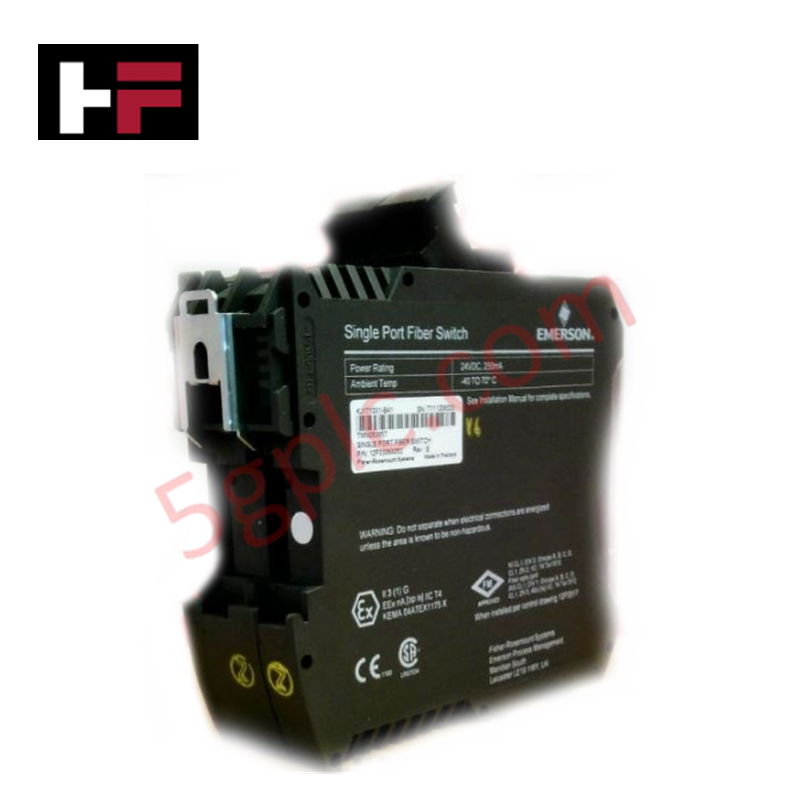
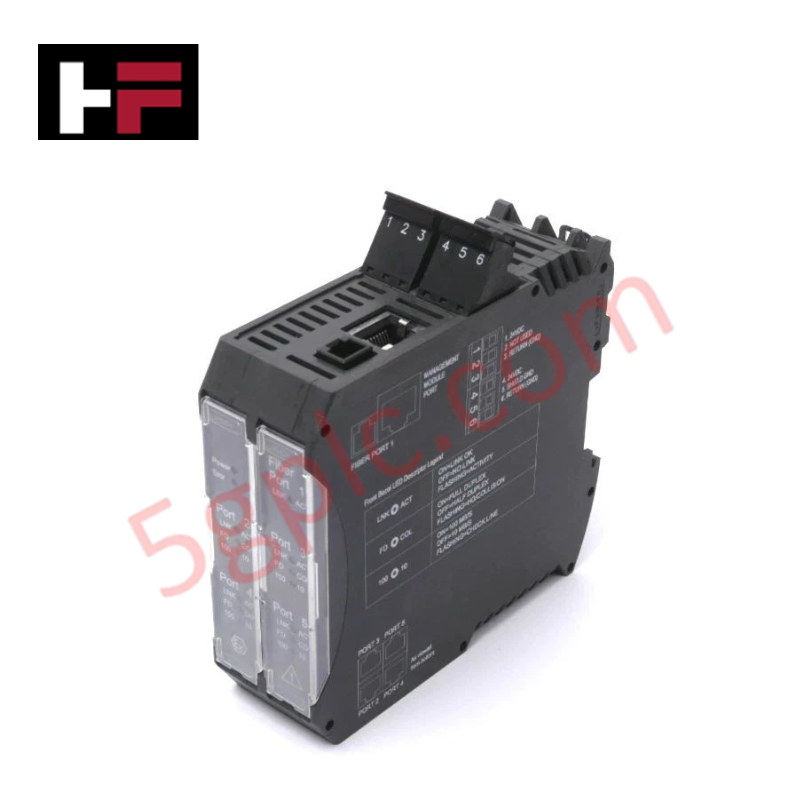
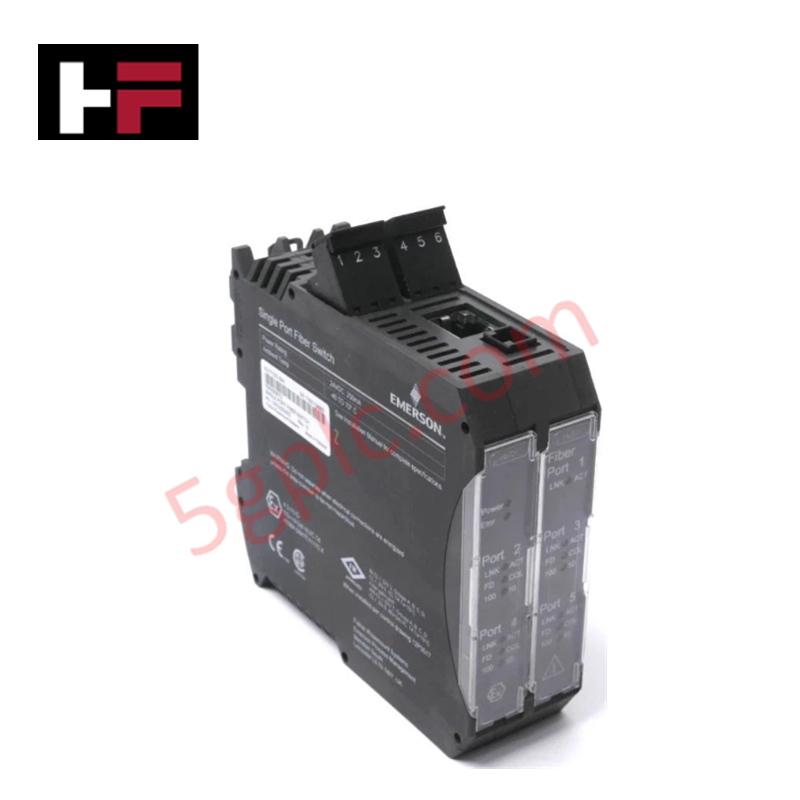
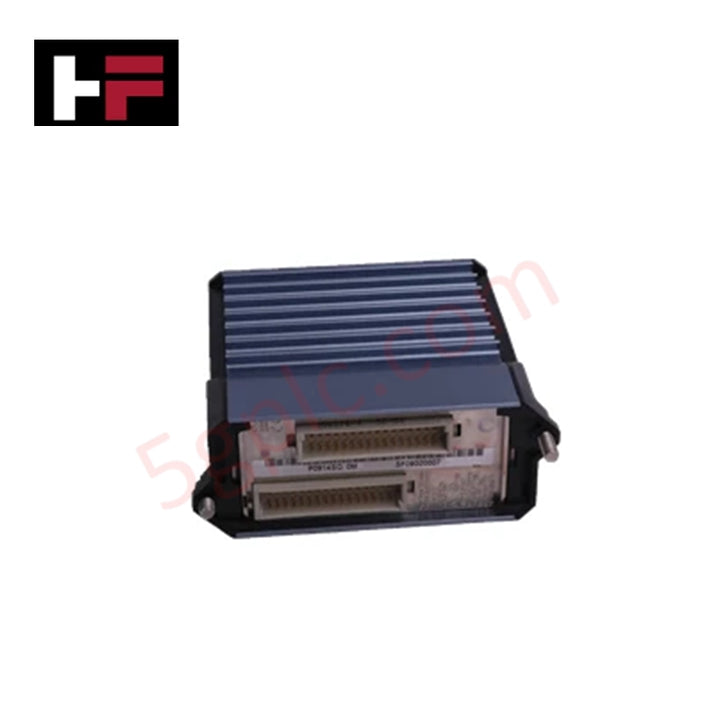
The Emerson KJ1710X1-BA1, also cataloged as the KJ1710X1 Single Port Fiber Switch, operates as a dedicated hardware component for optical network conversion and data signal transmission within Emerson DeltaV system networks. It provides physical fiber-optic communication interfacing to secure noise-immune data transfer across industrial control segments.
Hardware Specifications
| Parameter | Specification |
|---|---|
| Model | KJ1710X1-BA1 |
| Brand | Emerson |
| Base Model | KJ1710X1 |
| Origin | USA |
| Weight | 0.51 lbs (0.23 kg) |
| Dimensions | Standard DeltaV Rail-Mount Footprint |
| Operating Temp | -40 to +70 deg C (-40 to +158 deg F) |
| Power Consumption | 19.2-28.8 VDC at 250 mA |
| Port Configuration | Single Port Fiber Switch |
| Shock Resistance | 10 G 1/2-sinewave for 11 ms |
| Vibration Resistance | 1 mm peak-to-peak (5-16 Hz), 0.5 g (16-150 Hz) |
| Airborne Contaminants | ISA-S71.04-1985 Airborne Contaminants Class G3 |
| Relative Humidity | 5% to 95% non-condensing |
4-20 mA HART Loop Protocol and Channel Isolation
The KJ1710X1-BA1 switch establishes galvanically isolated optical paths for control networks, preventing ground loops and high-voltage field transients from interfering with local node communication. By converting electrical bus signals to fiber optics, the unit isolates DeltaV control I/O networks from electromagnetic interference, maintaining stable digital data flow alongside field loops carrying 4-20 mA HART loop protocol signals.
Frequently Asked Questions
Q: What are the input power supply limits for the KJ1710X1-BA1 fiber switch?
A: The module requires a direct current power input operating within 19.2 to 28.8 VDC, drawing a maximum nominal current of 250 mA.
Q: Is the KJ1710X1-BA1 rated for deployment in corrosive industrial atmospheres?
A: Yes, the unit is compliant with ISA-S71.04-1985 Class G3 standards for protection against harsh airborne contaminants.
Q: Can the fiber switch be mounted in high-vibration control environments?
A: The hardware is rated to withstand 10 G operational mechanical shock (11 ms half-sine) and 0.5 g vibration from 16 to 150 Hz.
Field Installation Guidelines
- Mount the switch securely onto the DeltaV carrier DIN rail, ensuring the grounding clip seats firmly against the grounded metallic rail.
- Verify that input power leads supplying 19.2 to 28.8 VDC are de-energized prior to attaching the power connector.
- Remove protective dust caps from the fiber-optic port immediately before inserting the optical cable connector.
- Maintain the minimum specified bend radius for the fiber cable to prevent optical attenuation or glass core fracture.
- Ensure the surrounding panel installation maintains ambient operating temperatures between -40 and +70 deg C.
Additional Information
- 100% Genuine Parts: All products are original and authentic, ensuring reliable industrial performance.
- 30-Day Refund Guarantee: Return any in-stock item within 30 days in original, unopened packaging for a full refund (excluding shipping and fees).
- 12-Month Warranty: Covers defects in materials or workmanship; excludes misuse, normal wear, or unauthorized modifications.
- Worldwide Shipping: We ship via USPS, UPS, FedEx, and DHL. Delivery times vary by country and may be subject to customs or import fees.
- Support & Contact: Technical and warranty assistance is available anytime. Contact us here: Contact.
- Purchase Guidance: Check product specifications and compatibility carefully before ordering to ensure proper application.


Tech & Buying Guide

Understanding Siemens PLC Memory Cards: MMC, SMC, and SD Solutions in Industrial Automation
Memory management plays a pivotal role in maintaining control system reliability across modern manufacturing plants. Industrial control systems rely on specialized memory cards to store project logic, firmware updates, and retentive system data. Siemens uses several memory architectures, including Micro Memory Cards (MMC) and SIMATIC Memory Cards (SMC). Engineers must understand these hardware variations to ensure zero data loss and minimize downtime during maintenance routines.

Redefining Control Systems: The Rise of Flexible I/O Modules in Industrial Automation
Conventional input-output architectures often limit engineering agility and inflate long-term inventory costs. Today, Flexible Input/Output Modules (FIOM) are transforming how control system engineers design, commission, and maintain automation infrastructure. By allowing individual channel software configuration, FIOM technology bridges the gap between rigid hardware design and dynamic plant requirements.
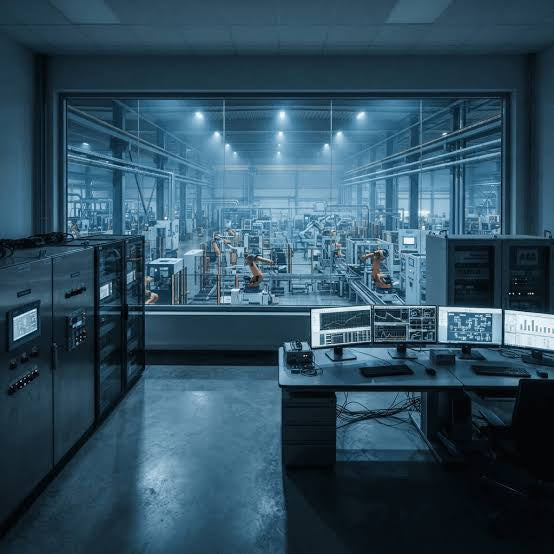
Understanding Modern SCADA Systems: Architecture, Communication Topologies, and Industrial Applications
Supervisory Control and Data Acquisition (SCADA) systems form the digital backbone of modern industrial automation. They collect critical field data, transmit signals across vast distances, and empower plant operators with real-time process visibility. Across modern infrastructures, SCADA solutions streamline centralized control and maintain continuous operational uptime.