












Product Details
Overview
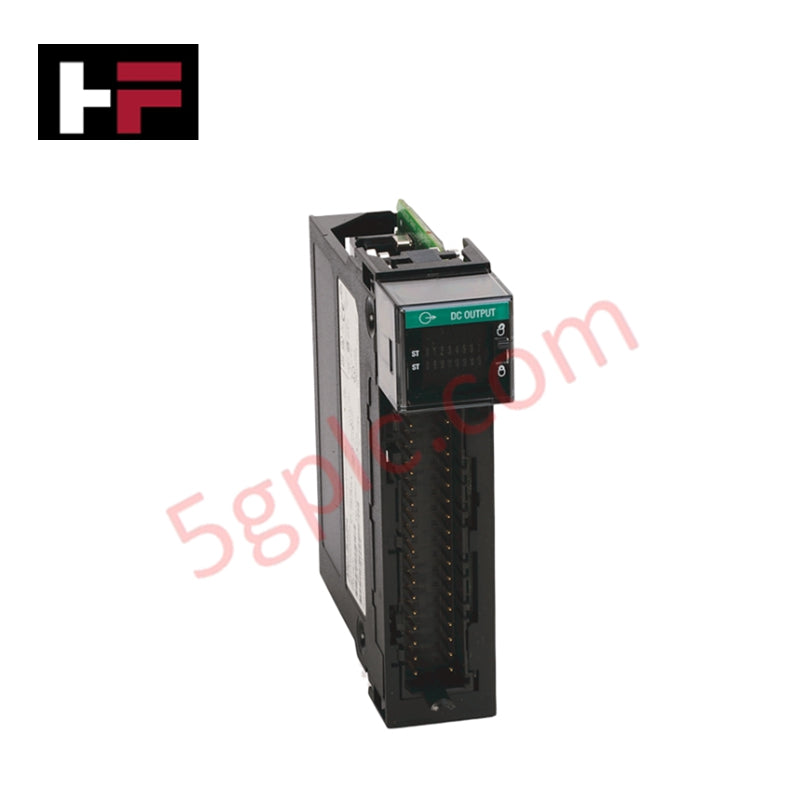
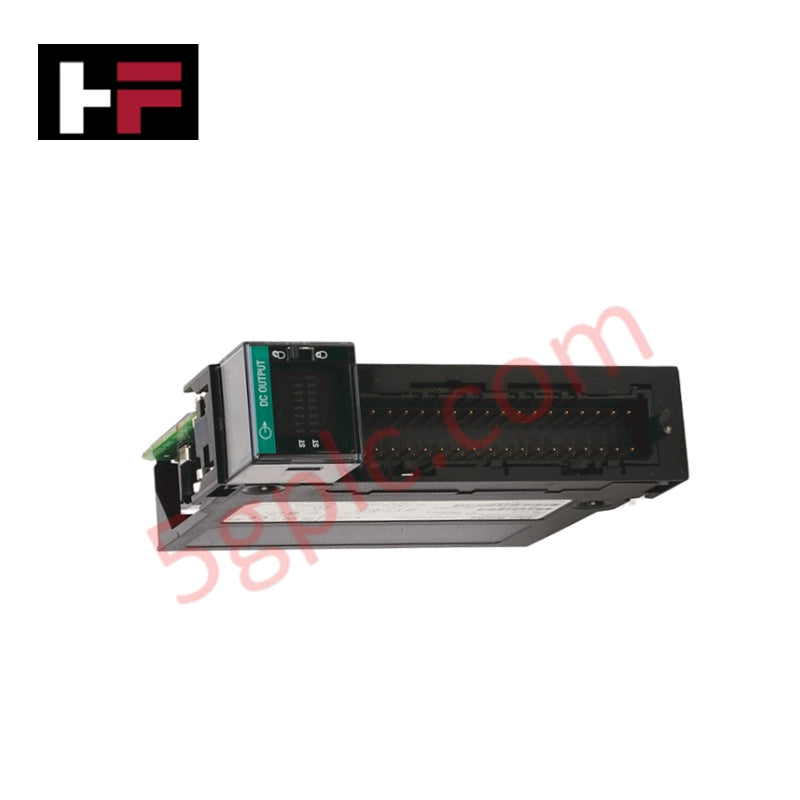
The 1756-OB16I is a 16-point DC output module designed for Allen-Bradley ControlLogix systems. Each output is individually isolated, ensuring reliable operation and protection across control circuits. This module delivers precise switching performance for industrial DC loads, featuring fast response times, configurable electronic keying, and full compatibility with ControlLogix backplanes.
Technical Specifications
-
Manufacturer: Allen-Bradley
-
Model / Part Number: 1756-OB16I
-
Module Type: DC Output Module, ControlLogix Series
-
Outputs: 16 individually isolated channels
-
Pilot Duty: 2 A (DC-13 SQ)
-
Voltage Category: 12/24V DC sink/source
-
Operating Voltage Range: 10–30V DC
-
Output Switching Times:
-
Off-to-On: 1 ms max
-
On-to-Off: 2 ms max
-
Current Draw: 350 mA @ 5.1V, 2.5 mA @ 24V
-
Backplane Power Consumption: 1.8 W
-
Maximum Power Dissipation: 3.6 W @ 60°C, Thermal Dissipation 12.28 BTU/hr
-
Off-State Leakage: Max 0.5 mA per point
-
On-State Voltage Drop: Max 1.2 V @ 2 A
-
Current per Point: 2 A @ 30°C; 1 A @ 60°C (linear derating)
-
Current per Module: 8 A @ 30°C; 4 A @ 60°C (linear derating)
-
Surge Current per Point: 4 A for 10 ms, repeatable every 2 s
-
Minimum Load Current: 1 mA per point
-
Scheduled Outputs: Synchronization within 16.7 s max (reference to Coordinated System Time)
-
Output States in Fault/Program Mode: Hold last state, configurable On/Off
-
Isolation Voltage:
-
Outputs-to-Backplane: 250 V continuous, basic insulation
-
Output-to-Output: 125 V continuous, basic insulation
-
Tested at 1350 V AC for 2 s
-
Module Keying: Electronic, software configurable
-
Fusing: Not included; fused IFM recommended
-
Removable Terminal Block Compatibility: 1756-TBCH, 1756-TBS6H
-
RTB Keying: User-defined mechanical
-
Slot Width: 1
-
Wire Category: 1
-
Temperature Codes: North American T4A, IEC T4
-
Enclosure: Open-style, no housing
Application Notes
-
Suitable for DC load control, pilot duty applications, and automated machine systems
-
Compatible with ControlLogix backplane for seamless integration
-
Ideal for high-reliability industrial switching with isolated outputs
FAQ
Q: How many outputs does the 1756-OB16I provide?
A: 16 individually isolated DC output points.
Q: What is the maximum current per channel?
A: 2 A at 30°C, derated to 1 A at 60°C.
Q: Is the module isolated from the backplane and between outputs?
A: Yes, outputs-to-backplane and output-to-output isolation is provided.
Additional Information
- 100% Genuine Parts: All products are original and authentic, ensuring reliable industrial performance.
- 30-Day Refund Guarantee: Return any in-stock item within 30 days in original, unopened packaging for a full refund (excluding shipping and fees).
- 12-Month Warranty: Covers defects in materials or workmanship; excludes misuse, normal wear, or unauthorized modifications.
- Worldwide Shipping: We ship via USPS, UPS, FedEx, and DHL. Delivery times vary by country and may be subject to customs or import fees.
- Support & Contact: Technical and warranty assistance is available anytime. Contact us here: Contact.
- Purchase Guidance: Check product specifications and compatibility carefully before ordering to ensure proper application.
Tech & Buying Guide

Understanding Safety Relays in Industrial Automation: Architecture, Operation, and Functional Safety
Standard electromechanical relays provide basic electrical isolation between low-voltage control circuits and high-power output loads. A traditional switching relay features a magnetic coil driving mechanical Common (COM), Normally-Open (NO), and Normally-Closed (NC) contacts. However, standard relays pose severe functional risks when deployed in critical safety interlock circuits. High current inrush or mechanical wear can weld contacts together permanently. If contact welding occurs in an emergency stop circuit, pressing the button fails to halt hazardous machinery movements. Consequently, global functional safety standards prohibit standard relays for critical machine guarding functions.

Mastering Wire Identification in Industrial Automation: The Power of Ferrules and Cross-Ferruling
Proper wire labeling forms the cornerstone of reliable control system installation and long-term maintenance. In complex industrial automation environments, technicians terminate thousands of conductor ends inside control panels, marshalling racks, and field junction boxes. Ferrules serve as individual tube-shaped sleeve markers slipped onto conductors before final termination. While technicians historically relied on pre-printed individual letter rings, modern control panel builders utilize automated ferrule printing machines. These thermal-transfer printers generate durable, single-sleeve heat-shrink tags directly matching approved wiring schematics, significantly accelerating cabinet assembly workflows.

Understanding Marshalling Cabinets in Industrial Automation and Control Systems
Marshalling cabinets serve as the crucial connection hub between field instruments and centralized processing units. In large DCS and PLC control system architectures, hundreds of multipair field cables run from local junction boxes to the central instrument equipment room. The marshalling cabinet houses field terminal blocks, surge arresters, intrinsic safety isolation barriers, and interposing relays. By segregating field field-wiring terminations from sensitive processor hardware, engineers protect expensive controller backplanes from high-voltage transients. Consequently, this modular separation dramatically streamlines maintenance workflows and simplifies system expansion.