Rockwell AENT Module Explained: Remote I/O Adapter for PLC Control Systems
- 〡
- 〡 by WUPAMBO

Understanding Remote I/O in Industrial Automation
In industrial automation, I/O architecture includes local, remote, and distributed systems. These configurations depend on field device locations.
Remote I/O becomes essential when instruments sit far from the main control panel. Therefore, engineers use network adapters to connect devices efficiently within PLC and DCS control systems.
What Is the AENT Module in Rockwell PLC Systems
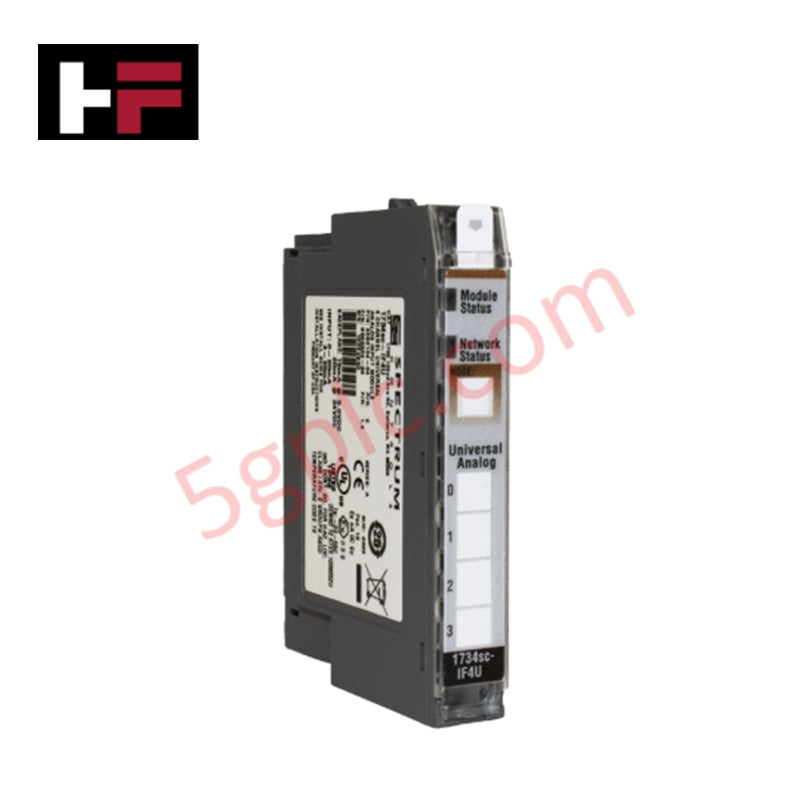
The Rockwell Automation AENT module acts as a remote I/O adapter. It connects field devices to the main PLC through Ethernet/IP communication.
However, the module does not include a CPU. It only transfers input and output data between I/O modules and the PLC processor. As a result, all control logic remains in the central controller.
Role of AENT in PLC and Control Systems Architecture
In modern PLC control systems, the AENT module simplifies system expansion. It allows engineers to install I/O modules closer to field devices.
Moreover, this approach reduces wiring complexity and installation cost. Therefore, it supports scalable industrial automation and flexible plant design.
Technical Specifications of the AENT Module
The AENT module typically belongs to the 1734-AENT series. It supports up to 64 I/O modules on a single node.
In addition, it operates on a standard 24V DC power supply. The module uses Ethernet/IP protocol via RJ45 ports. It supports both half-duplex and full-duplex communication modes.
Furthermore, it provides detailed diagnostics for each connected I/O module. This feature improves troubleshooting and system visibility.
IP Address Configuration in Ethernet-Based PLC Networks
Proper IP configuration ensures stable communication in industrial networks. The AENT module supports multiple configuration methods.
Engineers can set the IP address using onboard switches. Alternatively, they can use BootP/DHCP or Rockwell configuration software.
Once configured, the module integrates seamlessly into PLC systems such as Studio 5000. As a result, it enables reliable data exchange across the network.
LED Diagnostics and Troubleshooting in Control Systems
The AENT module includes several LED indicators for system monitoring. These LEDs display module status, network activity, and power conditions.
Moreover, POINT Bus status LEDs help identify communication issues between modules. Therefore, technicians can quickly diagnose faults in industrial automation systems.
Power Distribution and System Design Considerations
Power management plays a key role in system reliability. The AENT module can support up to 10 I/O modules per power supply segment.
Therefore, engineers must install additional power modules for larger configurations. This design ensures stable operation across the entire control system.
Chassis Size Configuration in PLC Automation
Chassis size defines the number of connected I/O modules. Engineers must configure this parameter correctly in the AENT module.
For example, if 19 modules are installed, the chassis size should be set to 20. Moreover, mismatched configurations prevent I/O communication.
From practical experience, incorrect chassis settings remain a common commissioning issue. Therefore, engineers should verify this during system startup.
Compatibility with Rockwell PLC Platforms
The AENT module works with several high-end PLC platforms. These include ControlLogix, CompactLogix, and FlexLogix systems.
As a result, it supports a wide range of industrial automation applications. Moreover, it integrates well with existing factory automation and process control systems.
Expert Insight: Practical Use of AENT in Industrial Projects
From a field engineering perspective, the AENT module offers strong flexibility. It reduces panel congestion and simplifies cable routing.
However, proper network design remains critical. Engineers should plan IP addressing and topology carefully. In addition, they should ensure redundancy where required.
In my experience, combining AENT modules with well-structured Ethernet networks improves system reliability significantly.
Application Scenarios and Solution Use Cases
The AENT module supports various industrial automation applications:
Manufacturing lines requiring distributed I/O architecture
Oil and gas facilities using remote field instrumentation
Water treatment plants with wide-area control systems
Material handling systems with decentralized control panels
Process industries integrating PLC and DCS control systems
These scenarios highlight the importance of remote I/O in modern automation.
Conclusion: A Key Component in Modern PLC Automation
The Rockwell AENT module plays a critical role in Ethernet-based control systems. It enables efficient communication between field devices and PLC controllers.
As industrial automation evolves, remote I/O solutions like AENT will remain essential. Therefore, understanding its configuration and application is vital for engineers.
- Posted in:
- control systems design
- DCS control systems
- Ethernet IP communication
- factory automation
- PLC remote IO
- Rockwell AENT module