Process Interlocks and Trips in Industrial Automation: Ensuring Safe and Reliable Operations
- 〡
- 〡 by WUPAMBO
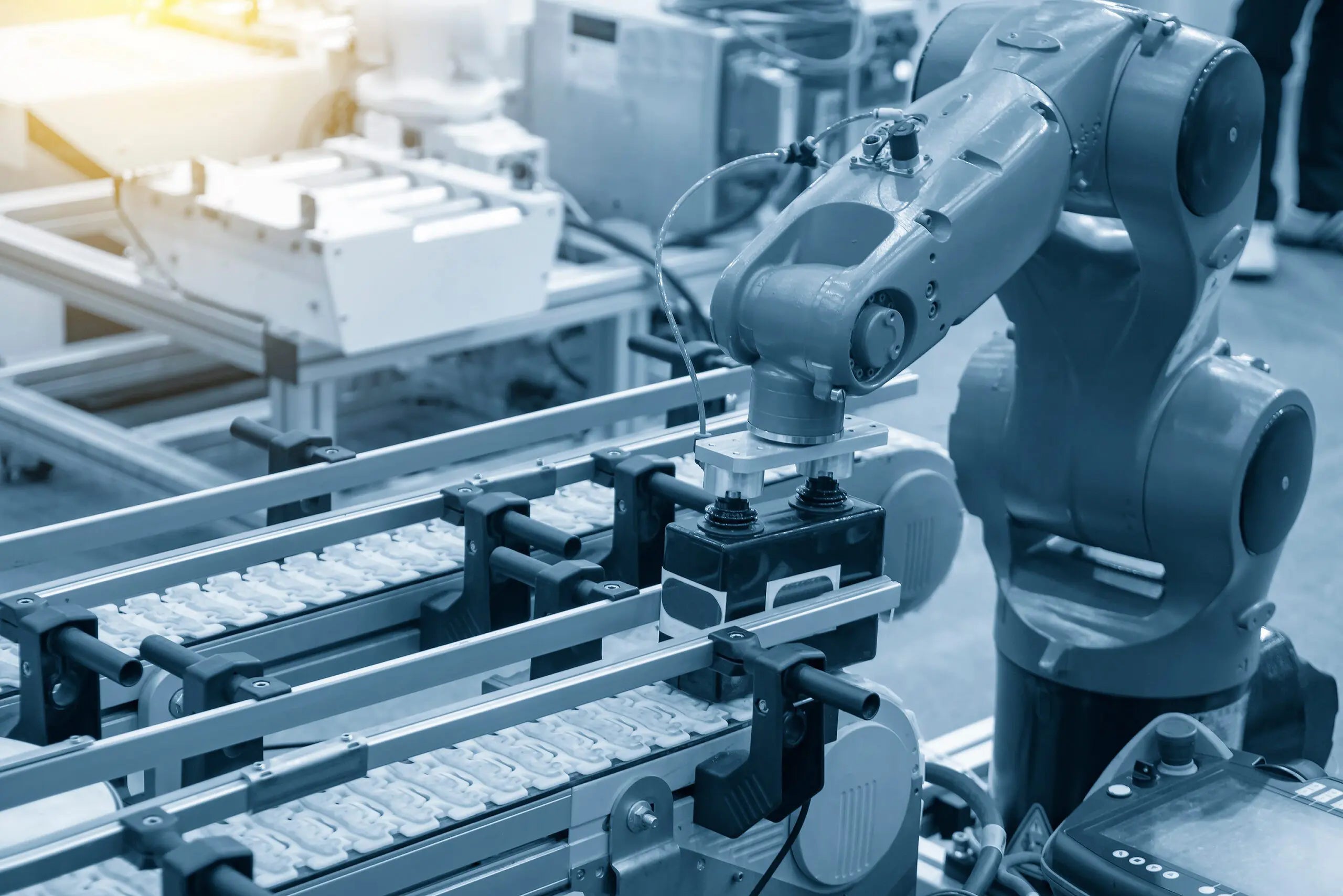
In industrial automation, Process Interlocks and Trips are essential safeguards designed to prevent unsafe control actions and protect critical assets. They form the backbone of process safety systems, ensuring that both operators and automated control systems maintain operations within safe limits.
Understanding Process Interlocks and Trips
Process interlocks prevent hazardous control actions by restricting operator or system commands that might trigger unsafe conditions. They act as automatic, self-resetting barriers against dangerous operations.
Process trips, on the other hand, respond to abnormal process conditions by detecting excursions beyond predefined setpoints and then initiating corrective actions — such as shutting down equipment — to bring the process back to a safe state. Trips should not automatically reset unless proper justification and risk analysis have been conducted.
These two layers of protection together reduce the likelihood of human or system error leading to hazardous events.
The Principle of Independence in Protective Systems
To maintain high safety integrity, protective systems must operate independently from primary control systems, PLCs, or other protective layers. Independence ensures that a failure in one system does not compromise another.
This separation can be achieved through physical segregation, diverse hardware, or dedicated utilities. For instance, redundant power supplies and distinct wiring routes help prevent common-mode failures caused by shared resources or environmental factors.
International standards such as IEC 61508 and IEC 61511 outline requirements for ensuring adequate system independence.
Managing Dependence on Utilities
Protective systems often rely on utilities like electrical power, air, and cooling water to perform safety actions. Passive safety functions (e.g., isolating a process line) require minimal utility support, while active safety functions (e.g., injecting an inhibitor or activating emergency cooling) depend heavily on continuous utilities.
Therefore, engineers must ensure that backup or uninterruptible power supplies (UPS) and redundant systems are available to maintain protection even during utility failures. The integrity of these supporting systems should match the safety integrity level (SIL) of the protective function they support.
Ensuring Survivability Against Environmental Factors
A robust protective system must survive harsh operating environments. It should resist failures caused by lightning, electromagnetic interference (EMI), corrosion, extreme temperatures, vibration, or power fluctuations.
Designers often use shielded enclosures, filtered power supplies, and segregated cable routing to mitigate such risks. During maintenance, technicians must consider temporary exposure to hazards — for example, avoiding the use of radios near open cabinets that could reduce electromagnetic shielding.
Protecting Against Hardware and Systematic Failures
To achieve the required reliability, the system’s architecture should be designed with fault tolerance and redundancy. Common approaches include using high-reliability sensors, automatic diagnostics, and 2-out-of-3 voting logic for critical measurements.
While redundancy mitigates random failures, diversity in hardware and software design helps prevent common-mode and systematic faults. For software-based protection systems, applying a structured safety lifecycle — as recommended in IEC 61508 Part 3 — minimizes systematic errors.
The Role of Sensors in Protective Systems
Sensors detect process conditions and trigger trips or interlocks when thresholds are breached. Their reliability directly influences the overall integrity of the safety system. Engineers should favor direct measurements over inferred ones and use fail-safe principles such as de-energize-to-trip configurations.
Regular proof testing ensures that sensors respond correctly under operating conditions. Maintenance procedures should specify calibration methods traceable to national standards and address factors such as vibration, corrosion, signal degradation, and cross-sensitivity in analyzers.
Actuators: The Final Control Elements
Actuators execute safety actions — such as closing a valve or cutting power — when a trip occurs. They are often the weakest link in protective systems due to mechanical wear or loss of power.
To improve reliability, designers should apply fail-safe design principles, provide redundant power supplies, and conduct partial stroke tests to verify valve movement. Critical actuators should also have diagnostic monitoring for torque, travel time, and end-position verification.
In modern plants, actuators may include smart positioners or variable-speed drives, which require additional safeguards to prevent software-related failures.
Logic Systems and Voting Architectures
The logic subsystem determines when to activate protective actions. It may be built using programmable logic controllers (PLCs), safety relays, or dedicated logic solvers certified to specific SIL levels.
High-integrity systems often use dual-redundant or diverse hardware architectures to maintain functionality during faults. The system should continuously monitor inputs and outputs for open-circuit or short-circuit conditions and raise alarms accordingly.
Software-driven logic systems must follow strict development and verification processes to ensure safety lifecycle compliance and reduce the risk of systematic software faults.
Wiring, Communication, and Signal Integrity
Reliable signal transmission is vital in maintaining safety integrity. Cables and communication paths should be properly shielded, segregated, and protected from fire, moisture, and mechanical damage.
For analog loops, 4–20 mA signals remain a preferred standard due to their fail-safe nature and diagnostic capabilities. In advanced automation architectures, optical fiber and digital fieldbus systems may be used, but their adoption in safety applications requires rigorous validation and SIL verification.
Utility Systems Supporting Safety Functions
Utilities such as electricity, compressed air, nitrogen, and cooling water often form part of the protective system infrastructure. Engineers must verify that these utilities are reliable, monitored, and backed by redundant or reservoir supplies.
Regular testing confirms that emergency reserves can sustain protective functions during power interruptions. Protective devices such as surge arresters, overcurrent protection, and voltage conditioning further enhance system robustness.
Proof Testing and System Verification
The effectiveness of protective systems depends on how frequently they are proof-tested and how well these tests detect hidden failures. Proof tests simulate trip conditions to confirm that sensors, logic, and actuators operate as expected.
Testing intervals should align with the system’s failure rate and demand frequency, following the principles in IEC 61511. Comprehensive documentation ensures repeatability and provides traceability for audits and functional safety assessments.
Maintenance, Operation, and Modifications
Effective operation and maintenance practices are critical for sustaining safety integrity. Procedures must define how to manage overrides, handle alarms, perform maintenance safely, and verify reinstatement after servicing.
Control of software backups, version tracking, and qualified personnel are equally important. A structured management of change (MOC) process ensures that any system modifications preserve both safety function and integrity.
Remote Diagnostics and Cybersecurity
Remote diagnostics offer convenience but introduce potential safety and cybersecurity risks. Unauthorized access or unintended parameter changes can compromise safety functions.
Before enabling remote access, organizations should conduct a risk assessment and implement controls such as secure authentication, access logging, and defined communication protocols. The diagnostic system should operate in restricted or monitoring-only mode during normal operations.
Application Example: Safety Interlock System in a Refinery
In a hydrocarbon refinery, interlocks prevent operators from opening a bypass valve when the downstream compressor is off. Trips automatically isolate the process if high pressure or temperature is detected. The protective system uses redundant transmitters, SIL-rated logic solvers, and spring-return valves to ensure the plant remains in a safe state even during component failures.
Conclusion: Building Reliable and Safe Automation Systems
Process Interlocks and Trips are vital in achieving safe, reliable, and compliant industrial automation systems. They bridge the gap between control and safety, preventing hazardous operations while ensuring operational continuity.
By integrating independent architecture, redundancy, proof testing, and sound maintenance practices, engineers can design systems that meet stringent safety integrity requirements and contribute to safer industrial environments