Sustainable AI Data Centres: Schneider Electric’s Industrial Automation Strategy
- 〡
- 〡 by WUPAMBO

AI Energy Demands Reshape Industrial Automation
Schneider Electric positions itself as a leading energy technology partner for sustainable data centre growth. At the 2025 Innovation Summit in Copenhagen, CEO Olivier Blum emphasized how artificial intelligence and automation drive unprecedented electricity demand. Data centres now sit at the intersection of industrial automation, climate responsibility, and infrastructure resilience.
From Equipment Manufacturer to Energy Technology Leader
Blum outlined Schneider’s ambition to evolve beyond equipment manufacturing into a global energy technology company. This strategic pivot relies on advanced control systems, PLCs, and DCS platforms that integrate seamlessly with factory automation and data centre operations. As a result, Schneider aims to solve one of the decade’s most pressing infrastructure challenges.
AI’s Rising Energy Appetite and Infrastructure Pressure
Artificial intelligence, IoT devices, and automation could increase global electricity consumption by 60% in 15 years. Data centres, among the most energy-intensive assets, face volatility in power supply and pricing. Therefore, Schneider develops “software-defined power” solutions—programmable energy systems that optimize flow and performance in real time.
AI-Enhanced Cooling and Energy Efficiency
In addition to electrical optimization, Schneider invests in AI-driven cooling systems. Liquid cooling and HVAC technologies maintain safe server rack temperatures without excessive energy use. Moreover, products like the SpaceLogic Room Controller demonstrate how embedded intelligence reduces waste in smart buildings and data centres alike.
EcoStruxure: Digital Backbone for Control Systems
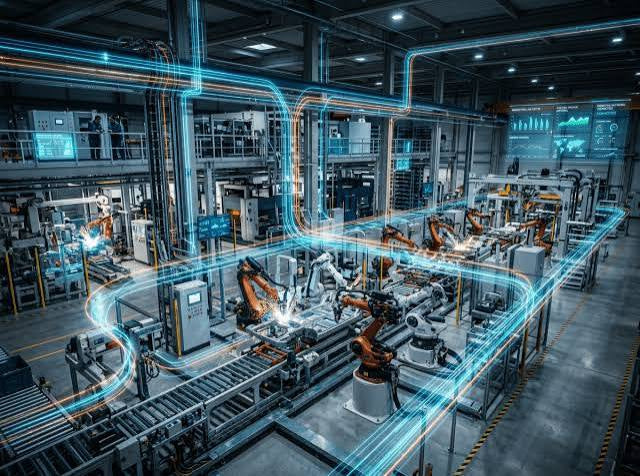
Schneider’s EcoStruxure platform acts as the digital spine for modern data centres. This IoT-enabled architecture connects automation tools, energy analytics, and remote operations under one framework. Within industrial automation, EcoStruxure integrates PLC and DCS systems to fine-tune power and thermal management. The company files over 1,400 patents annually, many focused on data centre innovation.
Grid Agility and Renewable Integration
Blum stressed that grid infrastructure must adapt to volatility and renewable integration. Schneider responds with microgrid advisors and real-time automation tools that balance fluctuating loads. In factory automation, such solutions ensure uptime while supporting sustainability targets. As a result, operators gain resilience without sacrificing efficiency.
Decarbonisation and Sustainability Leadership
Schneider reports a 75% reduction in Scope 1 and 2 emissions since 2017, validated by the Science Based Targets initiative. However, Scope 3 emissions remain challenging. To address this, Schneider launched the Zero Carbon Project for suppliers and the Materialize programme for customer efficiency. These initiatives reinforce trustworthiness and long-term sustainability.
SE Ventures and Innovation Ecosystem
Through SE Ventures, valued at over US$1bn, Schneider invests in start-ups developing green technologies. Many focus on energy storage, cooling, and grid software that directly benefit data centres. In addition, Schneider’s ecosystem includes over one million professionals—from electricians to system integrators—who implement industrial automation solutions globally.
Author’s Commentary: Industrial Automation Meets AI Era
Schneider’s strategy reflects a pragmatic view: energy demand will continue rising, especially in AI-heavy applications. Suppressing demand is unrealistic; instead, technology must mitigate environmental impact. In my view, Schneider’s emphasis on software-defined power and AI-enhanced cooling aligns with broader industrial automation trends. Companies that integrate PLC, DCS, and control systems with digital platforms will gain competitive advantage in efficiency and sustainability.
Application Scenarios and Solutions
-
Hyperscale Data Centres: Deploy EcoStruxure for real-time monitoring and predictive maintenance.
-
Factory Automation: Integrate PLC and DCS systems with microgrid advisors to balance renewable energy loads.
-
Smart Buildings: Use AI-driven controllers to reduce HVAC energy consumption.
-
Edge Data Centres: Apply liquid cooling systems to manage high-density workloads efficiently.