










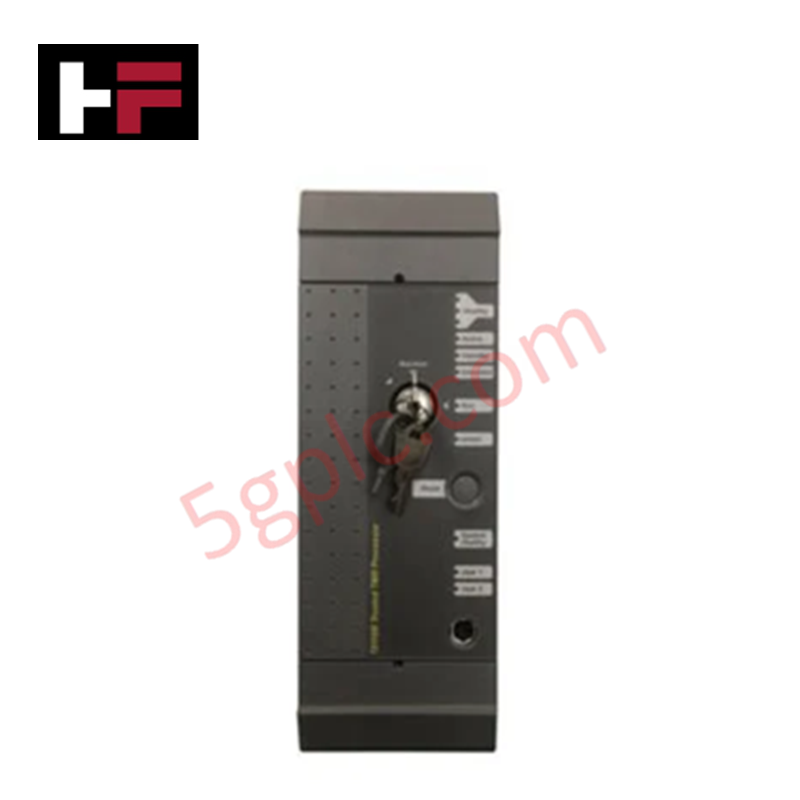
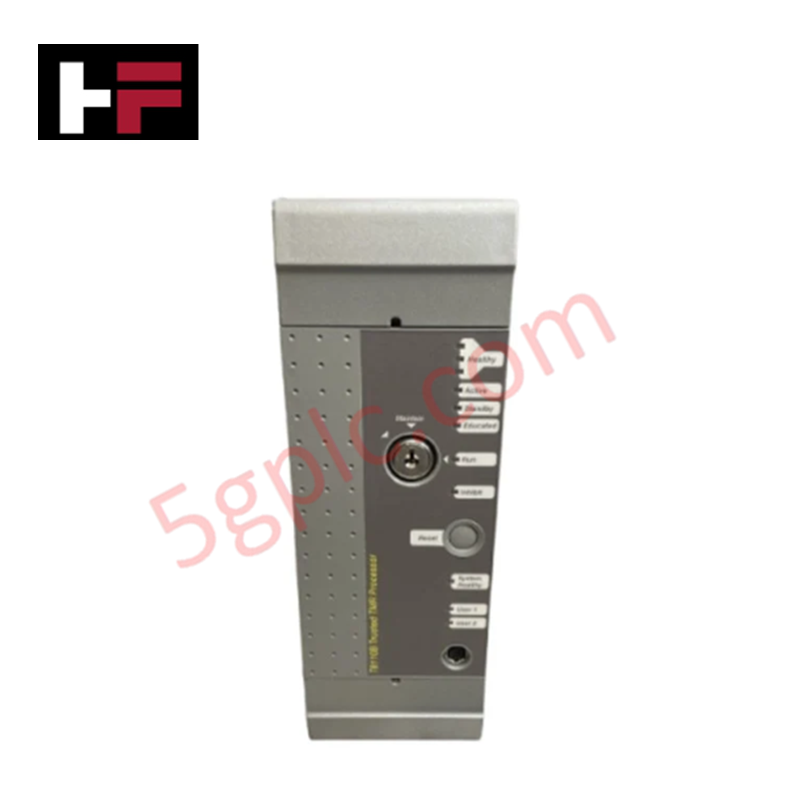
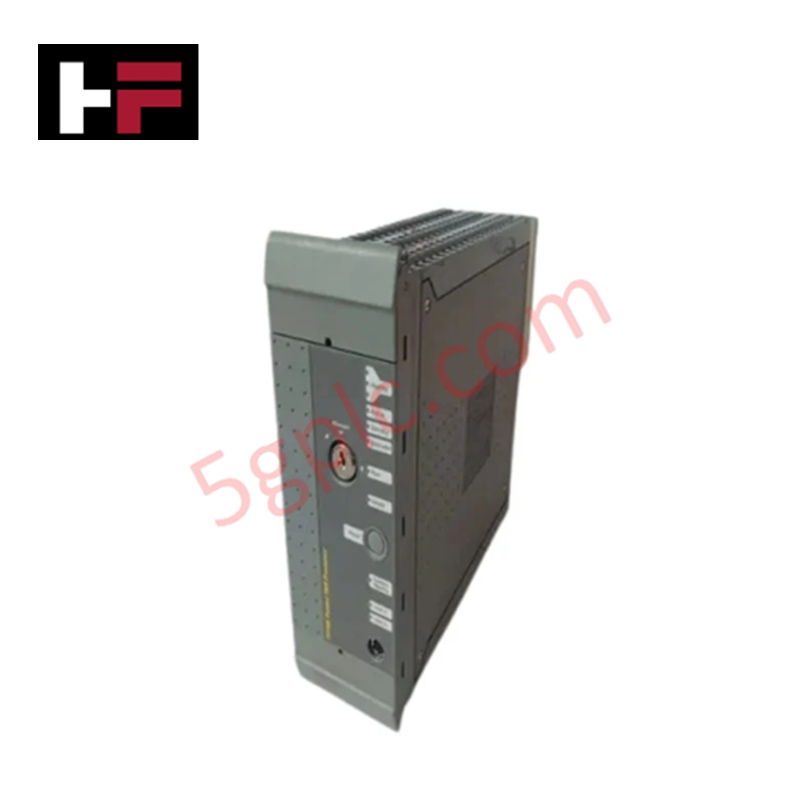
Product Details
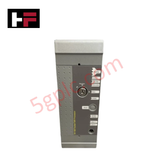
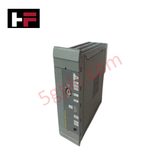
The ICS Triplex T8110B, also cataloged as the T8110B Trusted TMR Processor Module, operates as a dedicated hardware component for safety logic execution within T8100 chassis platforms. Executing logic across a triple redundant Inter-Module Bus, the unit processes application code via a 100 MHz clock rate paired with 16 MB EDO DRAM and 128 kB NVRAM variable memory.
Hardware Specifications
| Parameter | Specification |
|---|---|
| Model | T8110B |
| Brand | ICS Triplex |
| Origin | United Kingdom |
| Weight | 2.94 kg (6.48 lb) |
| Dimensions | 266 mm x 93 mm x 303 mm (10.5 in x 3.6 in x 12.0 in) |
| Operating Temp | 0 deg C to +60 deg C (+32 deg F to +140 deg F) |
| Power Consumption | 80 W Maximum Load (Heat Dissipation: 80 W) |
| Voltage Range | 20 VDC to 32 VDC |
| Compatible Chassis | T8100 |
| Processor Clock | 100 MHz |
| Memory Configuration | 16 MB EDO DRAM (60 ns), 2 MB FLASH, 512 kB EPROM, 128 kB NVRAM |
| SOE Buffer Capacity | 1000 events (transfers to CI buffer of 4000 events) |
| Retained Variable Storage | Booleans: 1 byte, Analogues: 4 bytes, Timers: 5 bytes |
| I/O Interface | Triple redundant Inter-Module Bus |
| Relative Humidity | 10% to 95% non-condensing |
High-Reliability Safety Control & TMR Architecture
The T8110B implements a triple modular redundancy (TMR) 2oo3 architecture to satisfy SIL3 certification criteria across high-availability safety applications. Fault-tolerant processing circuits execute synchronized 2oo3 voting across internal bus lanes, guaranteeing fail-safe state execution without interruption to active control loops. Galvanic isolation throughout system interfaces prevents localized electrical transients from crossing bus boundaries, maintaining determinism during high-density I/O scan cycles.
Frequently Asked Questions
Q: How are retained variables allocated within the T8110B non-volatile memory structure?
A: Retained variable memory uses specific footprint allocations: 1 byte per Boolean variable, 4 bytes per Analogue variable, and 5 bytes per Timer variable within the 128 kB NVRAM space.
Q: What is the sequence of events (SOE) storage architecture on the processor module?
A: The T8110B maintains an onboard SOE buffer capacity of 1000 events, which automatically transfers logged event records to a Communications Interface (CI) buffer capable of storing up to 4000 events.
Q: Can the T8110B processor module be deployed in secondary expansion chassis?
A: No. The T8110B processor module is designed specifically for operation inside the primary T8100 system chassis.
Field Installation Guidelines
- Ensure the T8100 chassis backplane power is verified within the 20 VDC to 32 VDC supply tolerance before inserting the module.
- Torque the top and bottom chassis module retention screws to ensure positive frame ground contact and mechanical latching to the backplane connectors.
- Maintain unrestricted vertical airflow above and below the T8100 chassis slot to dissipate up to 80 W of thermal load during full logic processing.
- Verify system earthing connections to mitigate high-frequency ground noise that could affect time synchronization across the triple redundant bus.
Additional Information
- 100% Genuine Parts: All products are original and authentic, ensuring reliable industrial performance.
- 30-Day Refund Guarantee: Return any in-stock item within 30 days in original, unopened packaging for a full refund (excluding shipping and fees).
- 12-Month Warranty: Covers defects in materials or workmanship; excludes misuse, normal wear, or unauthorized modifications.
- Worldwide Shipping: We ship via USPS, UPS, FedEx, and DHL. Delivery times vary by country and may be subject to customs or import fees.
- Support & Contact: Technical and warranty assistance is available anytime. Contact us here: Contact.
- Purchase Guidance: Check product specifications and compatibility carefully before ordering to ensure proper application.


Tech & Buying Guide

Master Acceptance Testing: Understanding FAT and SAT in Industrial Control Systems
Factory Acceptance Testing (FAT) and Site Acceptance Testing (SAT) serve as critical quality assurance gateways in complex industrial control systems. Both procedures verify that programmable logic controllers (PLCs), distributed control systems (DCS), and associated field devices meet strict functional specifications. However, executing these tests effectively requires clear delineation between off-site staging and final field commissioning.

Industrial Networking Essentials: Demystifying Hubs, Switches, and Routers in Control Systems
Industrial automation relies heavily on robust networking infrastructure to connect programmable logic controllers (PLCs), distributed control systems (DCS), and human-machine interfaces (HMIs). Modern factory automation environments generate vast amounts of real-time operational data across deterministic networks. Understanding the structural differences between hubs, switches, and routers ensures optimal traffic segmentation, minimizes latency, and maintains high network availability.

Safety Relays in Industrial Automation: Fundamentals, Design Standards, and Fail-Safe Architecture
Safety relays form the bedrock of functional safety in modern factory automation, preventing catastrophic equipment failure and protecting plant personnel. While standard electromechanical relays handle basic load switching, they lack the redundant diagnostics required for high-risk industrial environments. Modern industrial automation platforms—including programmable logic controllers (PLCs) and distributed control systems (DCS)—rely on specialized safety relays to monitor field devices and isolate hazards instantly.