










Product Details
Product Overview
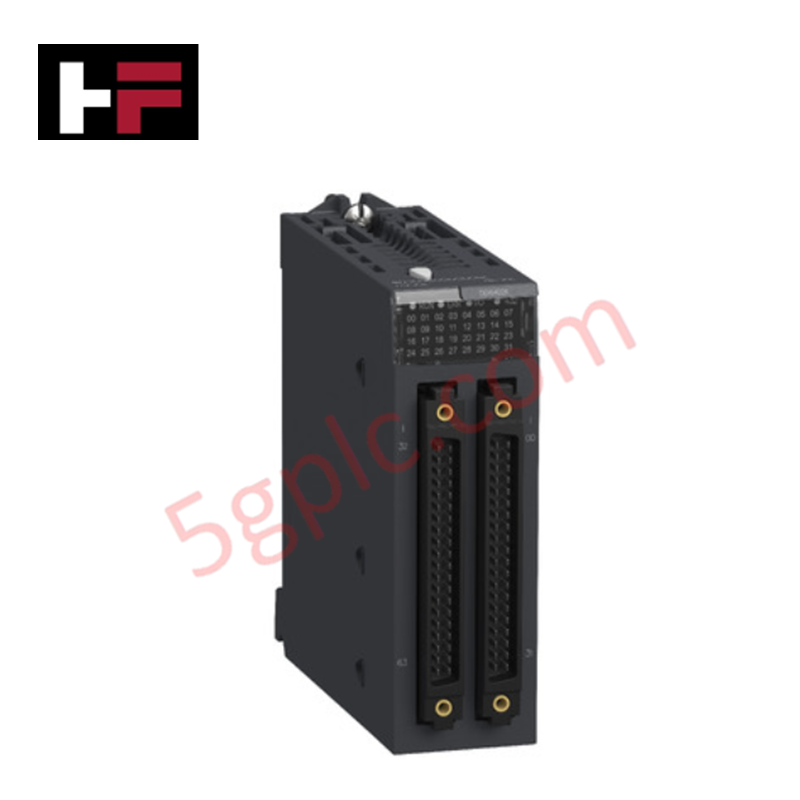
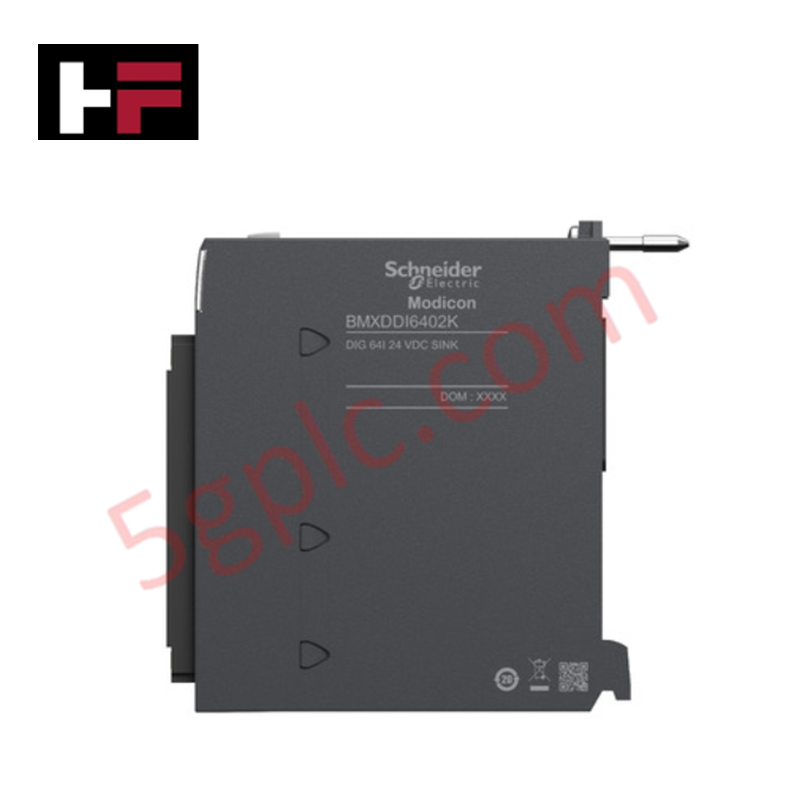
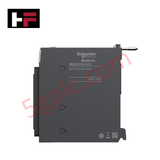
The Schneider Electric BMXDDI6402K provides ultra-high-density digital signal acquisition within the Modicon X80 PAC (Programmable Automation Controller) hardware platform. This 64-channel discrete input module aggregates extensive arrays of 24 V DC field signals from push-buttons, limit switches, proximity sensors, and safety interlocks. By consolidating 64 isolated points into a single chassis slot using positive (sink) logic, this module drives complex sequence tracking and distributed control systems in massive automotive assembly lines, baggage handling facilities, and power generation plants.
Technical Specifications
| Parameter | Technical Specification Data |
| Manufacturer | Schneider Electric |
| Model | BMXDDI6402K |
| Range of Product | Modicon X80 |
| Product Type | Ultra-High Density Discrete Input Module |
| Condition | 100% Brand New Original |
| Discrete Input Number | 64 isolated channels |
| Nominal Input Voltage | 24 V DC (Isolated) |
| Discrete Input Logic | Positive logic (Sink) |
| Discrete Input Current | 0.6 mA at 24 V DC |
| Input Impedance | 40,000 Ohm |
| Voltage State 1 Guaranteed | >= 15 V DC |
| Voltage State 0 Guaranteed | <= 4 V DC |
| Signal Response Times | 4 ms typical / 7 ms maximum |
| Bus Galvanic Isolation | 1500 V DC for 1 minute between channels and bus |
| Typical Current Draw | 160 mA at 24 V DC |
| Maximum Power Dissipation | 4.3 W |
| Mean Time Between Failures | 510,000 Hours (MTBF) |
| Physical Dimensions | 5.3 x 1.3 x 3.4 in (134.6 x 32 x 86 mm) |
| Product Net Weight | 0.320 lb (0.145 kg) |
Engineering Advantages
-
Maximum Cabinet Space Optimization: High-I/O process lines typically demand extensive mounting real estate, driving up cabinet infrastructure costs. The BMXDDI6402K packs 64 independent digital inputs into a single 1.3-inch (32 mm) module width. This ultra-high-density layout allows engineers to double the input capacity of a standard rack, eliminating extra backplanes and shrinking the overall enclosure footprint.
-
Low-Current Thermal Efficiency: High-density cards often generate significant internal heat when multiple channels activate simultaneously. Operating with a low current draw of just 0.6 mA per channel and a high 40,000 Ohm input impedance, this card limits its total power dissipation to 4.3 W. This low thermal signature prevents localized hot spots within sealed control cabinets, extending the operational life of surrounding components.
-
Live Backplane Interruption Immunity: Critical continuous-process environments cannot tolerate system shutdowns for routine hardware maintenance. The module features full hot-swapping functionality backed by a robust fallback mechanism. Field technicians remove and replace a faulted module under live-rack voltage conditions without triggering backplane communication drops or destabilizing active control loops.
-
Advanced Sensor Power Supervision: Floating ground issues or dropping external power supplies cause erratic logic state reads. The module integrates real-time voltage detection circuitry that tracks the field sensor supply lines. It triggers an automatic sensor fault flag when voltage falls below 14 V DC and verifies safe field parameters only when the supply clears 18 V DC.
-
High-Voltage Galvanic Isolation Protection: Inductive line switching and ground loops can propagate destructive electrical noise to the core processor. The BMXDDI6402K withstands a 1500 V DC isolation barrier for one minute between the field circuitry and the internal backplane bus, blocking transient voltage spikes from reaching the primary PAC processor.
FAQs
-
Is this BMXDDI6402K input module a brand new original unit?
Yes. We sell this product strictly as a 100% brand new, original factory unit. It ships in the original Schneider Electric packaging, completely unaltered, and includes all factory warranties and engineering data sheets.
-
What type of terminal blocks or connectors does this 64-channel module require?
Due to the ultra-dense 64-point configuration, this module does not use traditional screw terminal blocks. Instead, it utilizes high-density multi-pin connectors on the front panel. It requires specialized pre-formed wiring harnesses or Telefast breakout cables to distribute the 64 channels to standard terminal strips.
-
How do technicians view channel diagnostics with so many points on one card?
The front panel optimizes space via a multi-tier local signaling LED array. It houses a green RUN LED, a red module error (ERR) LED, and a red I/O fault LED alongside a channel diagnostic layout. It includes a green "+32 channels indicator" LED that toggles the display focus between the first group of 32 channels and the second group of 32 channels.
-
Can I wire two different sensors in parallel into a single input channel?
No. The technical design of this module explicitly forbids the paralleling of inputs. Paralleling sensors changes the channel input impedance profile, which prevents the internal optocouplers from accurately detecting the guaranteed State 1 (>= 15 V) and State 0 (<= 4 V) voltage levels.
Additional Information
- 100% Genuine Parts: All products are original and authentic, ensuring reliable industrial performance.
- 30-Day Refund Guarantee: Return any in-stock item within 30 days in original, unopened packaging for a full refund (excluding shipping and fees).
- 12-Month Warranty: Covers defects in materials or workmanship; excludes misuse, normal wear, or unauthorized modifications.
- Worldwide Shipping: We ship via USPS, UPS, FedEx, and DHL. Delivery times vary by country and may be subject to customs or import fees.
- Support & Contact: Technical and warranty assistance is available anytime. Contact us here: Contact.
- Purchase Guidance: Check product specifications and compatibility carefully before ordering to ensure proper application.


Tech & Buying Guide

Mastering the Siemens PLC Scan Cycle: How the CPU Executes Automation Programs
Industrial automation relies heavily on programmable logic controllers (PLCs) to manage complex manufacturing processes. Many engineers dive straight into programming without mastering the underlying architecture. However, understanding how a PLC CPU executes a program ensures reliable system design. Therefore, mastering the scan cycle optimizes both performance and troubleshooting in modern control systems.

How to Connect to Siemens S7 PLCs: 5 Essential Communication Methods
Establishing a reliable hardware link between a programming terminal and a Siemens SIMATIC controller is essential for engineering workflows. Field engineers rely on distinct physical layers, ranging from legacy serial connections to high-speed Industrial Ethernet protocols. Modern factory automation environments prioritize fast data transfer and seamless driver integration. Selecting the correct connection method simplifies program downloads, online monitoring, and system troubleshooting in complex control systems.

Will PLCs Become Obsolete? The Future of Control Systems in Industry 4.0
Modern manufacturing is undergoing a rapid technological transformation driven by Industry 4.0 innovations. Technologies like Artificial Intelligence (AI), Machine Learning (ML), and the Industrial Internet of Things (IIoT) are dominating discussions across the factory automation sector. Consequently, many engineers wonder if these advanced digital tools will eventually replace traditional Programmable Logic Controllers (PLCs). However, evaluating the core physics of industrial operations reveals a very different reality for control systems.