












Product Details
The Yokogawa NFBU050-S15, also cataloged as the NFBU050 Base Module, operates as a dedicated hardware component for mechanical support and backplane electrical connectivity within FCN-RTU low-power autonomous controllers and CENTUM VP platforms.
Hardware Specifications
| Parameter | Specification |
|---|---|
| Model | NFBU050-S15 |
| Brand | Yokogawa |
| Origin | Japan |
| Weight | 1.5 kg |
| Dimensions | 130 x 142.5 x 65.8 mm |
| Operating Temp | -20 to +70 deg C |
| Power Consumption | Passive backplane backplane bus distribution |
| Product Type | Short Base Module |
| Altitude Rating | Operational up to 3000 m |
| System Compatibility | Yokogawa FCN-RTU and CENTUM VP systems |
| Module Capacity | Supports up to 3 I/O modules with NFCP050 CPU |
| Mounting Options | DIN rail or 19-inch rack mounting |
Process Control & DCS Integration Characteristics
The backplane bus architecture of the NFBU050-S15 routes local power lines and high-speed communication signals between the CPU and expansion modules. Channel-to-channel isolation on mounted I/O modules prevents ground loops across the backplane bus, maintaining signal integrity across the internal communication channels. The module's passive bus traces maintain balanced signal paths across the entire assembly.
Frequently Asked Questions
Q: What is the maximum module capacity hosted on the NFBU050-S15 base?
A: When populated with an NFCP050 CPU module, the short base module supports direct backplane connection for up to three I/O expansion modules.
Q: What structural mounting methods are supported for panel assembly?
A: The hardware supports standard DIN rail snapping or direct 19-inch rack enclosure mounting via structural alignment slots.
Field Installation Guidelines
- Mechanical Mounting: Secure the base module to a standardized 35 mm DIN rail or 19-inch rack frame. Ensure the DIN-rail locking mechanism is fully engaged to prevent lateral displacement under industrial vibration.
- Backplane Protection & Module Insertion: Align CPU and I/O module multi-pin backplane connectors carefully before pushing them into the base module slots. Keep unused backplane connector slots covered to prevent particulate contamination.
- Earthing and Grounding: Connect the functional earth terminal of the base module directly to the main cabinet earthing bar using a low-impedance copper wire. Maintain single-point earthing to avoid ground loops across the system bus.
Additional Information
- 100% Genuine Parts: All products are original and authentic, ensuring reliable industrial performance.
- 30-Day Refund Guarantee: Return any in-stock item within 30 days in original, unopened packaging for a full refund (excluding shipping and fees).
- 12-Month Warranty: Covers defects in materials or workmanship; excludes misuse, normal wear, or unauthorized modifications.
- Worldwide Shipping: We ship via USPS, UPS, FedEx, and DHL. Delivery times vary by country and may be subject to customs or import fees.
- Support & Contact: Technical and warranty assistance is available anytime. Contact us here: Contact.
- Purchase Guidance: Check product specifications and compatibility carefully before ordering to ensure proper application.


Tech & Buying Guide
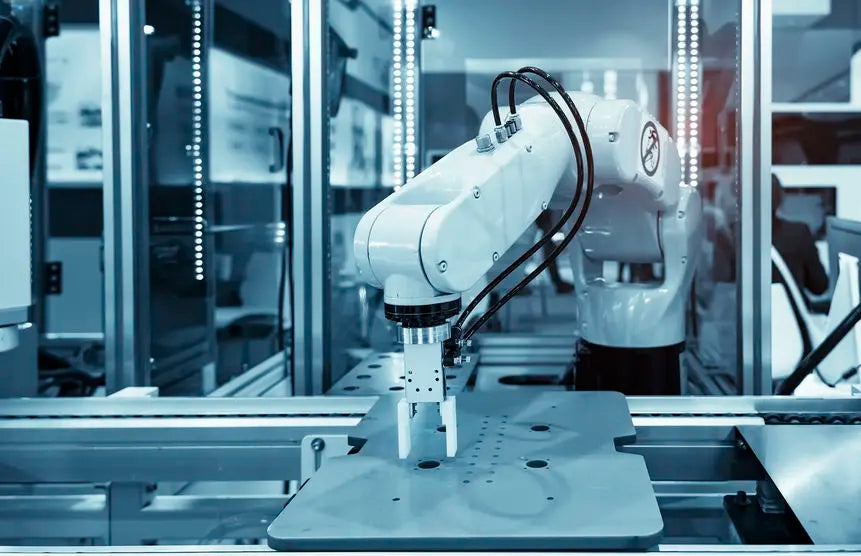
Comprehensive Guide to PLC Types in Modern Industrial Automation
Modern industrial automation relies on programmable logic controllers to govern critical factory operations. System integrators classify PLCs based on scale, hardware architecture, and power supply design. Understanding these core categories enables automation engineers to select the right control system architecture. Consequently, proper hardware selection optimizes performance while minimizing long-term operational costs.

Demystifying the DDE Protocol in Legacy Industrial Automation Systems
Modern control systems rely heavily on seamless interprocess communication to exchange operational data between software programs. Microsoft first introduced the Dynamic Data Exchange (DDE) protocol in 1987 to enable real-time data sharing. In factory automation, DDE served as an early bridge between control software and Windows desktop applications. Therefore, understanding DDE mechanics provides crucial insights into how legacy industrial networks established software-level connectivity.

Demystifying CPU Communication Ports in Siemens PLC Architectures
Industrial automation relies heavily on robust data exchange between devices. Without seamless connectivity, field instruments, network switches, human-machine interfaces, and programmable logic controllers cannot coordinate effectively. Therefore, understanding the various CPU communication ports available in Siemens hardware ensures efficient factory automation design and seamless system integration.