












Product Details
Product Overview
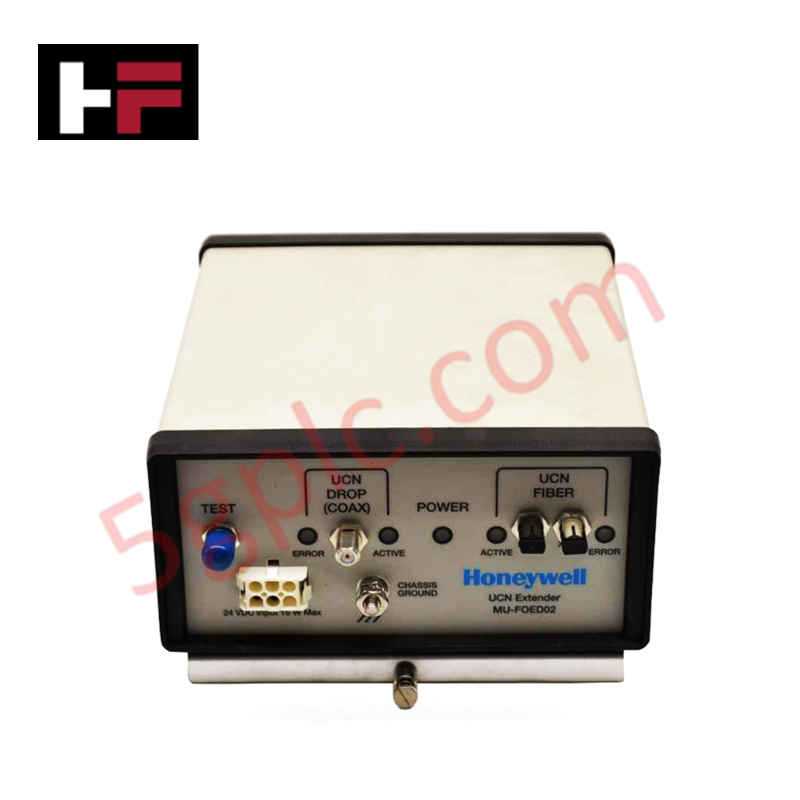
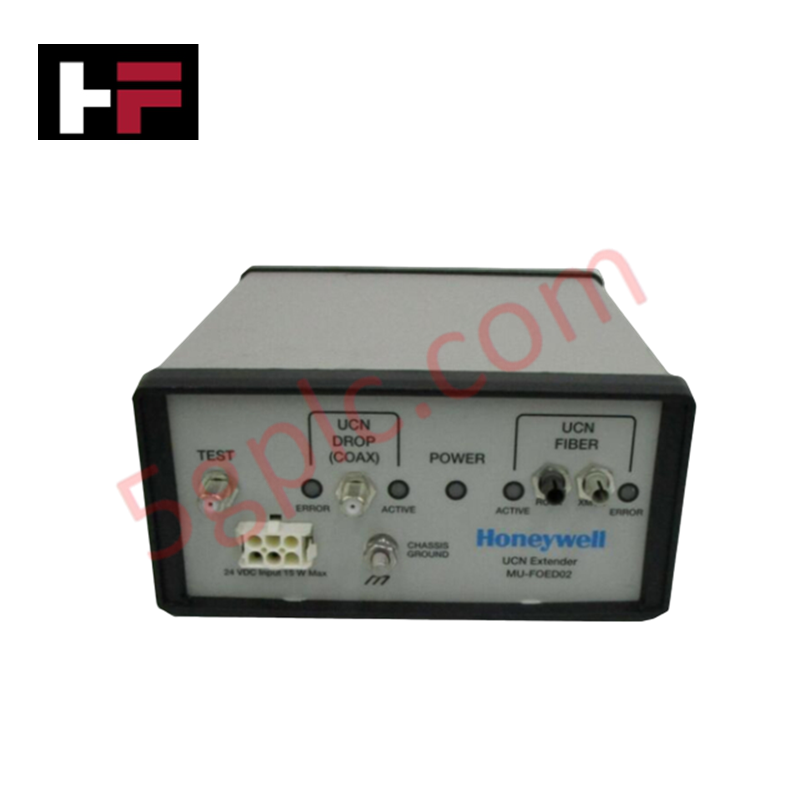
The Honeywell MU-FOED02 (Part Number: 51197564-200) serves as a high-performance Fiber Optic Signal Extender designed for large-scale industrial control networks. It converts electrical signals into optical pulses to facilitate long-distance data transmission across the Universal Control Network (UCN) or Data Hiway. This module eliminates the distance limitations of copper cabling while providing total immunity to ground loops. We supply this unit as 100% Brand New Original equipment to ensure maximum network backbone stability.
Technical Specifications
The MU-FOED02 utilizes precision optics to maintain signal integrity over extended spans:
| Feature | Specification Details |
| Manufacturer | Honeywell (USA) |
| Model Number | MU-FOED02 |
| Part Number | 51197564-200 |
| Function | Fiber Optic Signal Extension / Conversion |
| Weight | 2.86 kg (6.3 lbs) |
| Dimensions | 25 cm x 10 cm x 8 cm |
| Housing Material | Industrial-Grade Ruggedized Chassis |
| Country of Origin | USA |
| Condition | 100% Brand New Original |
Engineering Advantages
-
Total EMI/RFI Immunity: By utilizing fiber optic media, the MU-FOED02 shields your control signals from electromagnetic interference. This allows for safe signal routing through high-voltage switchgear rooms and areas with heavy motor activity without data corruption.
-
Distance Extension: This module overcomes the physical limitations of standard coaxial or twinaxial cables. It enables the connection of remote I/O racks and control stations located kilometers away from the central processor.
-
Ground Loop Elimination: The optical isolation provided by the MU-FOED02 prevents electrical current from flowing between different plant grounding systems. This protects sensitive controller electronics from damage during lightning strikes or power surges.
-
Heat Dissipation Design: Despite its significant 2.86 kg mass and rugged chassis, the unit manages thermal loads efficiently within standard control cabinets, ensuring continuous 24/7 operation in demanding process environments.
FAQs
-
Does this extender require specific fiber cable types?
The MU-FOED02 typically interfaces with standard industrial multi-mode fiber. For optimal performance and to meet Honeywell's decibel (dB) loss budget specifications, ensure your fiber terminations meet the required polish and connector standards defined in the TDC 3000 installation manual.
-
Can the MU-FOED02 replace older copper-based repeaters?
Yes. Engineers frequently use this module to upgrade legacy copper segments to fiber optics. This transition improves network reliability and provides a more robust infrastructure for high-speed data traffic.
-
What are the primary installation requirements for this module?
Mount the unit securely within a standard Honeywell FTA mounting channel or cabinet. Ensure the fiber optic bend radius adheres to manufacturer limits to prevent signal attenuation or physical damage to the glass core.
-
Is this unit compatible with both TDC 3000 and Experion PKS?
Yes, this extender supports the signal translation required for various Honeywell control architectures that utilize UCN or similar high-level data links. Always verify your specific system topology before integration.
Additional Information
- 100% Genuine Parts: All products are original and authentic, ensuring reliable industrial performance.
- 30-Day Refund Guarantee: Return any in-stock item within 30 days in original, unopened packaging for a full refund (excluding shipping and fees).
- 12-Month Warranty: Covers defects in materials or workmanship; excludes misuse, normal wear, or unauthorized modifications.
- Worldwide Shipping: We ship via USPS, UPS, FedEx, and DHL. Delivery times vary by country and may be subject to customs or import fees.
- Support & Contact: Technical and warranty assistance is available anytime. Contact us here: Contact.
- Purchase Guidance: Check product specifications and compatibility carefully before ordering to ensure proper application.


Tech & Buying Guide
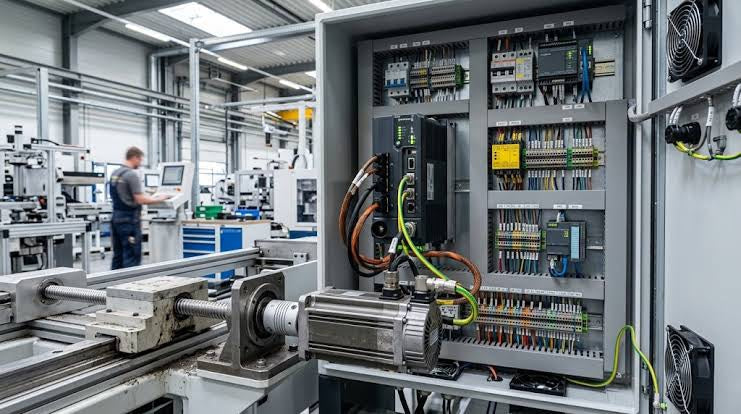
Demystifying Programmable Logic Controllers: Comprehensive Guide to PLC Classification and Selection in Industrial Automation
Modern industrial automation heavily relies on Programmable Logic Controllers (PLCs) to drive factory floor efficiency. Over my 15 years as an industrial automation expert working with DCS, TSI, and control systems, I have seen PLCs evolve into the central nervous system of modern manufacturing. Selecting the right controller requires a deep understanding of PLC types based on physical size, hardware architecture, and power supply configurations.
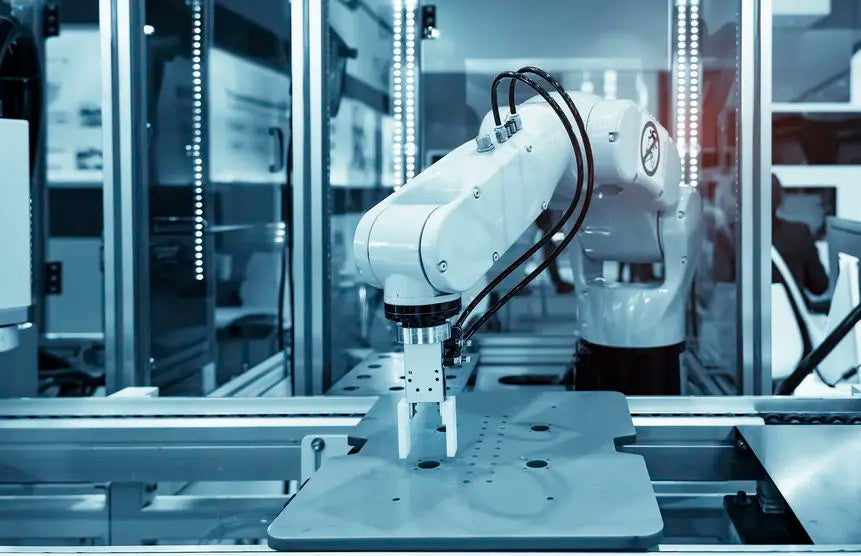
Comprehensive Guide to PLC Types in Modern Industrial Automation
Modern industrial automation relies on programmable logic controllers to govern critical factory operations. System integrators classify PLCs based on scale, hardware architecture, and power supply design. Understanding these core categories enables automation engineers to select the right control system architecture. Consequently, proper hardware selection optimizes performance while minimizing long-term operational costs.

Demystifying the DDE Protocol in Legacy Industrial Automation Systems
Modern control systems rely heavily on seamless interprocess communication to exchange operational data between software programs. Microsoft first introduced the Dynamic Data Exchange (DDE) protocol in 1987 to enable real-time data sharing. In factory automation, DDE served as an early bridge between control software and Windows desktop applications. Therefore, understanding DDE mechanics provides crucial insights into how legacy industrial networks established software-level connectivity.