











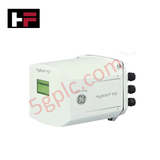
Product Details
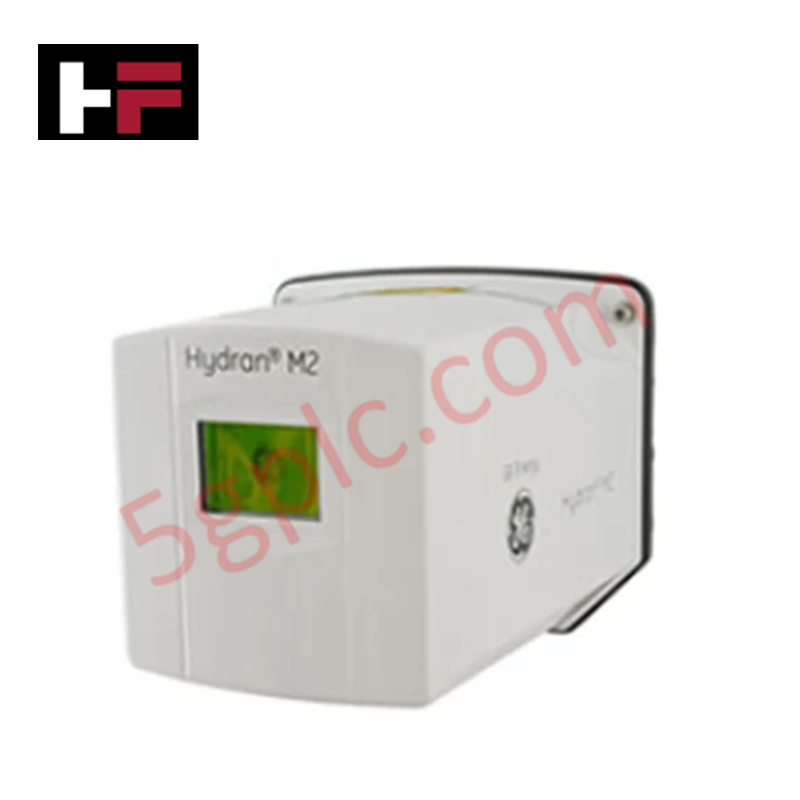
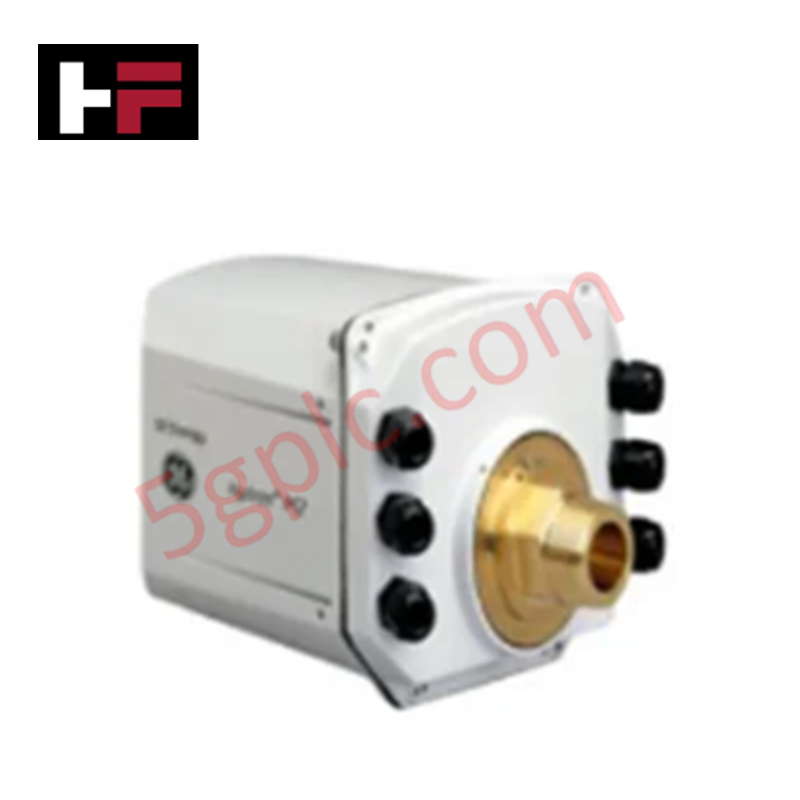
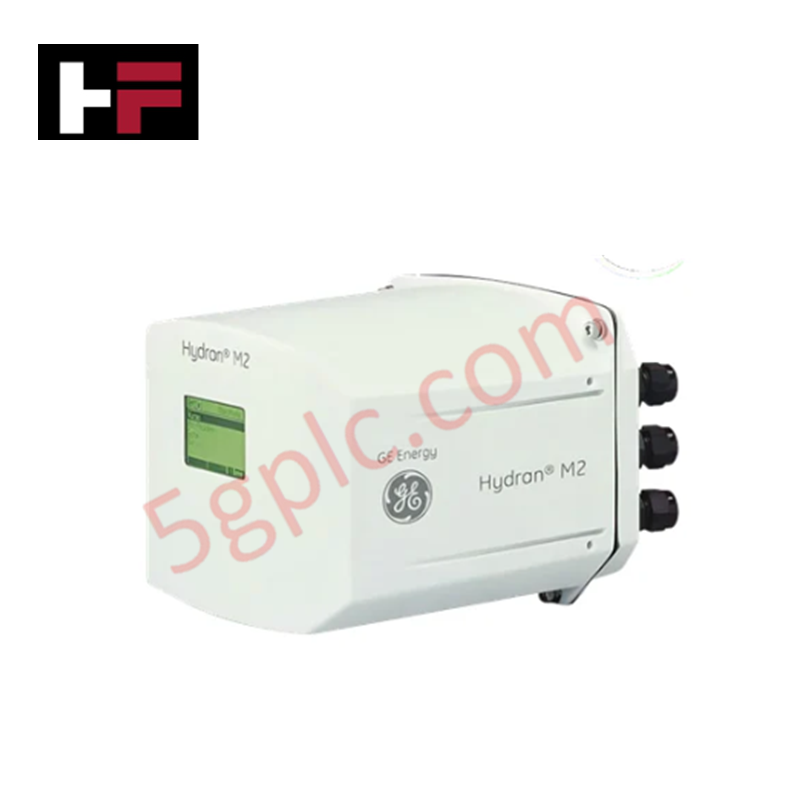
The GE Hydran M2, also cataloged as the HYDRANM2 Transformer Monitoring Device, operates as a dedicated hardware component for dissolved gas and moisture evaluation within mineral transformer insulating oil grids.
Hardware Specifications
| Parameter | Specification |
|---|---|
| Model | Hydran M2 (HYDRANM2) |
| Brand | GE |
| Origin | United States / Canada |
| Weight | Standard Hydran Chassis Profile Weight |
| Dimensions | Standard Valve-Mount Enclosure Footprint |
| Operating Temp | Ambient: -40 - +55 deg C; Oil at valve: -40 - +105 deg C |
| Power Consumption | Station Bus Power Dependent |
| Gas Sensor Type | Fuel cell type behind gas permeable membrane |
| Gas Measurement Range | 0 - 2000 ppm (V/V, H2 equivalent) |
| Gas Accuracy | +/- 10% of reading +/- 25 ppm |
| Moisture Sensor Type | Thin film capacitive |
| Moisture Measurement Range | 0 - 100% RH |
| Moisture Accuracy | +/- 2% RH |
| Local Interface | Backlit LCD (128 x 64 pixels) with configuration keypad |
| Digital Interfaces | Isolated RS-485 (2000 Vac RMS), RS-232 (DB-9) |
| Protocol Support | Hydran, Modbus, DNP 3.0 |
| Alarm Contact Relays | 5 Dry Contacts (Form C, SPDT), 3 A @ 250 VAC / 30 VDC |
Profinet / EtherNet/IP Deterministic Networks and Firmware Flash Compatibility
The system processes electrochemical and capacitive sensor potentials using integrated microprocessor logic to track outgassing trends and moisture boundaries. While remote asset management architectures interface locally via isolated RS-485 running Modbus or DNP 3.0, physical conversion adapters bridge these data structures over Profinet / EtherNet/IP deterministic networks. Maintaining uniform data registers requires verifying matching firmware flash compatibility rules across the monitoring node to ensure threshold alarms trip synchronously without processing delay anomalies.
Frequently Asked Questions
Q: Can the gas and moisture sensor module be hot-swapped under active oil pressure?
A: No. The internal fuel cell membrane is exposed to a flooded manifold under 0 - 700 KPa of oil pressure. The transformer mounting valve must be mechanically closed and the oil evacuated from the sampling block before servicing the sensor assembly to prevent hot fluid release.
Q: How do firmware flash compatibility updates affect the dry contact relay configurations?
A: Flashing the core firmware resets the internal registers governing the 5 Form C SPDT relays. Output behaviors for Gas Alert, Moisture Alarm, and Service faults must be mapped and read back against the configuration files post-flash to ensure fail-safe execution profiles are preserved.
Field Installation Guidelines
- Mechanical Valve Integration: Mount the device assembly directly onto the transformer tank valve block using the designated finned heat sink adapter option to maintain correct oil flow properties.
- Serial Cable Isolation Shielding: Route the RS-485 network lines through dedicated grounded conduits, validating that the 2000 Vac RMS galvanic isolation boundary is uncompromised by parallel high-voltage AC cables.
- Terminal Interface Torquing: Terminate the 3 A alarm contact wiring onto the terminal blocks using standard torque values to secure continuous continuity across the Form C relay junctions.
Additional Information
- 100% Genuine Parts: All products are original and authentic, ensuring reliable industrial performance.
- 30-Day Refund Guarantee: Return any in-stock item within 30 days in original, unopened packaging for a full refund (excluding shipping and fees).
- 12-Month Warranty: Covers defects in materials or workmanship; excludes misuse, normal wear, or unauthorized modifications.
- Worldwide Shipping: We ship via USPS, UPS, FedEx, and DHL. Delivery times vary by country and may be subject to customs or import fees.
- Support & Contact: Technical and warranty assistance is available anytime. Contact us here: Contact.
- Purchase Guidance: Check product specifications and compatibility carefully before ordering to ensure proper application.


Tech & Buying Guide

Demystifying the DDE Protocol in Legacy Industrial Automation Systems
Modern control systems rely heavily on seamless interprocess communication to exchange operational data between software programs. Microsoft first introduced the Dynamic Data Exchange (DDE) protocol in 1987 to enable real-time data sharing. In factory automation, DDE served as an early bridge between control software and Windows desktop applications. Therefore, understanding DDE mechanics provides crucial insights into how legacy industrial networks established software-level connectivity.

Demystifying CPU Communication Ports in Siemens PLC Architectures
Industrial automation relies heavily on robust data exchange between devices. Without seamless connectivity, field instruments, network switches, human-machine interfaces, and programmable logic controllers cannot coordinate effectively. Therefore, understanding the various CPU communication ports available in Siemens hardware ensures efficient factory automation design and seamless system integration.

Mastering the Siemens PLC Scan Cycle: How the CPU Executes Automation Programs
Industrial automation relies heavily on programmable logic controllers (PLCs) to manage complex manufacturing processes. Many engineers dive straight into programming without mastering the underlying architecture. However, understanding how a PLC CPU executes a program ensures reliable system design. Therefore, mastering the scan cycle optimizes both performance and troubleshooting in modern control systems.