










Product Details
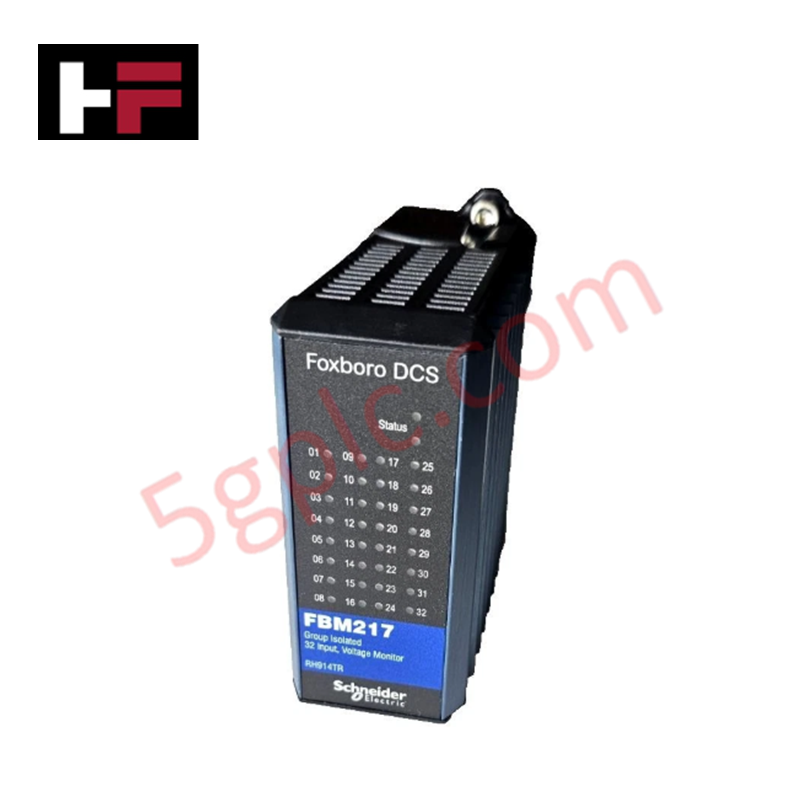
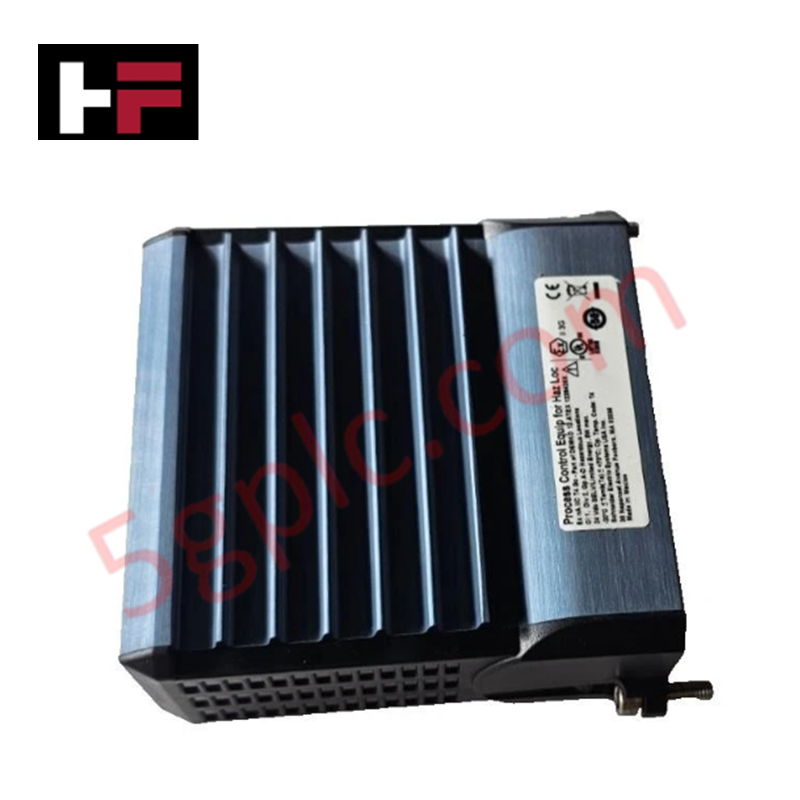
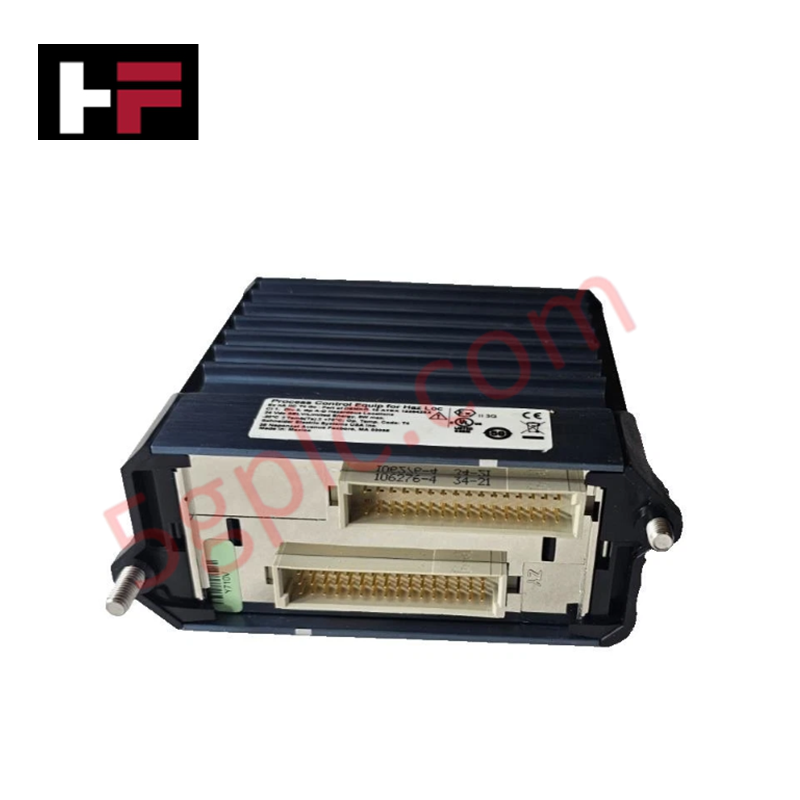
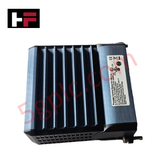
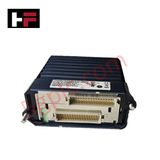
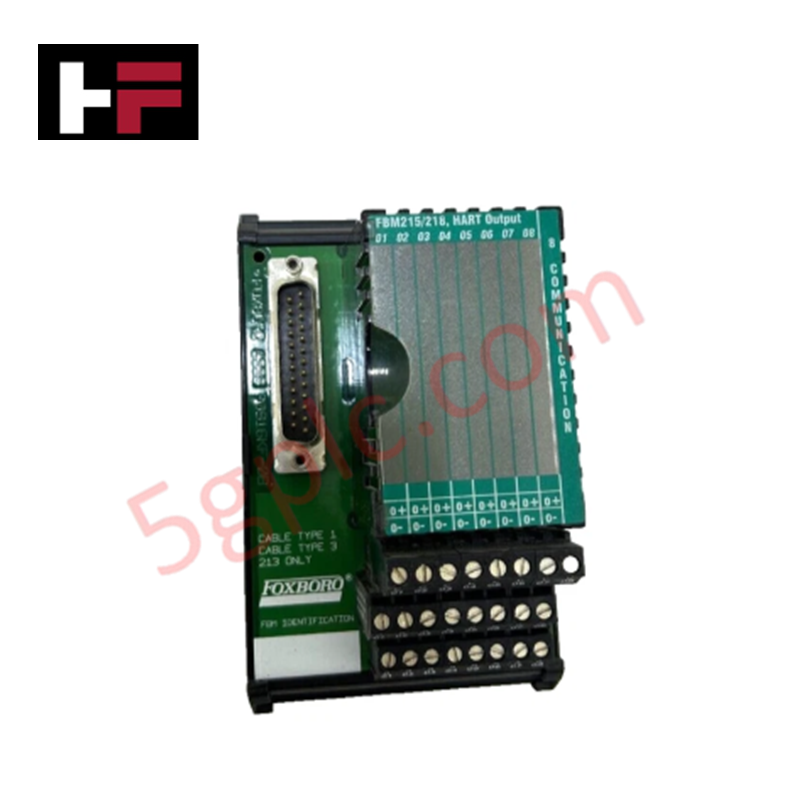
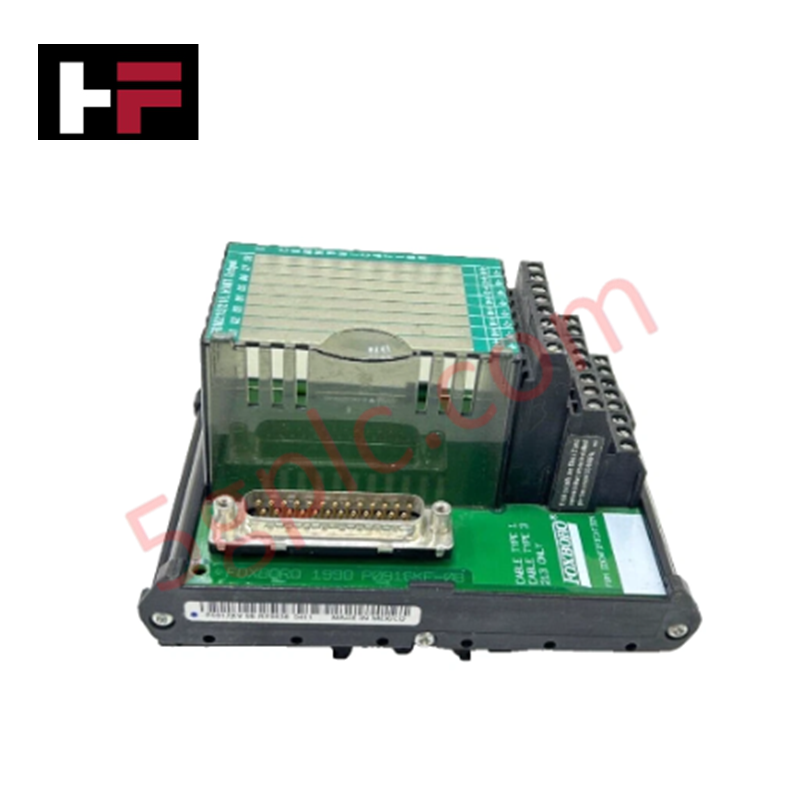
The Foxboro FBM217 RH916XZ, also cataloged as the FBM217 Discrete Input Module, operates as a dedicated hardware component for monitoring 32 channels of discrete field signals within EcoStruxure Foxboro DCS and I/A Series platforms.
Hardware Specifications
| Parameter | Specification |
|---|---|
| Model | FBM217 (RH916XZ) |
| Brand | Foxboro |
| Operating Temp | -20 deg C to +70 deg C |
| Power Consumption | Sourced from baseplate (24 VDC) |
| Input Channels | 32 isolated points |
| Input Type | 24 VDC Discrete / Dry Contact |
| Isolation | 2500 Vrms |
Process Instrumentation Connectivity and Isolation
The FBM217 employs channel-to-channel isolation architecture to prevent ground loop propagation between the field-side sensors and the system logic. Each of the 32 input channels is designed to accept 24 VDC signals, with operational thresholds defined at 15 to 30 VDC for "on-state" and 0 to 5 VDC for "off-state" logic levels. The module integrates configurable digital input filtering to mitigate transient electrical noise and mechanical contact bounce, ensuring high-fidelity signal acquisition. Furthermore, the 2500 Vrms galvanic isolation provides protection against potential field-side surges, maintaining the structural integrity of the DCS backplane communication.
Frequently Asked Questions
Q: Does the FBM217 support hot-swapping under energized conditions?
A: Yes. The module is engineered for hot-swappable replacement, allowing technicians to remove and replace the unit while the system is powered without interrupting the Field Control Processor (FCP) operations.
Q: How is redundancy managed for the FBM217?
A: The module supports fault-tolerant redundancy by pairing two FBM217 units. This configuration ensures continuous signal monitoring should a primary module encounter a hardware failure.
Field Installation Guidelines
- Baseplate Compatibility: The FBM217 is designed for mounting on modular 200 Series baseplates. Ensure the mechanical locking mechanism is fully engaged to establish a secure connection with the backplane bus.
- Signal Wiring: When connecting dry contacts or 24 VDC inputs, ensure the cable shielding is properly terminated to a common reference ground at the field termination assembly. This minimizes electromagnetic interference (EMI) that can influence the 2.2 mA nominal input current sensing.
- Environmental Sealing: Although rated for harsh temperatures from -20 deg C to +70 deg C, maintain adequate clearance in the cabinet to facilitate airflow around the module, ensuring the internal thermal dissipation is within nominal limits.
Additional Information
- 100% Genuine Parts: All products are original and authentic, ensuring reliable industrial performance.
- 30-Day Refund Guarantee: Return any in-stock item within 30 days in original, unopened packaging for a full refund (excluding shipping and fees).
- 12-Month Warranty: Covers defects in materials or workmanship; excludes misuse, normal wear, or unauthorized modifications.
- Worldwide Shipping: We ship via USPS, UPS, FedEx, and DHL. Delivery times vary by country and may be subject to customs or import fees.
- Support & Contact: Technical and warranty assistance is available anytime. Contact us here: Contact.
- Purchase Guidance: Check product specifications and compatibility carefully before ordering to ensure proper application.




Tech & Buying Guide

Demystifying the DDE Protocol in Legacy Industrial Automation Systems
Modern control systems rely heavily on seamless interprocess communication to exchange operational data between software programs. Microsoft first introduced the Dynamic Data Exchange (DDE) protocol in 1987 to enable real-time data sharing. In factory automation, DDE served as an early bridge between control software and Windows desktop applications. Therefore, understanding DDE mechanics provides crucial insights into how legacy industrial networks established software-level connectivity.

Demystifying CPU Communication Ports in Siemens PLC Architectures
Industrial automation relies heavily on robust data exchange between devices. Without seamless connectivity, field instruments, network switches, human-machine interfaces, and programmable logic controllers cannot coordinate effectively. Therefore, understanding the various CPU communication ports available in Siemens hardware ensures efficient factory automation design and seamless system integration.

Mastering the Siemens PLC Scan Cycle: How the CPU Executes Automation Programs
Industrial automation relies heavily on programmable logic controllers (PLCs) to manage complex manufacturing processes. Many engineers dive straight into programming without mastering the underlying architecture. However, understanding how a PLC CPU executes a program ensures reliable system design. Therefore, mastering the scan cycle optimizes both performance and troubleshooting in modern control systems.