










Product Details
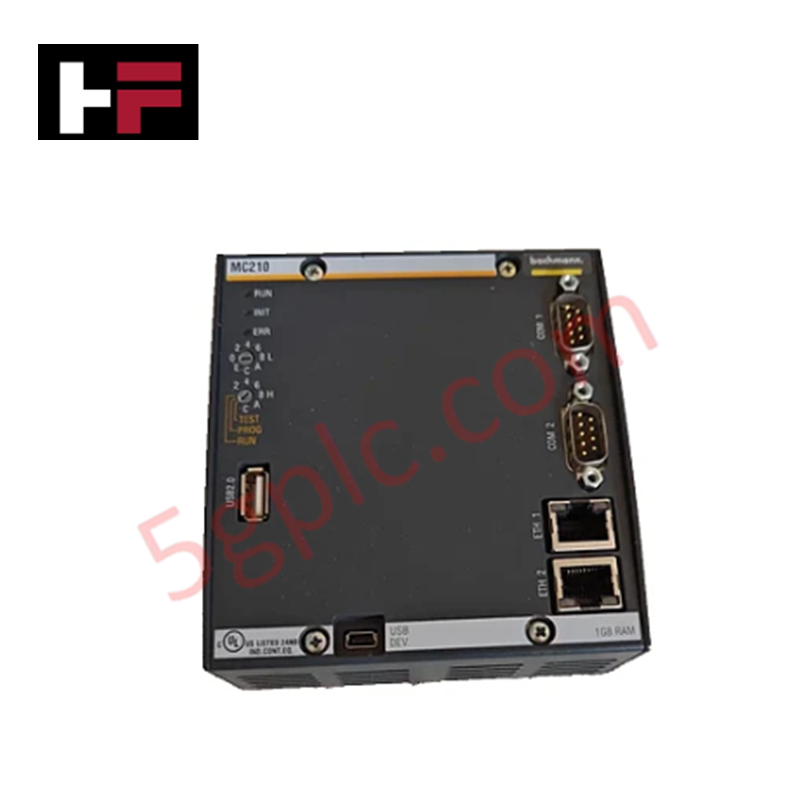
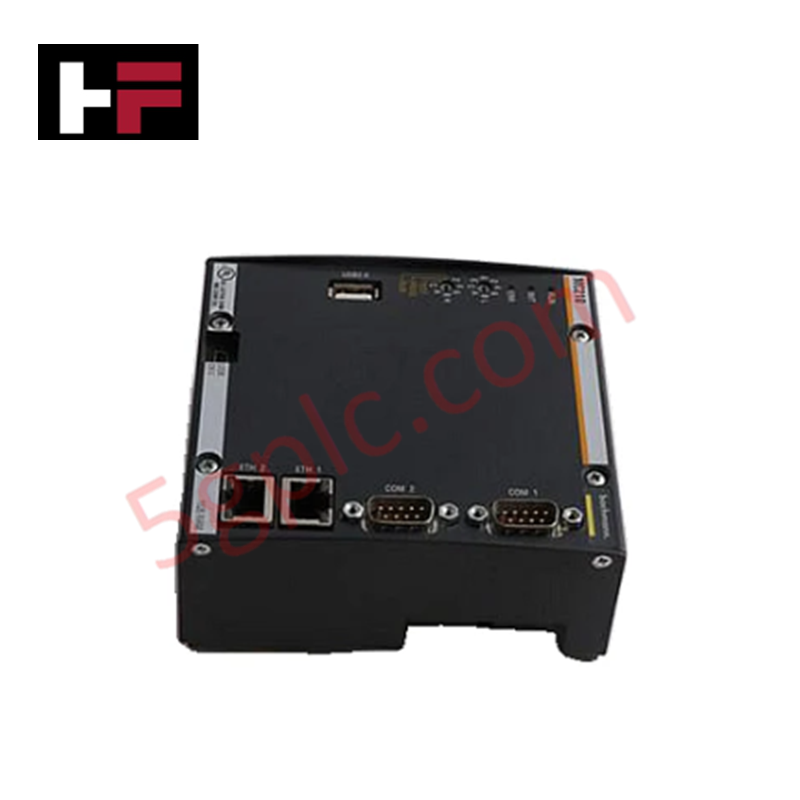
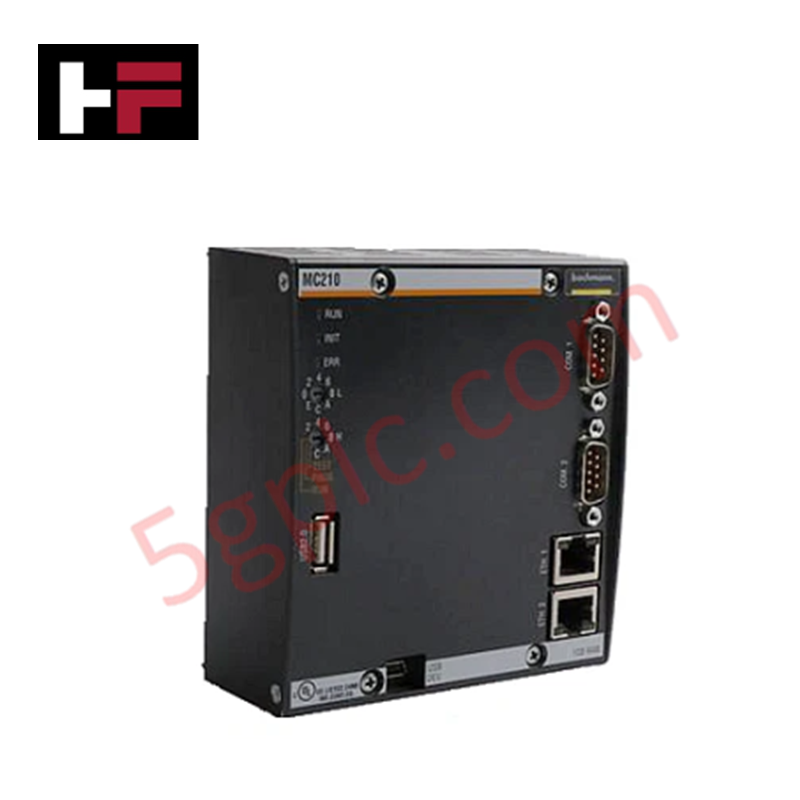
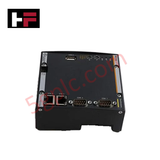
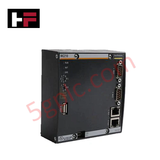
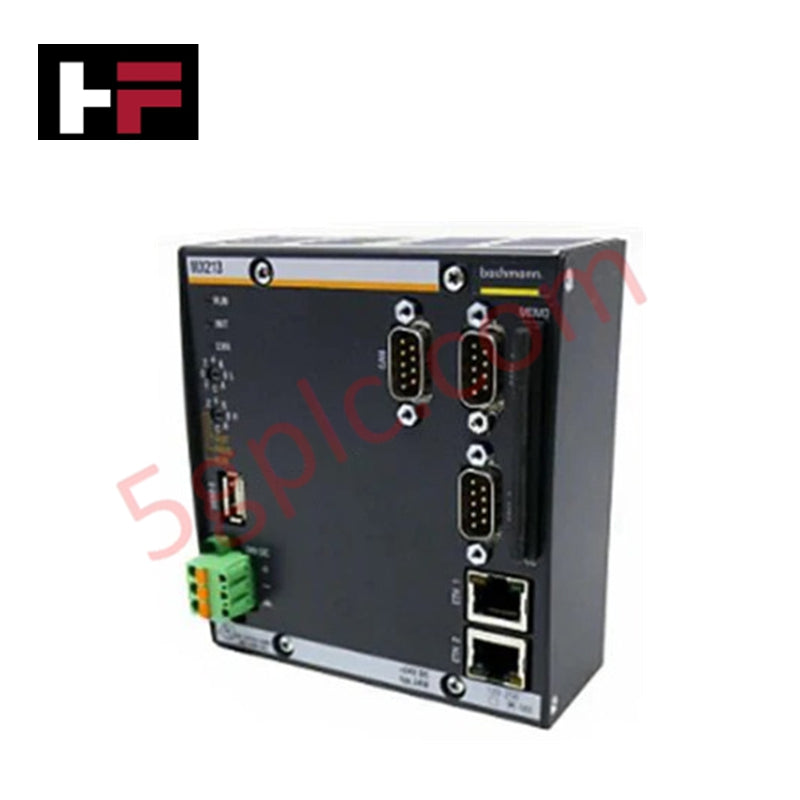
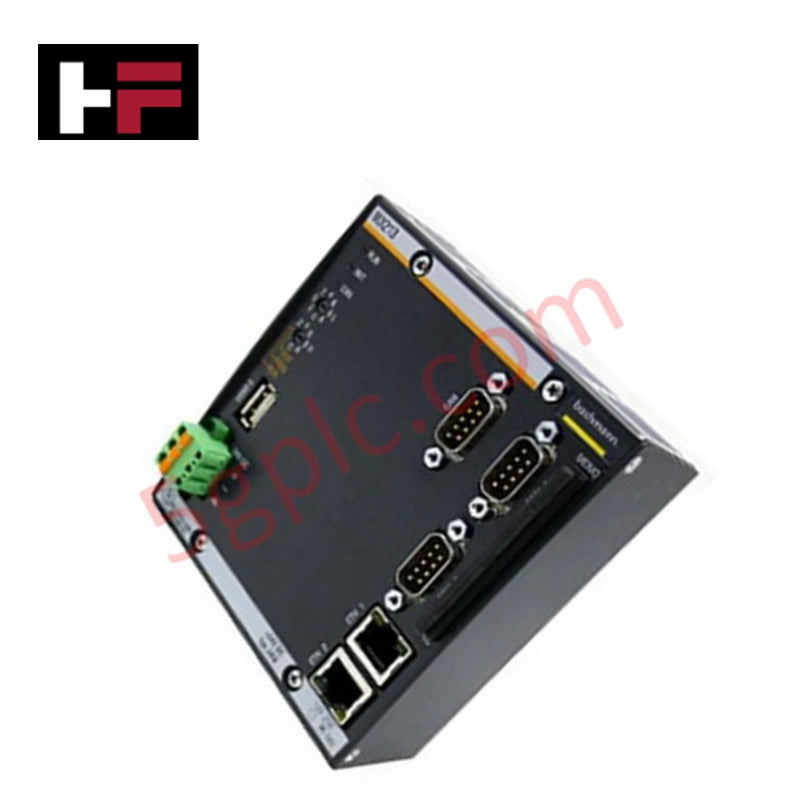
The Bachmann MC210, also cataloged as the MC210 CPU Module, operates as a dedicated hardware component for executing real-time control logic and process management within M-series automation platforms.
Hardware Specifications
| Parameter | Specification |
|---|---|
| Model | MC210 |
| Brand | Bachmann |
| Origin | Germany |
| Weight | Approx. 0.45 kg |
| Dimensions | Standard M-series module form factor |
| Operating Temp | -20 deg C to 60 deg C |
| Power Consumption | < 15 W |
| Processor | 1.6 GHz ATOM E680 |
| RAM | 1 GB DRAM DDR2 |
| Mass Storage | > 8 GB CFast |
| Interfaces | 2x Gigabit Ethernet (IEEE1588), 2x Serial, 2x USB |
Backplane bus communication velocity Licences
The Bachmann MC210 executes high-speed backplane bus communication to synchronize distributed I/O nodes and motion control peripherals. Through configurable firmware parameters, the module supports optimized bus throughput, ensuring deterministic data exchange aligned with M-series backplane cycle times. The integration of IEEE1588 precision time protocol across the dual Gigabit Ethernet interfaces enables sub-microsecond clock synchronization, which is required for multi-axis motion coordination and high-speed data acquisition. All bus communication protocols are managed via the internal process image controller to maintain strict cycle consistency across the local backplane.
Frequently Asked Questions
Q: Can the MC210 be hot-swapped while the backplane is powered?
A: No, the MC210 is not designed for live insertion or removal. The system must be fully powered down to prevent electrical arcing or damage to the backplane communication pins during module seating.
Q: Is the internal FLASH memory available for user-defined data logging?
A: No, the 64 MB internal FLASH is reserved for the application program and system runtime. For extended data logging and mass storage requirements, utilize the side-accessible CFast interface.
Q: How can I verify the communication velocity of the backplane bus?
A: Backplane bus statistics, including throughput and error rates, are accessible through the SolutionCenter configuration environment under the hardware diagnostic tab.
Field Installation Guidelines
- Mechanical Seating: Align the Bachmann MC210 module guides with the M-series backplane rack. Insert the module until the locking mechanism engages, ensuring firm contact with the backplane bus headers.
- Grounding Protocols: Ensure the controller chassis is connected to a common system ground. Utilize the module functional ground terminal to mitigate electromagnetic interference, particularly when operating in environments with high-frequency switching noise.
- Cabling Requirements: Use high-quality shielded twisted-pair (STP) cables for Gigabit Ethernet connections. Maintain a minimum separation of 50 mm from high-voltage AC power cabling to ensure signal integrity.
- Thermal Management: Ensure vertical clearance of at least 100 mm above and below the module to allow for natural convection cooling within the control cabinet.
- Start-up Sequence: Prior to applying main power, verify all serial and network connections are fully seated. Monitor the LED status indicators upon power-up to confirm the CPU has successfully passed internal BIOS self-tests and is communicating with the backplane bus.
Additional Information
- 100% Genuine Parts: All products are original and authentic, ensuring reliable industrial performance.
- 30-Day Refund Guarantee: Return any in-stock item within 30 days in original, unopened packaging for a full refund (excluding shipping and fees).
- 12-Month Warranty: Covers defects in materials or workmanship; excludes misuse, normal wear, or unauthorized modifications.
- Worldwide Shipping: We ship via USPS, UPS, FedEx, and DHL. Delivery times vary by country and may be subject to customs or import fees.
- Support & Contact: Technical and warranty assistance is available anytime. Contact us here: Contact.
- Purchase Guidance: Check product specifications and compatibility carefully before ordering to ensure proper application.
Tech & Buying Guide

Demystifying the DDE Protocol in Legacy Industrial Automation Systems
Modern control systems rely heavily on seamless interprocess communication to exchange operational data between software programs. Microsoft first introduced the Dynamic Data Exchange (DDE) protocol in 1987 to enable real-time data sharing. In factory automation, DDE served as an early bridge between control software and Windows desktop applications. Therefore, understanding DDE mechanics provides crucial insights into how legacy industrial networks established software-level connectivity.

Demystifying CPU Communication Ports in Siemens PLC Architectures
Industrial automation relies heavily on robust data exchange between devices. Without seamless connectivity, field instruments, network switches, human-machine interfaces, and programmable logic controllers cannot coordinate effectively. Therefore, understanding the various CPU communication ports available in Siemens hardware ensures efficient factory automation design and seamless system integration.

Mastering the Siemens PLC Scan Cycle: How the CPU Executes Automation Programs
Industrial automation relies heavily on programmable logic controllers (PLCs) to manage complex manufacturing processes. Many engineers dive straight into programming without mastering the underlying architecture. However, understanding how a PLC CPU executes a program ensures reliable system design. Therefore, mastering the scan cycle optimizes both performance and troubleshooting in modern control systems.