












Product Details
Product Overview
The Yokogawa ANB10D-420/CU2T/NDEL serves as a vital expansion node for the CENTUM VP Distributed Control System (DCS). This unit facilitates high-speed communication between the Field Control Station (FCS) and remote I/O modules via a dual-resistant ESB bus interface. It enables the seamless scaling of I/O points across industrial facilities. We supply this unit as 100% Brand New and Original, serving as the direct, upgraded replacement for the legacy ANB10D/CU2T configuration.
Part Number Breakdown: ANB10D-420/CU2T/NDEL
Yokogawa utilizes a modular coding system to define the specific hardware and licensing capabilities of the ANB10D series:
| Code | Specification | Technical Definition |
| ANB10D | Base Model | Node Unit for Dual-Resistant ESB Bus |
| -4 | Power Redundancy | Dual-redundant power supply configuration |
| 2 | Voltage | 220 - 240 V AC power supply |
| 0 | Protection | Basic type (No explosion protection) |
| /CU2T | Option | Connector unit with Terminator for ESB Bus |
| /NDEL | Option | Software license for Node Expansion |
Technical Specifications
The ANB10D-420/CU2T/NDEL incorporates robust electrical and mechanical parameters for continuous industrial operation:
-
Type: ESB Bus Node Unit
-
Power Input: 220 - 240 V AC, 50/60 Hz
-
Power Consumption: 200 VA (AC); 5.5 A (DC equivalents)
-
Redundancy: Supports dual-redundant power and dual-resistant bus paths
-
Mounting: Standard 19-inch rack mounting
-
Included Accessories: Insulation bush, M5 x 4 mounting screws
-
Communication: Connector unit with built-in ESB terminator
-
Net Weight: 10 kg
Engineering Advantages
The ANB10D-420/CU2T/NDEL provides critical solutions for high-availability process control and system scalability:
-
Eliminate Signal Reflections: The integrated /CU2T option provides a dedicated connector unit with an internal terminator. This hardware eliminates electrical "noise" and signal reflections on the ESB bus, ensuring data integrity across long cable runs between nodes.
-
Pre-Licensed Scalability: The /NDEL suffix includes the software license for Node Expansion at the point of purchase. This removes the administrative burden of sourcing separate licenses when adding new I/O nodes to an existing CENTUM VP project.
-
Fail-Safe Power Architecture: The -4 suffix indicates dual-redundant power supplies. If one power module fails, the secondary module assumes the full load instantly. This prevents node-wide shutdowns and ensures that the field I/O data remains visible to the operator at all times.
-
Simplified Rack Integration: The unit includes specialized insulation bushes and standard M5 screws. These accessories simplify 19-inch rack installation while preventing ground loops and electromagnetic interference (EMI) from migrating through the rack frame.
FAQs
-
Can the ANB10D-420/CU2T/NDEL replace the older ANB10D/CU2T? Yes, Yokogawa designates this specific model as a direct replacement. It maintains the same physical footprint while integrating the latest component revisions for improved thermal management.
-
Does this unit support 110V AC power? The "2" in the suffix code specifically indicates a 220-240V AC configuration. If your site utilizes 100-120V AC, you must select the model with the "1" suffix code.
-
What is the benefit of the dual-resistant ESB bus? The dual-resistant architecture provides two independent physical paths for data. If one ESB cable sustains physical damage, the node continues to communicate through the secondary cable, maintaining 100% process visibility.
-
Is the NDEL software license physical or digital? The license is tied to the hardware's serial number and firmware. By ordering the /NDEL version, the hardware arrives ready for expansion within the Yokogawa engineering environment.
Additional Information
- 100% Genuine Parts: All products are original and authentic, ensuring reliable industrial performance.
- 30-Day Refund Guarantee: Return any in-stock item within 30 days in original, unopened packaging for a full refund (excluding shipping and fees).
- 12-Month Warranty: Covers defects in materials or workmanship; excludes misuse, normal wear, or unauthorized modifications.
- Worldwide Shipping: We ship via USPS, UPS, FedEx, and DHL. Delivery times vary by country and may be subject to customs or import fees.
- Support & Contact: Technical and warranty assistance is available anytime. Contact us here: Contact.
- Purchase Guidance: Check product specifications and compatibility carefully before ordering to ensure proper application.


Tech & Buying Guide

Optimizing Tank Level Control Using Proportional Algorithms in PLC Systems
Industrial automation engineers frequently encounter liquid level regulation challenges across diverse process plants. Traditional ON-OFF control mechanisms often disrupt system stability due to abrupt actuator switching. Therefore, upgrading to closed-loop architectures like proportional control yields smoother responses. In a typical PLC environment, such as Siemens TIA Portal, engineers utilize closed-loop feedback to minimize process errors without requiring full PID complexity.

Understanding Why Your PLC Enters Stop Mode: Causes and Troubleshooting
In industrial automation, programmable logic controllers (PLCs) serve as the core intelligence of modern factory automation and distributed control systems (DCS). Understanding how a PLC transitions between modes is vital for maintenance engineers. Typically, a PLC operates across four primary modes: Run, Stop, Start-Up, and Hold. When power is applied, the system immediately boots into Stop mode before initiating the Start-Up sequence. If the controller encounters a critical error during execution, it automatically reverts to Stop mode to prevent equipment damage. Therefore, monitoring these state transitions helps technicians maintain high system availability.
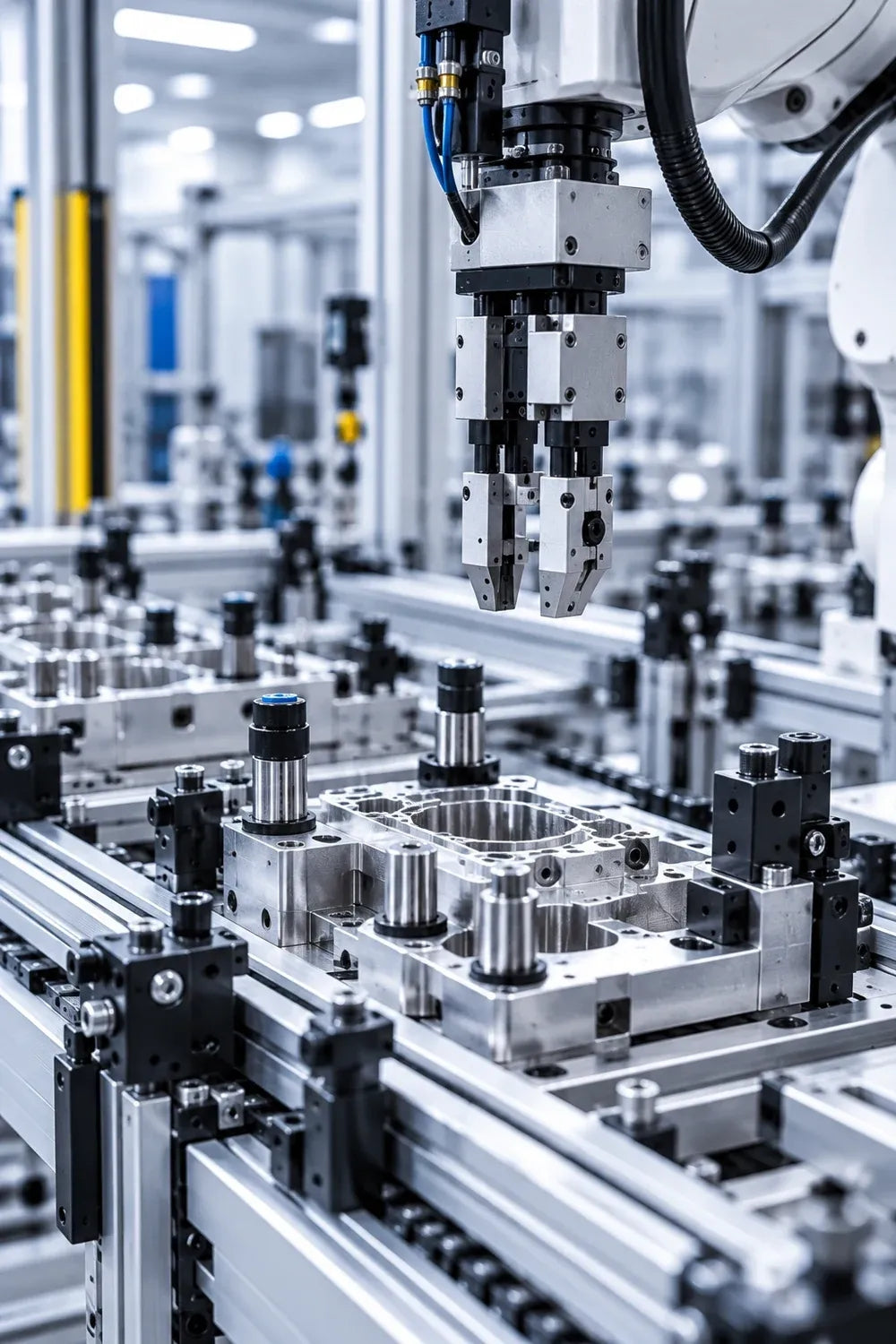
Comprehensive Guide to Servo Motor Drive Control Techniques in Industrial Automation
Precision motion control systems drive high-throughput manufacturing across modern industrial automation environments. Unlike standard induction motors running on basic variable frequency drives, servo motor systems deliver sub-millimeter positioning accuracy and fast dynamic response.