Product Details
The Yokogawa AIP171 Transceiver Control Module serves as the essential optical bus repeater for expanding and stabilizing V net communication networks within Yokogawa Centum VP and CS3000 DCS environments. It directly addresses signal attenuation and distance limitations inherent in large-scale industrial plants by regenerating optical signals transmitted over fiber optic cables. By functioning as a high-speed repeater, the AIP171 ensures data integrity across extended network segments, connecting multiple Field Control Stations (FCS) and Human Interface Stations (HIS) without latency or packet loss. This module is critical for maintaining the deterministic performance of the V net backbone, particularly in geographically dispersed facilities like refineries and power plants where control nodes are separated by significant distances.
Technical Specifications
|
Parameter |
Specification |
|---|---|
|
Product Type |
Optical Bus Repeater / Transceiver Control Unit |
|
Primary Function |
V net Signal Regeneration and Extension |
|
Compatible Systems |
Yokogawa Centum VP, CS3000 DCS |
|
Model Reference |
AS S9511DB-00 (Internal Component Designation) |
|
Network Protocol |
V net (Yokogawa Proprietary High-Speed Control Bus) |
|
Transmission Media |
Optical Fiber Cable |
|
Weight |
0.2 kg (0.44 lbs) |
|
Dimensions |
2.5 cm x 12.7 cm x 17.8 cm (1.0" x 5.0" x 7.0") |
|
Mounting Style |
Dedicated slot in V net Node Unit or Repeater Chassis |
|
Operating Role |
Bidirectional signal amplification for V net loops |
|
Application Scope |
Large-scale process control, refinery networks, utility grids |
Model Code Decomposition
The Yokogawa AIP171 follows the specific naming logic of the Centum VP communication hardware series. While the internal component may reference the "AS S9511DB-00" designation, the ordering part number "AIP171" is the definitive identifier for system integration.
Part Number: AIP171
-
AI: Denotes the functional category within the Centum architecture, specifically identifying Interface and Communication modules.
-
P: Indicates the hardware platform series, ensuring compatibility with the standard Centum VP node structure and backplane.
-
171: The unique sequence number assigned to the V net Optical Bus Repeater function.
-
Note: Unlike analog I/O modules that often carry suffixes indicating terminal block types (e.g., -S1, -H2) or safety ratings, the AIP171 is a fixed-function communication unit. The base model number "AIP171" fully specifies the optical transceiver capabilities for V net. The suffix "-00" found in the internal description (AS S9511DB-00) typically denotes the standard revision or generic configuration, implying no special customizations or regional variants are required for general deployment.
Installation Recommendations and Wiring Guidelines
Installing the AIP171 requires precise handling of fiber optic components to maintain signal quality. The module is designed to slide into specific slots within the V net node unit or dedicated repeater chassis; ensure the system power is stable before insertion, although the unit supports hot-swapping in redundant configurations.
For cabling, use high-quality multimode or single-mode fiber optic cables compatible with the V net protocol specifications. Connect the input fiber from the upstream node to the "IN" port and the output fiber to the downstream node via the "OUT" port. Pay strict attention to the transmit (TX) and receive (RX) polarity; reversing these connections will prevent link establishment. Clean all fiber connector end-faces with approved lint-free wipes and cleaning solution prior to mating to avoid insertion loss caused by dust or oil. When deploying in a dual-redundant V net configuration (V net/IP or redundant V net), install AIP171 modules on both Bus A and Bus B paths, ensuring physical separation of the fiber routes to protect against simultaneous cable damage. After installation, verify the status LEDs on the module front panel; a steady green light indicates a healthy optical link and successful signal regeneration.
Frequently Asked Questions (FAQ)
Q: What is the maximum distance extension provided by the AIP171?
A: The AIP171 regenerates the optical signal, effectively resetting the distance counter for the V net segment. While a single V net segment has limits (typically up to several kilometers depending on fiber type), chaining repeaters allows the network to span much larger facilities. However, the total number of repeaters in a single loop is governed by the Centum VP system configuration limits to ensure deterministic timing. Consult the specific Engineering Manual for your system version.
Q: Is the AIP171 compatible with V net/IP networks?
A: The AIP171 is designed for the traditional V net optical bus architecture. V net/IP utilizes standard Ethernet infrastructure (TCP/IP). While some Centum VP systems bridge these networks, the AIP171 specifically handles the proprietary optical signaling of the legacy or core V net bus, not standard IP traffic over Ethernet.
Q: Can I replace a failed AIP171 without shutting down the plant?
A: Yes, provided the V net is configured in a redundant mode (dual bus). In a redundant setup, traffic flows through the secondary bus while the primary is maintained. You can hot-swap the faulty AIP171 module on the active bus, though it is best practice to perform this during a scheduled maintenance window or after confirming the redundancy is fully healthy to avoid transient alarms.
Q: What does the "AS S9511DB-00" marking refer to?
A: This is the internal manufacturer part number or component designation for the specific transceiver assembly housed within the AIP171 module casing. For procurement, system configuration, and spare parts management, always use the "AIP171" model number, as this is the identifier recognized by the Centum VP engineering software and system documentation.
Additional Information
- 100% Genuine Parts: All products are original and authentic, ensuring reliable industrial performance.
- 30-Day Refund Guarantee: Return any in-stock item within 30 days in original, unopened packaging for a full refund (excluding shipping and fees).
- 12-Month Warranty: Covers defects in materials or workmanship; excludes misuse, normal wear, or unauthorized modifications.
- Worldwide Shipping: We ship via USPS, UPS, FedEx, and DHL. Delivery times vary by country and may be subject to customs or import fees.
- Support & Contact: Technical and warranty assistance is available anytime. Contact us here: Contact.
- Purchase Guidance: Check product specifications and compatibility carefully before ordering to ensure proper application.


Tech & Buying Guide

Voice-Activated Industrial Automation: Integrating Speech Control into PLC and DCS Architectures
Industrial automation integrates speech recognition, IIoT protocols, and NLP with PLCs and DCS to streamline operations. By leveraging advanced edge computing, engineers enable real-time, hands-free control—allowing personnel to manage smart factory processes safely away from hazardous equipment.
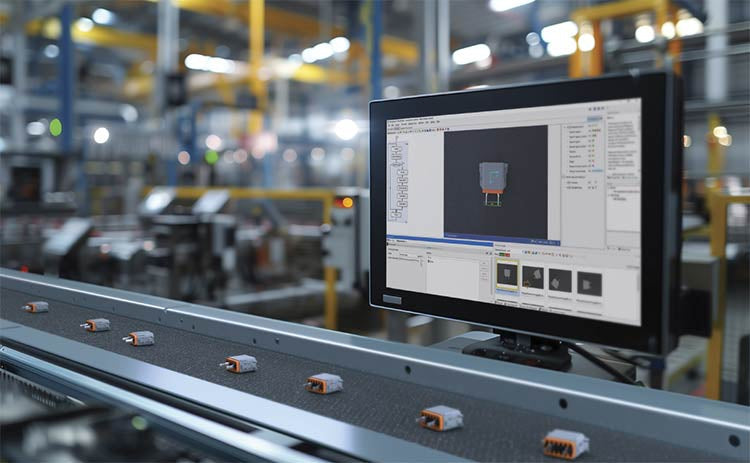
Modern Industrial Automation: Transforming Safety and Efficiency in Mining Operations
Industrial automation has evolved from a simple manufacturing tool into the operational backbone of high-risk sectors. Modern mining operations increasingly rely on advanced control systems, programmable logic controllers (PLCs), distributed control systems (DCS), and artificial intelligence to address deep-underground hazards. By replacing manual labor in high-risk zones, factory automation technologies protect personnel while significantly boosting operational throughput.