










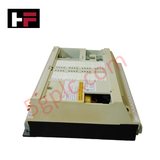
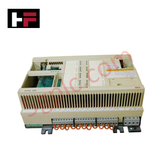
Product Details
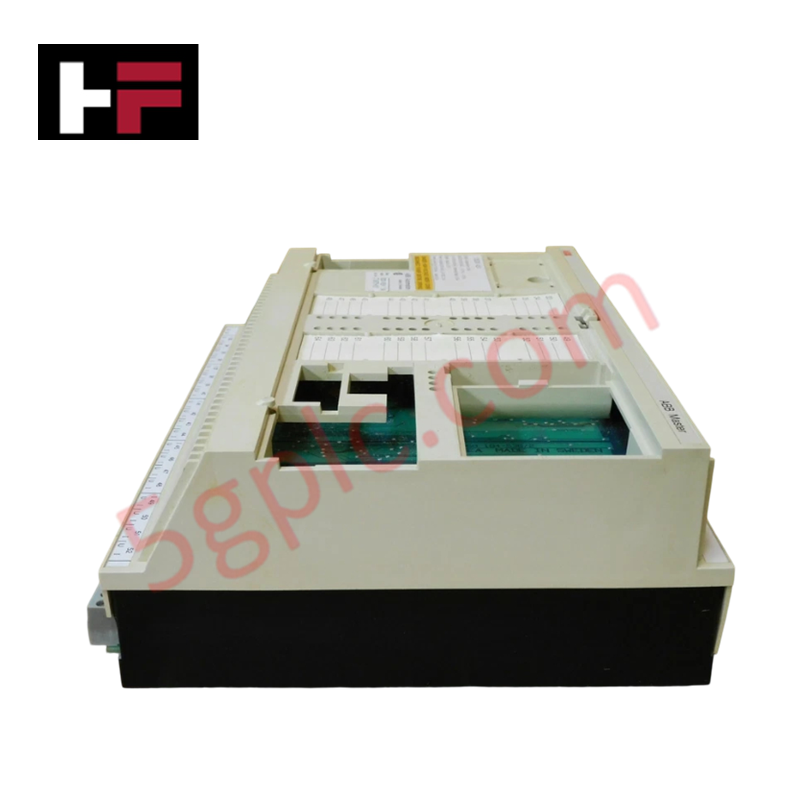
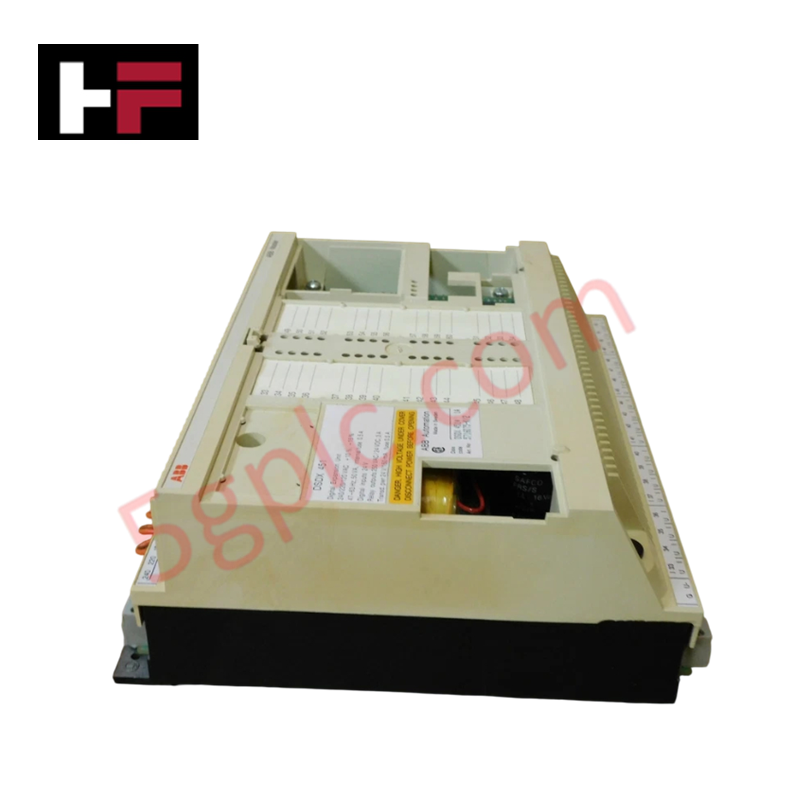
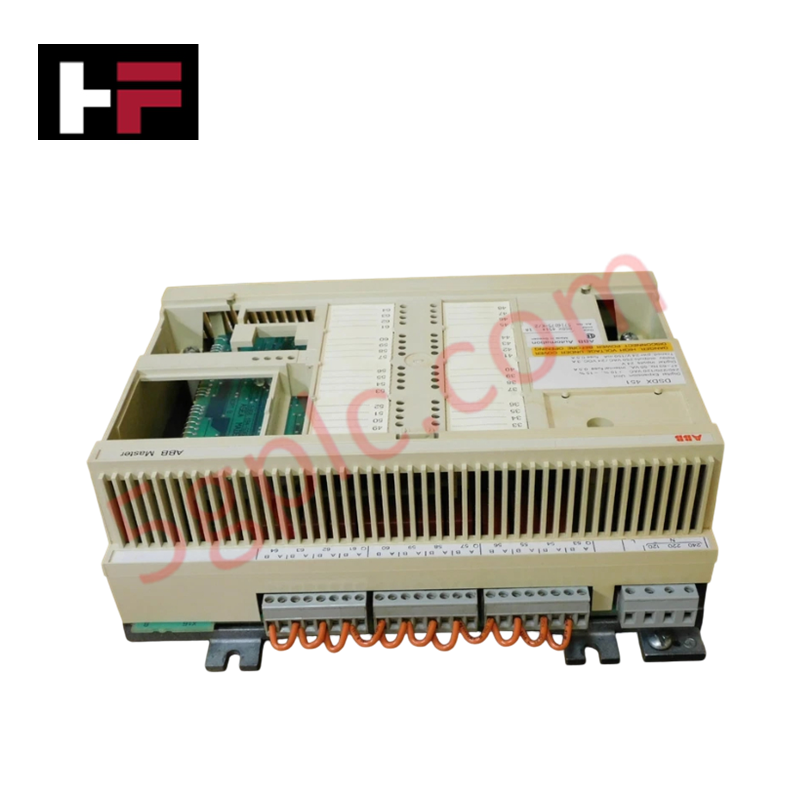
The ABB DSDX 451 5716075-K serves as the primary DSDX 451 Remote In/Out Expansion Unit utilized to execute discrete signal processing across Advant OCS platforms. This remote assembly manages the physical interfacing of 20 digital input channels operating at 24 VDC and 12 digital output channels rated for 0.1 to 3 A, establishing direct galvanic boundaries between field execution instrumentation and upper-level processor logic.
Hardware Specifications
| Parameter | Specification |
|---|---|
| Model | DSDX 451 5716075-K |
| Brand | ABB |
| Origin | Sweden / Germany (Standard production matrix baseline) |
| Weight | 2.9 kg |
| Dimensions | 94.5 mm x 180 mm x 216 mm |
| Digital Inputs | 20 channels (24 VDC nominal) |
| Digital Outputs | 12 channels (0.1 to 3 A capacity range) |
| Fuse Rating | 500 mA (ABB Part No. 56722011-11) |
| Interface Plugs | 4-position (2664197-4), 2-position (2664193-2), 8-position (2664193-8) |
| Regulatory Status | RoHS exemption under directive 2011/65/EU scope |
| WEEE Category | Small Equipment (No external dimension over 50 cm) |
| Product Type | Remote I/O Units |
Profinet / EtherNet/IP Deterministic Networks and I/O Density Scaling
The internal trace logic of the ABB DSDX 451 5716075-K regulates switching intervals in synchronization with design-specified backplane bus communication velocity baselines. When localized industrial networks are bridged over to high-level Profinet or EtherNet/IP deterministic networks, the expansion unit processes digital signal transitions without dropping datagram frames. The 32-channel high-capacity configuration withstands rapid load state updates during intensive I/O density scaling routines, provided that all modules in the node assembly match the firmware flash compatibility matrices dictated by the central master controller.
Frequently Asked Questions
Q: Is hot-swapping or live extraction of the interface plugs permitted on the DSDX 451 while power is applied?
A: No. Terminal plugs (including the 4-position, 2-position, and 8-position variations) must not be disconnected while the 24 VDC field voltage or internal logic power is active. Live extraction can generate inductive breaking arcs across pins, causing data corruption, hardware logic faults, or fusing failure on the output circuits.
Q: What actions are required if an internal channel fuse undergoes an overcurrent event?
A: System engineers must isolate the unit, identify the short-circuit condition on the affected field channel loop, and replace the open circuit component strictly with the factory-specified 500 mA fuse (Part No. 56722011-11) to avoid thermal stress or circuit trace degradation.
Field Installation Guidelines
- Mechanical Mounting Stability: Mount the 2.9 kg module securely onto a standard industrial backing plate or enclosure rail system inside a clean, dry cabinet. Ensure adequate structural retention to mitigate vibration-induced mechanical stresses on the terminal connections.
- Terminal Insertion and Wiring: Attach field conductors to the designated 2664197-4, 2664193-2, and 2664193-8 plugs before inserting them into the module receptacles. Ensure proper wire termination tension to minimize high-resistance contact points.
- Cable Separation Rules: Route the 24 VDC input lines and high-current 3 A digital output cables inside dedicated low-voltage raceways. Maintain a minimum separation of 100 mm from three-phase AC power feeds or frequency converter lines to suppress EMI coupling.
- Enclosure Grounding: Connect the module framework directly to the central instrument ground bus using a short, low-impedance copper braid to maintain effective surge shielding limits.
Additional Information
- 100% Genuine Parts: All products are original and authentic, ensuring reliable industrial performance.
- 30-Day Refund Guarantee: Return any in-stock item within 30 days in original, unopened packaging for a full refund (excluding shipping and fees).
- 12-Month Warranty: Covers defects in materials or workmanship; excludes misuse, normal wear, or unauthorized modifications.
- Worldwide Shipping: We ship via USPS, UPS, FedEx, and DHL. Delivery times vary by country and may be subject to customs or import fees.
- Support & Contact: Technical and warranty assistance is available anytime. Contact us here: Contact.
- Purchase Guidance: Check product specifications and compatibility carefully before ordering to ensure proper application.


Tech & Buying Guide

Redundant Automation Systems: Maximizing Uptime in Critical Control Applications
Industrial automation relies on continuous operational stability to prevent catastrophic downtime and financial loss. While standard dictionary definitions treat redundancy as superfluous, industrial engineers consider redundant control architectures indispensable for high-availability systems. Implementing backup hardware ensures seamless takeover during primary equipment failures, protecting critical infrastructure across manufacturing and process industries.
Demystifying the 5 Levels of Industrial Automation Architecture
Modern manufacturing relies on structured communication hierarchy to bridge physical shop-floor hardware with enterprise management software. This framework, commonly known as the Automation Pyramid, establishes how data flows between field devices, logic controllers, and corporate IT networks. Understanding these five distinct levels helps engineers and plant managers optimize system operations, reduce downtime, and implement seamless factory automation solutions.

Transforming Shop Floor Data into Actionable Insights: A Deep Dive into MES
Manufacturing Execution Systems serve as the digital backbone of modern factory floors. Positioned at Level 3 of the ISA-95 automation pyramid, MES links enterprise resource planning with real-time shop floor control systems. Today, industrial operators rely on MES software to bridge operational strategy with physical production execution.