










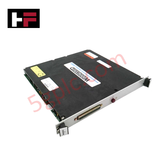
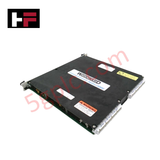
Product Details
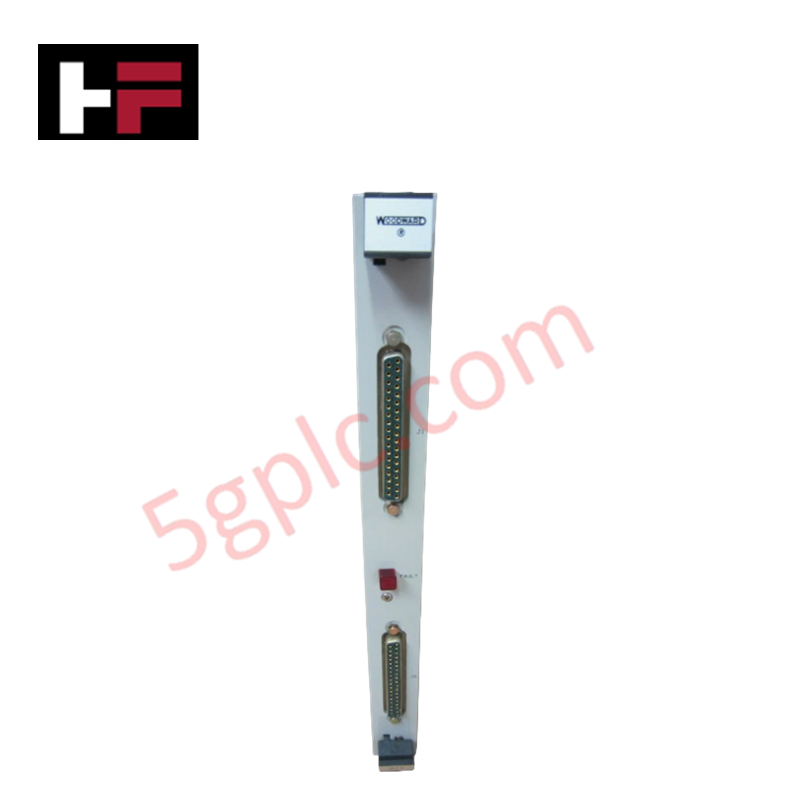
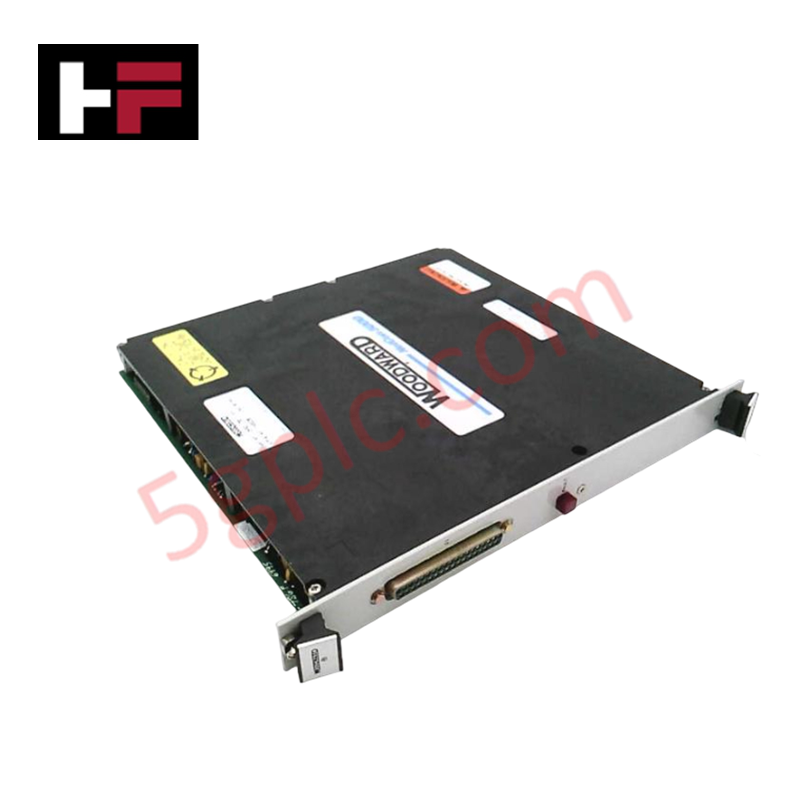
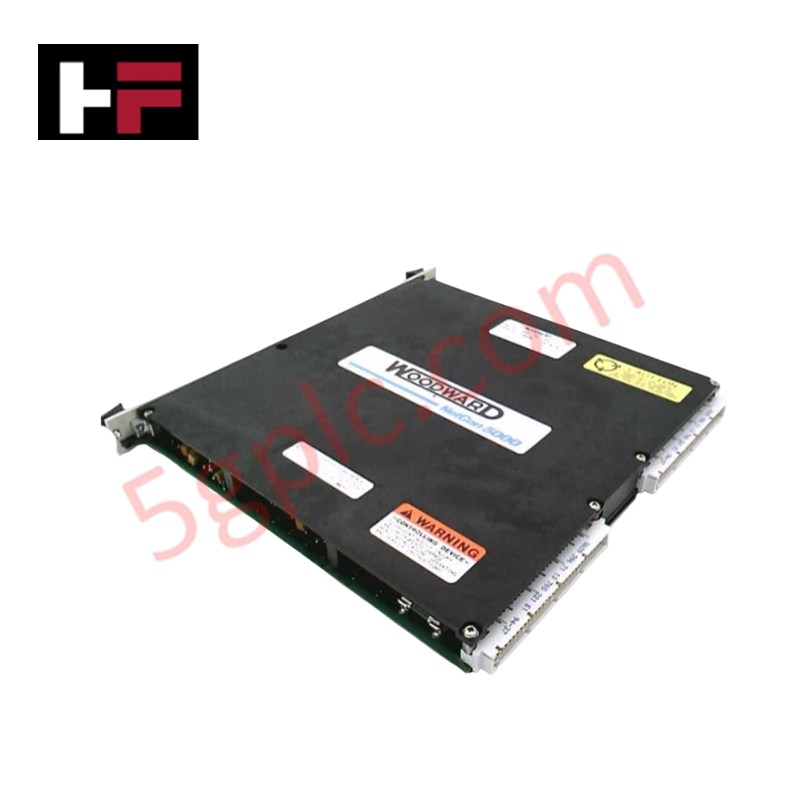
Configured for high-precision analog signal acquisition in turbine control platforms, the Woodward 5464-334 (5464-334 Analog Input Module) provides direct physical execution of isolated 4-20 mA current loop sensing and onboard diagnostic processing.
Hardware Specifications
| Parameter | Specification |
|---|---|
| Model | 5464-334 |
| Brand | Woodward |
| Origin | USA |
| Weight | 0.8 kg |
| Dimensions | 30 cm x 20 cm x 25 cm |
| Operating Temp | -25 deg C to +70 deg C |
| Power Consumption | 10-60 VDC |
| Channels | 8 Channels |
| Isolation | 3000 VDC |
Actuator Loop Feedback Response and Thermal Heat Sink Dissipation Profiles
The 5464-334 module utilizes an intelligent microcontroller architecture to manage 8 independent 4-20 mA input channels. Each channel maintains galvanic isolation to suppress common-mode noise and prevent cross-channel interference. To maintain signal integrity during continuous operation, the module's circuitry is engineered with specific thermal heat sink dissipation profiles, preventing localized overheating in the high-density terminal interface. This thermal management supports consistent actuator loop feedback response, as the module performs automated temperature compensation and calibration by periodically measuring an onboard precision voltage reference. The module independently handles rate-group scheduling, minimizing the processing overhead on the central CPU while ensuring deterministic signal acquisition and fault reporting.
Frequently Asked Questions
Q: How does the module handle internal fault detection for individual input channels?
A: The onboard microcontroller executes power-on self-tests and continuous background diagnostics. If a channel deviation is detected relative to the internal voltage reference or if an electrical fault occurs, the module illuminates the front-panel LED to signal the fault state to the operator.
Q: Is the 3000 VDC isolation rating applied channel-to-channel or channel-to-chassis?
A: The 3000 VDC isolation specification defines the dielectric strength between the input circuitry and the system ground/backplane. This level of isolation ensures that transients on the field side do not propagate to the control-side communication bus.
Field Installation Guidelines
- Mounting: Secure the module within the designated control rack, ensuring positive engagement with the backplane connectors. Verify that the cabinet environment remains within the -25 to +70 deg C range.
- Wiring: Terminate field loops using shielded, twisted-pair cabling. Maintain strict polarity for all 4-20 mA inputs to ensure correct transducer signal interpretation.
- Grounding: Connect cable shields to the cabinet ground bus at a single common point. Avoid multiple ground paths for the shield to prevent the induction of circulating currents that may interfere with the current loop precision.
- Power-up Procedure: Energize the control rack and observe the front-panel LED. Successful initialization occurs when the LED extinguishes following the completion of the onboard microcontroller self-tests.
Additional Information
- 100% Genuine Parts: All products are original and authentic, ensuring reliable industrial performance.
- 30-Day Refund Guarantee: Return any in-stock item within 30 days in original, unopened packaging for a full refund (excluding shipping and fees).
- 12-Month Warranty: Covers defects in materials or workmanship; excludes misuse, normal wear, or unauthorized modifications.
- Worldwide Shipping: We ship via USPS, UPS, FedEx, and DHL. Delivery times vary by country and may be subject to customs or import fees.
- Support & Contact: Technical and warranty assistance is available anytime. Contact us here: Contact.
- Purchase Guidance: Check product specifications and compatibility carefully before ordering to ensure proper application.


Tech & Buying Guide

Demystifying the DDE Protocol in Legacy Industrial Automation Systems
Modern control systems rely heavily on seamless interprocess communication to exchange operational data between software programs. Microsoft first introduced the Dynamic Data Exchange (DDE) protocol in 1987 to enable real-time data sharing. In factory automation, DDE served as an early bridge between control software and Windows desktop applications. Therefore, understanding DDE mechanics provides crucial insights into how legacy industrial networks established software-level connectivity.

Demystifying CPU Communication Ports in Siemens PLC Architectures
Industrial automation relies heavily on robust data exchange between devices. Without seamless connectivity, field instruments, network switches, human-machine interfaces, and programmable logic controllers cannot coordinate effectively. Therefore, understanding the various CPU communication ports available in Siemens hardware ensures efficient factory automation design and seamless system integration.

Mastering the Siemens PLC Scan Cycle: How the CPU Executes Automation Programs
Industrial automation relies heavily on programmable logic controllers (PLCs) to manage complex manufacturing processes. Many engineers dive straight into programming without mastering the underlying architecture. However, understanding how a PLC CPU executes a program ensures reliable system design. Therefore, mastering the scan cycle optimizes both performance and troubleshooting in modern control systems.