












Product Details
Product Overview
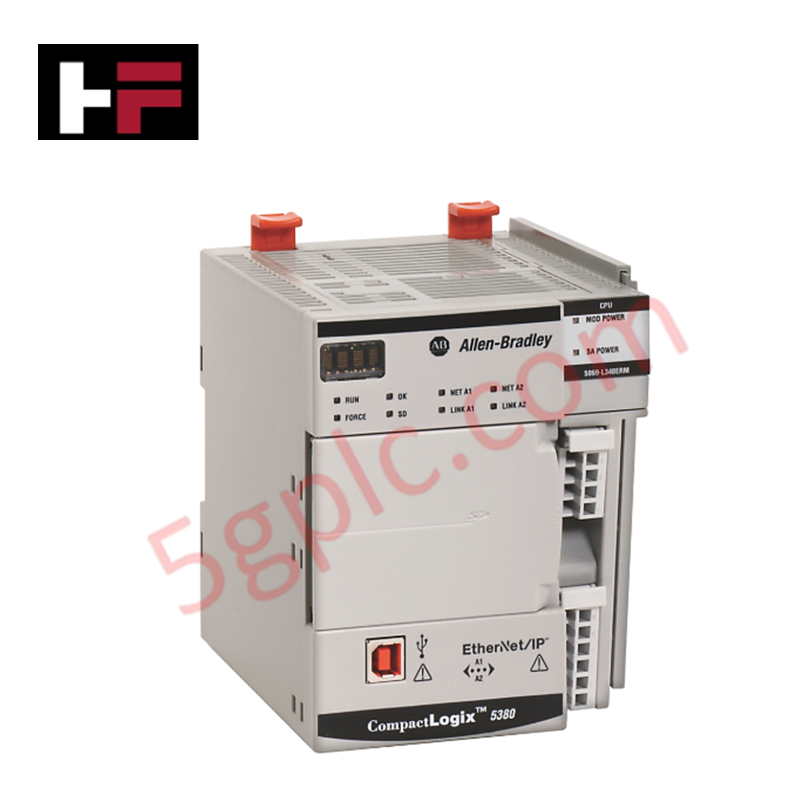
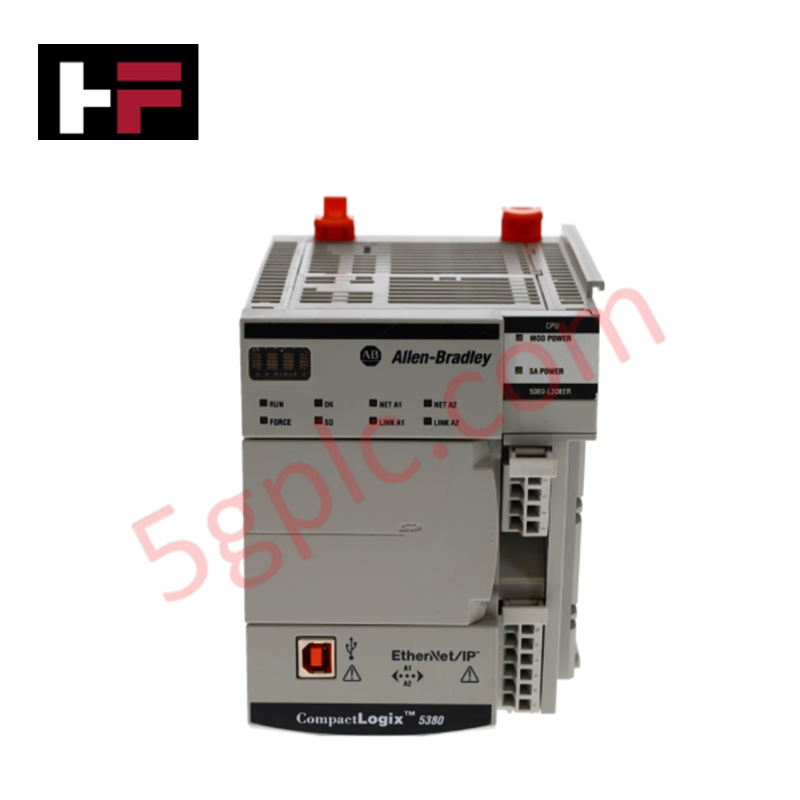
The Allen Bradley 5069-L340ER-NSE belongs to the CompactLogix 5380 family, specifically engineered for environments with strict energy storage restrictions. The "NSE" (No-Energy Storage) designation indicates that this controller does not contain the internal capacitors typically used to maintain power during shutdown, making it ideal for hazardous locations or secure facilities where stored energy poses a safety risk. It provides 1 Megabyte of application memory and supports up to 24 EtherNet/IP nodes. We supply this unit in 100% Brand New and Original condition, ensuring full compliance with your specialized industrial security and safety protocols.
Part Number Breakdown
The 5069-L310ER-NSE utilizes a specific suffix logic to define its operational capabilities:
| Suffix/Code | Technical Definition |
| 5069 | Next-generation CompactLogix Platform |
| L310 | 1 MB Application Memory Capacity |
| ER | Dual Ethernet Ports (Supports DLR, Star, and Linear) |
| NSE | No-Energy Storage: Module contains no internal power storage components |
Technical Specifications
The 5069-L310ER-NSE delivers high-speed processing without the risk of residual energy:
| Feature | Specification |
| Manufacturer | Allen Bradley (Rockwell Automation) |
| Application Memory | 1 Megabyte |
| Non-Volatile Memory | 2GB (via included 1784-SD2 card) |
| EtherNet/IP Nodes | 24 Nodes |
| Communication Rate | 10/100 Mbps / 1 Gbps (Gigabit Ethernet) |
| Local I/O Capacity | Up to 8 Modules |
| USB Port | 1 Type B 2.0 Full-Speed |
| Standard Tasks | 32 Tasks |
| Motion Axes | 0 (Non-Motion Control Model) |
| Weight | 1.56 lbs (0.71 kg) |
Engineering Advantages
The 5069-L310ER-NSE solves unique challenges in secure and high-speed automation:
-
No-Energy Storage (NSE) Compliance: This module eliminates internal energy storage components. This technical feature meets the stringent requirements of hazardous industries where residual electrical energy could ignite volatile atmospheres or violate secure facility entry/exit protocols.
-
Gigabit Communication Throughput: Dual 1 Gbps Ethernet ports facilitate massive data exchange. This architecture supports Device Level Ring (DLR) topologies, allowing the controller to maintain communication even if a physical network cable sustains damage.
-
Rapid Logic Execution: The 5380 architecture optimizes the execution of complex Sequential Function Charts and Ladder Diagrams. This ensures high-speed response for discrete manufacturing processes without the latency found in older controller generations.
-
Precision Event Capture: Integrated support for Pulse Latching and Pattern Matching allows the controller to detect and record field events at microsecond intervals. This makes it a powerful tool for high-speed inspection and registration tasks.
FAQs
-
What happens to the program during power loss since this is an NSE model?
Because the NSE model lacks internal energy storage to "write" current states to memory during an unexpected power down, the controller relies on the included 1784-SD2 2GB card. You must ensure your programming strategy includes periodic saves to the non-volatile memory to prevent data loss.
-
Is this unit compatible with standard 5069 I/O modules?
Yes. The 5069-L310ER-NSE supports up to 8 local 5069 I/O modules. It utilizes the same high-speed backplane and terminal blocks as the rest of the 5380 series.
-
How do I verify the "Brand New" status of this controller?
We ship every 5069-L310ER-NSE in its original factory packaging. Each unit features a unique serial number, an intact factory seal, and the original Allen Bradley manufacturing documentation, guaranteeing it has never been deployed.
-
Does this model support motion control?
No. The 5069-L310ER-NSE is a discrete logic controller with 0 Motion Axes. If your application requires CIP Motion over EtherNet/IP, you must select an "M" designated model, such as the 5069-L310ERM.
Additional Information
- 100% Genuine Parts: All products are original and authentic, ensuring reliable industrial performance.
- 30-Day Refund Guarantee: Return any in-stock item within 30 days in original, unopened packaging for a full refund (excluding shipping and fees).
- 12-Month Warranty: Covers defects in materials or workmanship; excludes misuse, normal wear, or unauthorized modifications.
- Worldwide Shipping: We ship via USPS, UPS, FedEx, and DHL. Delivery times vary by country and may be subject to customs or import fees.
- Support & Contact: Technical and warranty assistance is available anytime. Contact us here: Contact.
- Purchase Guidance: Check product specifications and compatibility carefully before ordering to ensure proper application.
Tech & Buying Guide

Demystifying the DDE Protocol in Legacy Industrial Automation Systems
Modern control systems rely heavily on seamless interprocess communication to exchange operational data between software programs. Microsoft first introduced the Dynamic Data Exchange (DDE) protocol in 1987 to enable real-time data sharing. In factory automation, DDE served as an early bridge between control software and Windows desktop applications. Therefore, understanding DDE mechanics provides crucial insights into how legacy industrial networks established software-level connectivity.

Demystifying CPU Communication Ports in Siemens PLC Architectures
Industrial automation relies heavily on robust data exchange between devices. Without seamless connectivity, field instruments, network switches, human-machine interfaces, and programmable logic controllers cannot coordinate effectively. Therefore, understanding the various CPU communication ports available in Siemens hardware ensures efficient factory automation design and seamless system integration.

Mastering the Siemens PLC Scan Cycle: How the CPU Executes Automation Programs
Industrial automation relies heavily on programmable logic controllers (PLCs) to manage complex manufacturing processes. Many engineers dive straight into programming without mastering the underlying architecture. However, understanding how a PLC CPU executes a program ensures reliable system design. Therefore, mastering the scan cycle optimizes both performance and troubleshooting in modern control systems.