










Product Details
Product Overview
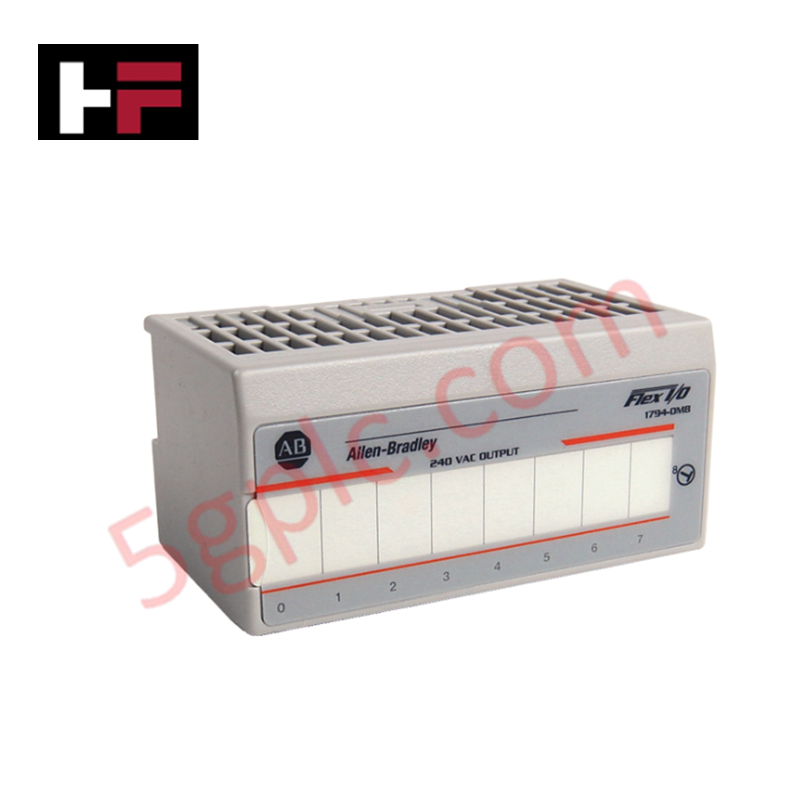
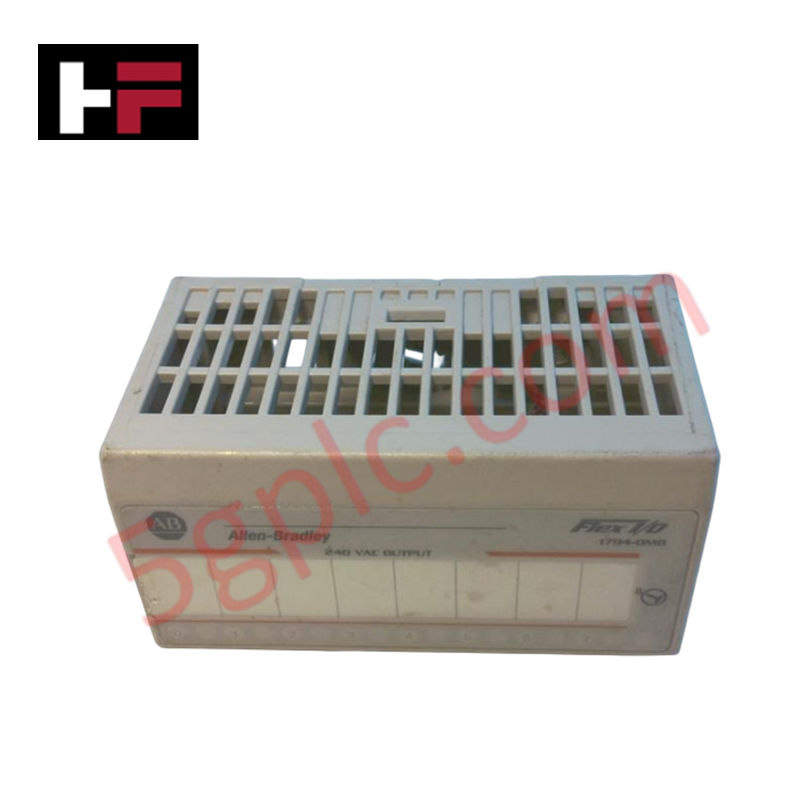
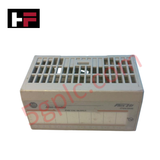
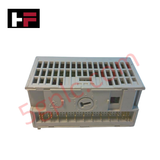
The Allen Bradley 1794-OM8 serves as a high-performance discrete output component within the FLEX I/O family. This module interfaces the controller with high-voltage AC field devices, providing 8 isolated points to switch actuators, motor starters, and solenoids. We supply this module as 100% Brand New and Factory Original, ensuring the internal triac circuitry meets the highest industrial standards for longevity and switching precision in distributed control architectures.
Technical Specifications
The 1794-OM8 converts digital logic signals into 220V AC power switching via the following technical parameters:
| Feature | Specification |
| Number of Outputs | 8 Non-Isolated Outputs |
| Output Type | Discrete AC (Triac) |
| Nominal Voltage | 220V AC |
| Voltage Range | 159V AC to 264V AC |
| Output Current Rating | 1.0 A per channel (4.0 A per module max) |
| On-State Voltage Drop | 1.0V @ 0.5 A (Maximum) |
| Off-State Leakage | 2.5 mA (Maximum) |
| Mounting Configuration | Horizontal or Vertical DIN Rail |
| Weight | 1.87 lbs (0.85 kg) |
Engineering Advantages
-
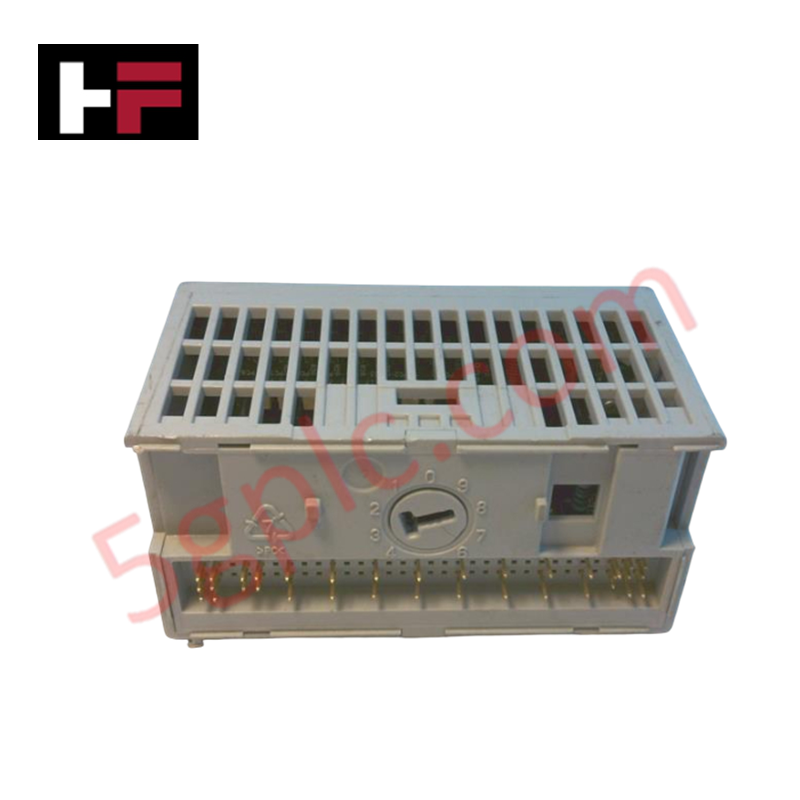
Modular Distributed Architecture: The 1794-OM8 plugs into a terminal base, separating the wiring from the I/O electronics. This design allows technicians to replace the module without disturbing field wiring, drastically reducing Mean Time to Repair (MTTR) during plant maintenance.
-
Space-Saving DIN-Mount Profile: The compact "Open Style" chassis minimizes panel footprint. By utilizing the FLEX I/O system, engineers consolidate high-voltage AC switching into tight enclosures where traditional rack-based PLCs cannot fit.
-
Robust 220V AC Switching: The integrated triac outputs handle a broad voltage range up to 264V AC. This resilience ensures stable operation in regions with fluctuating power grids or in heavy industrial zones where inductive loads cause significant line noise.
-
Passive Cooling Design: The module utilizes an efficient thermal layout that dissipates heat without the need for active fans. This reduces the risk of failure in dust-prone environments and allows for dense module packing on a single DIN rail.
FAQs
-
Is this 1794-OM8 unit genuinely brand new?
Yes. We guarantee this unit is 100% Brand New and ships in its original Allen Bradley factory packaging. It has never seen service, ensuring the internal electronic components have no thermal wear or previous load history.
-
Which terminal base is compatible with the 1794-OM8?
The 1794-OM8 requires a compatible FLEX I/O terminal base, such as the 1794-TB2, 1794-TB3, or 1794-TB3S. You must match the terminal base to your specific wiring requirements (screw vs. spring clamp).
-
Does the module support 110V AC applications?
While the module is optimized for 220V AC, it operates within a range of 159V to 264V AC. For standard 120V AC applications, you should use the 1794-OM16 or 1794-OA8 to ensure the gate trigger voltages remain within manufacturer specifications.
-
How does the module handle inductive load spikes?
The 1794-OM8 includes internal RC snubber circuits to suppress voltage transients. However, for highly inductive loads like large solenoids, we recommend installing external suppression across the load to further protect the module’s output triacs.
Additional Information
- 100% Genuine Parts: All products are original and authentic, ensuring reliable industrial performance.
- 30-Day Refund Guarantee: Return any in-stock item within 30 days in original, unopened packaging for a full refund (excluding shipping and fees).
- 12-Month Warranty: Covers defects in materials or workmanship; excludes misuse, normal wear, or unauthorized modifications.
- Worldwide Shipping: We ship via USPS, UPS, FedEx, and DHL. Delivery times vary by country and may be subject to customs or import fees.
- Support & Contact: Technical and warranty assistance is available anytime. Contact us here: Contact.
- Purchase Guidance: Check product specifications and compatibility carefully before ordering to ensure proper application.
Tech & Buying Guide

Demystifying CPU Communication Ports in Siemens PLC Architectures
Industrial automation relies heavily on robust data exchange between devices. Without seamless connectivity, field instruments, network switches, human-machine interfaces, and programmable logic controllers cannot coordinate effectively. Therefore, understanding the various CPU communication ports available in Siemens hardware ensures efficient factory automation design and seamless system integration.

Mastering the Siemens PLC Scan Cycle: How the CPU Executes Automation Programs
Industrial automation relies heavily on programmable logic controllers (PLCs) to manage complex manufacturing processes. Many engineers dive straight into programming without mastering the underlying architecture. However, understanding how a PLC CPU executes a program ensures reliable system design. Therefore, mastering the scan cycle optimizes both performance and troubleshooting in modern control systems.

How to Connect to Siemens S7 PLCs: 5 Essential Communication Methods
Establishing a reliable hardware link between a programming terminal and a Siemens SIMATIC controller is essential for engineering workflows. Field engineers rely on distinct physical layers, ranging from legacy serial connections to high-speed Industrial Ethernet protocols. Modern factory automation environments prioritize fast data transfer and seamless driver integration. Selecting the correct connection method simplifies program downloads, online monitoring, and system troubleshooting in complex control systems.