












Product Details
Product Overview
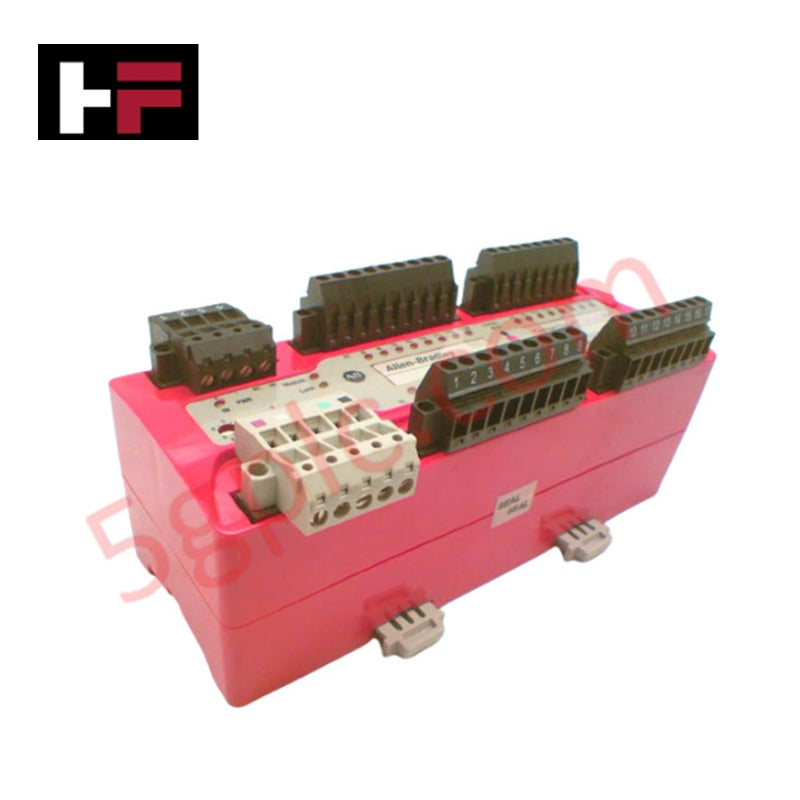
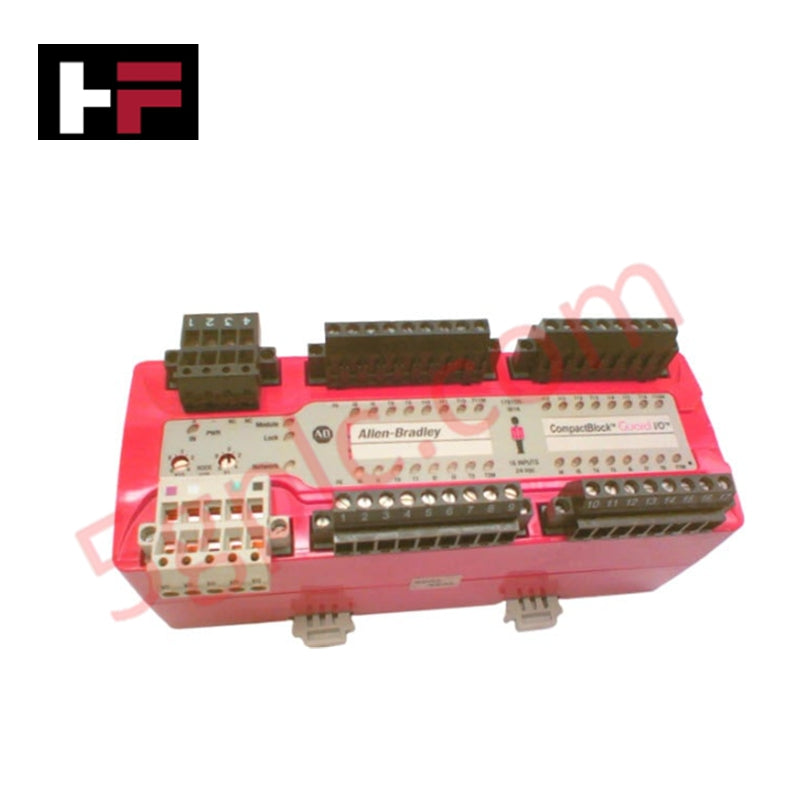
The Allen Bradley 1791DS-IB16 functions as a high-integrity safety input module within the CompactBlock™ Guard I/O™ family. This module interfaces directly with DeviceNet™ Safety networks, providing 16 dedicated safety inputs for monitoring critical field devices such as E-stop buttons, light curtains, and safety gates. It distributes safety-rated digital input data to GuardLogix® or SmartGuard™ controllers. We supply this unit as 100% brand new and original, ensuring your safety circuits comply with the highest SIL and Cat. performance ratings.
Technical Specifications
The 1791DS-IB16 utilizes a specialized hardware architecture to execute safety-critical logic:
| Feature | Specification |
| Number of Inputs | 16 Safety Inputs |
| Input Type | Single-Channel (Configurable for Dual-Channel) |
| Network Protocol | DeviceNet Safety |
| Operating Voltage Range | 20.4–26.4V DC |
| Power Consumption | 85 mA @ 24V DC |
| On-State Voltage | 11V DC Minimum |
| Off-State Voltage | 5V DC Maximum |
| Number of Outputs | 0 (Input Only Module) |
| Weight | 1.00 lbs (0.45 kg) |
| UPC | 612598336050 |
Engineering Advantages
-
SIL 3 / PLe Rated Monitoring: The 1791DS-IB16 supports safety applications up to SIL 3 (IEC 61508) and PLe (ISO 13849-1). This allows for integration into high-risk machinery zones where functional safety is a mechanical and legal requirement.
-
DeviceNet Safety Integration: The module utilizes the CIP Safety™ protocol over DeviceNet. This enables the transmission of safety and standard control data over a single wire pair, significantly reducing wiring complexity and material costs in distributed safety architectures.
-
On-Board Pulse Testing: The module generates test pulses to detect short circuits to external power sources or adjacent channels. This self-diagnostic capability ensures the system identifies wiring faults before they compromise the safety function.
-
Compact Block Form Factor: The space-saving design fits into shallow control cabinets. The integrated terminal blocks allow for direct field-device termination, eliminating the need for interposing terminal strips and simplifying the troubleshooting process.
-
Flexible Input Configuration: Engineers configure the 16 inputs as individual single-channel points or as 8 dual-channel pairs for applications requiring redundant safety monitoring.
FAQs
-
Does the 1791DS-IB16 require a safety controller?
Yes. This module acts as a remote safety I/O device. It must communicate with a safety master, such as an Allen Bradley GuardLogix controller or a SmartGuard 600 controller, via a DeviceNet Safety network.
-
Is this product a brand new Allen Bradley original?
Absolutely. We guarantee that every 1791DS-IB16 unit we ship is 100% brand new in original factory-sealed packaging. Each module meets the strict E-E-A-T industrial procurement standards.
-
What is the significance of the 11V DC On-State voltage?
The 11V DC threshold defines the minimum voltage the module recognizes as a "High" signal. This specific tolerance ensures stable operation in environments with potential voltage sags, preventing nuisance safety trips.
-
Can I monitor dual-channel light curtains with this module?
Yes. You can pair the inputs in the software configuration to support dual-channel safety devices. This configuration allows the module to perform cross-channel monitoring to detect discrepancies between the two signals.
Additional Information
- 100% Genuine Parts: All products are original and authentic, ensuring reliable industrial performance.
- 30-Day Refund Guarantee: Return any in-stock item within 30 days in original, unopened packaging for a full refund (excluding shipping and fees).
- 12-Month Warranty: Covers defects in materials or workmanship; excludes misuse, normal wear, or unauthorized modifications.
- Worldwide Shipping: We ship via USPS, UPS, FedEx, and DHL. Delivery times vary by country and may be subject to customs or import fees.
- Support & Contact: Technical and warranty assistance is available anytime. Contact us here: Contact.
- Purchase Guidance: Check product specifications and compatibility carefully before ordering to ensure proper application.
Tech & Buying Guide

Evolving SCADA System Architectures in Industrial Automation
A robust Supervisory Control and Data Acquisition (SCADA) system serves as the heartbeat of modern industrial operations. Understanding SCADA system architecture is vital for engineers designing efficient control systems. These architectures have evolved from isolated, monolithic structures to highly interconnected, networked ecosystems. Choosing the right design requires balancing data visibility, processing power, and long-term scalability requirements.

Choosing the Right Controller: PLC vs. Motion Controller in Industrial Automation
Selecting the optimal control architecture is a foundational decision in industrial automation. Engineers must frequently choose between a Programmable Logic Controller (PLC) and a dedicated Motion Controller. While both systems manage machinery, their underlying design philosophies differ significantly, impacting performance, scalability, and system integration.

Mastering PLC Power Supply Architectures and Operating Voltages
Selecting the correct operating voltage is a critical step in designing reliable industrial automation systems. Whether you are working with a compact PLC or a large-scale DCS, your power architecture dictates the system's longevity. In this guide, we explore the standard voltage ranges and power distribution strategies required to maintain stable factory automation operations.