
Product Details
Product Overview
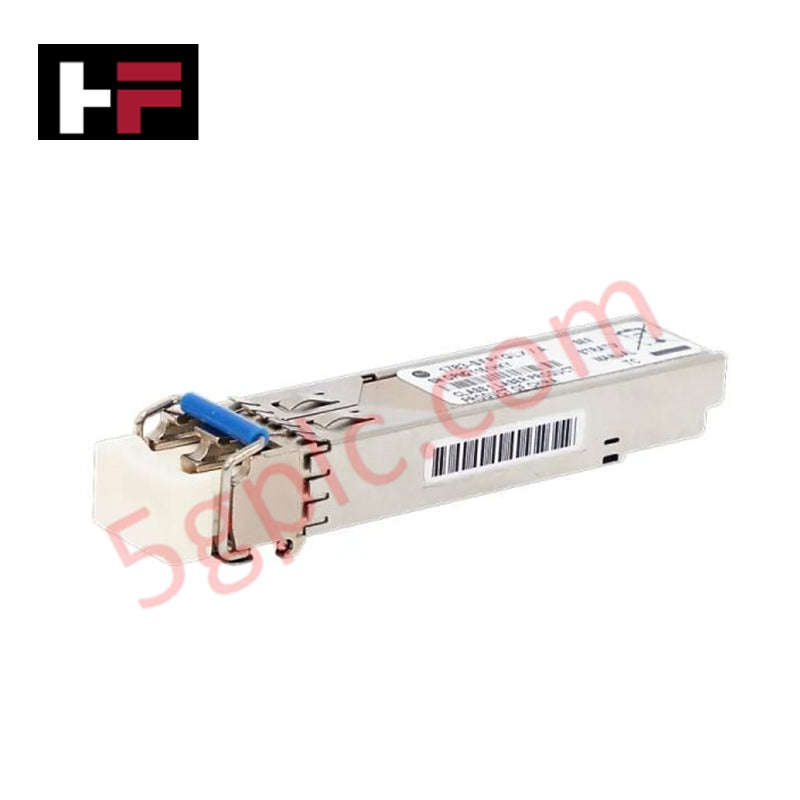
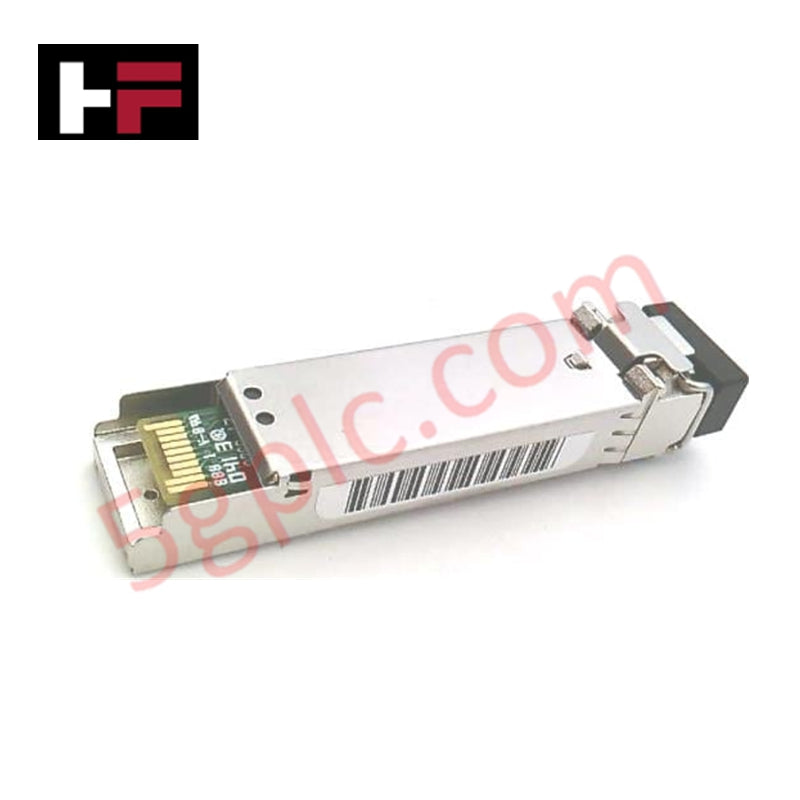
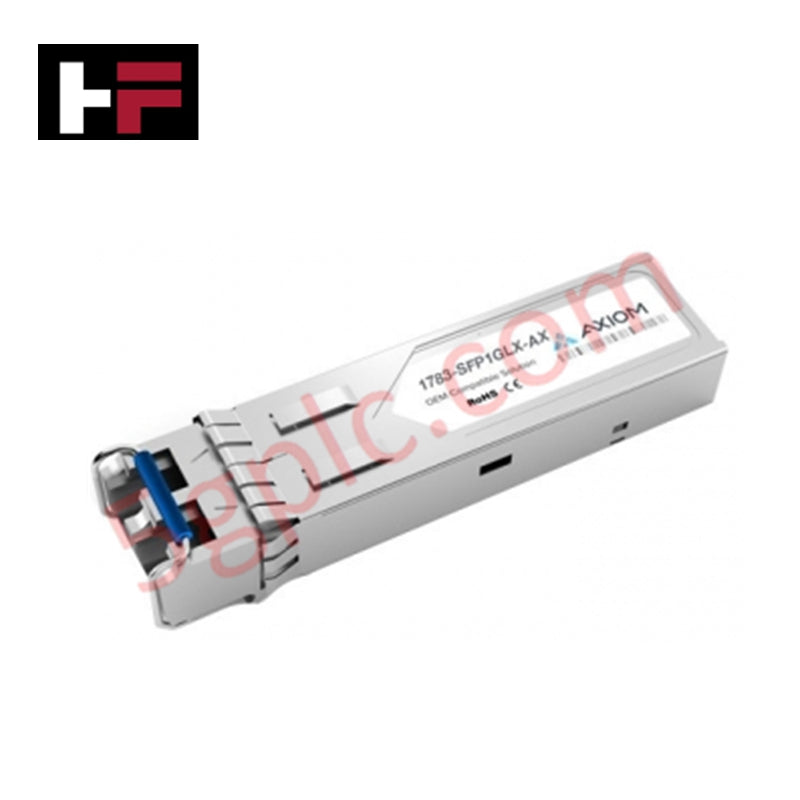
The Allen-Bradley 1783-SFP1GLX functions as a high-speed Small Form-factor Pluggable (SFP) transceiver designed specifically for the Stratix series industrial switches. This 1000LX module enables gigabit Ethernet communication over single-mode fiber optic cabling, significantly extending the reach of industrial networks beyond the limits of standard copper wire. It features a precision LC connector interface to provide low-signal-loss connectivity in critical automation backbones. We offer this component in 100% Brand New condition, ensuring the laser integrity and optical performance required for long-distance data transmission.
Technical Specifications
-
Module Type: SFP (Small Form-factor Pluggable) Transceiver
-
Network Standard: 1000Base-LX (Gigabit Ethernet)
-
Fiber Type: Single Mode
-
Data Rate: 1000 Mbps (1 Gbps)
-
Connector Type: LC Duplex
-
Transmission Distance: Up to 1000 Meters
-
Compatibility: Stratix 2000 and related Managed/Unmanaged Switches
-
Unit Weight: 0.04 lbs (0.018 kg)
Engineering Advantages
The 1783-SFP1GLX solves critical infrastructure challenges by providing a rugged, high-bandwidth optical interface:
-
Extended Network Range: This transceiver drives signals up to 1000 meters over single-mode fiber. It effectively connects remote I/O racks and distributed control cabinets across large-scale industrial facilities where copper distance limitations hinder connectivity.
-
Total Dielectric Isolation: The fiber optic medium eliminates ground loops and provides complete immunity to electromagnetic interference (EMI) and radio frequency interference (RFI). This ensures stable data flow even when routing network lines near high-voltage switchgear or large industrial motors.
-
Hot-Swappable Integration: The SFP architecture allows for "Removal and Insertion Under Power" (RIUP). Maintenance teams can upgrade or replace transceivers without shutting down the entire switch, maintaining uptime for the rest of the network segments.
-
Space-Efficient Design: The ultra-compact footprint allows for high port density on Stratix switches. This enables engineers to maximize the networking capabilities of small control panels without increasing the physical size of the hardware.
FAQs
-
Can I use the 1783-SFP1GLX with Multi-Mode fiber?
No. The 1783-SFP1GLX utilizes a laser optimized for Single-Mode fiber. Using Multi-Mode fiber will result in high signal attenuation and intermittent communication. For Multi-Mode applications, use the 1783-SFP1GSX.
-
Does this transceiver require any software configuration?
The Stratix hardware generally recognizes the 1783-SFP1GLX automatically via "Plug-and-Play" logic. However, you should verify that the specific port on your managed switch is enabled for SFP communication within the management console.
-
Is this a Brand New original Allen-Bradley part?
Yes. We supply only 100% Brand New original transceivers. Unlike used or third-party compatible units, original new modules guarantee that the optical laser meets its full power output and longevity ratings.
-
How do I protect the optical interface during installation?
Always keep the dust plugs inserted in the LC ports until the moment you connect the fiber cables. Even microscopic dust particles can obstruct the laser path and cause signal failure in Gigabit networks.
Additional Information
- 100% Genuine Parts: All products are original and authentic, ensuring reliable industrial performance.
- 30-Day Refund Guarantee: Return any in-stock item within 30 days in original, unopened packaging for a full refund (excluding shipping and fees).
- 12-Month Warranty: Covers defects in materials or workmanship; excludes misuse, normal wear, or unauthorized modifications.
- Worldwide Shipping: We ship via USPS, UPS, FedEx, and DHL. Delivery times vary by country and may be subject to customs or import fees.
- Support & Contact: Technical and warranty assistance is available anytime. Contact us here: Contact.
- Purchase Guidance: Check product specifications and compatibility carefully before ordering to ensure proper application.
Tech & Buying Guide

Mastering VFD Braking Theory and Mechanical Brake Sequencing in Industrial Automation
In industrial automation, variable frequency drives (VFDs) regulate motor speed and torque across manufacturing plants and material handling systems. However, certain heavy-duty applications experience external loads that can rotate the motor shaft without an active command. For instance, gravity pulls loads downward in unanchored hoisting equipment. Therefore, engineers integrate mechanical brakes with VFD logic to maintain absolute safety and prevent structural damage or personnel injury during shutdowns.

Optimizing Tank Level Control Using Proportional Algorithms in PLC Systems
Industrial automation engineers frequently encounter liquid level regulation challenges across diverse process plants. Traditional ON-OFF control mechanisms often disrupt system stability due to abrupt actuator switching. Therefore, upgrading to closed-loop architectures like proportional control yields smoother responses. In a typical PLC environment, such as Siemens TIA Portal, engineers utilize closed-loop feedback to minimize process errors without requiring full PID complexity.

Understanding Why Your PLC Enters Stop Mode: Causes and Troubleshooting
In industrial automation, programmable logic controllers (PLCs) serve as the core intelligence of modern factory automation and distributed control systems (DCS). Understanding how a PLC transitions between modes is vital for maintenance engineers. Typically, a PLC operates across four primary modes: Run, Stop, Start-Up, and Hold. When power is applied, the system immediately boots into Stop mode before initiating the Start-Up sequence. If the controller encounters a critical error during execution, it automatically reverts to Stop mode to prevent equipment damage. Therefore, monitoring these state transitions helps technicians maintain high system availability.