

Product Details
Module Overview
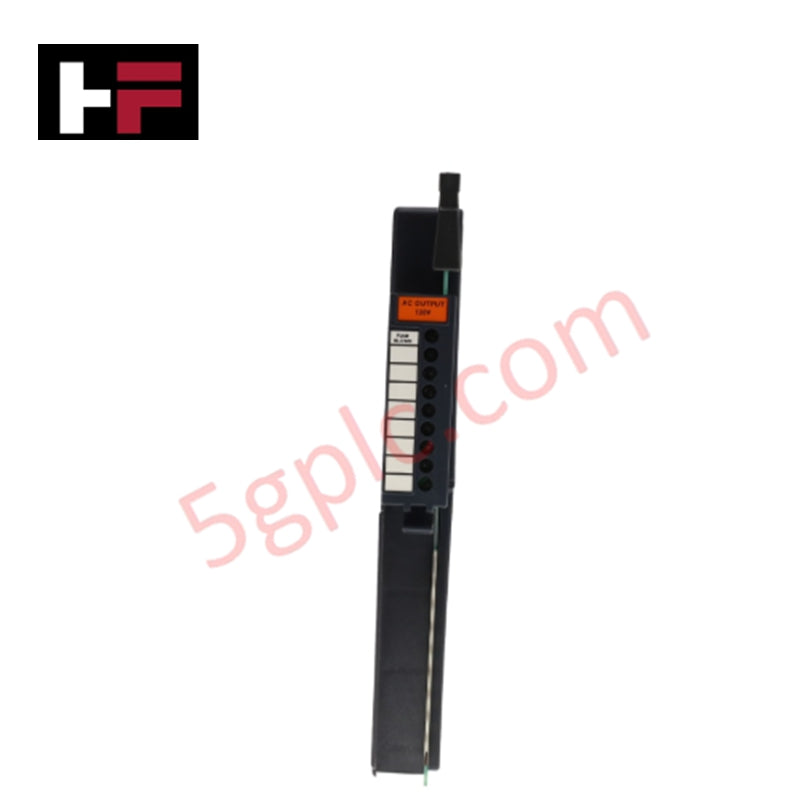
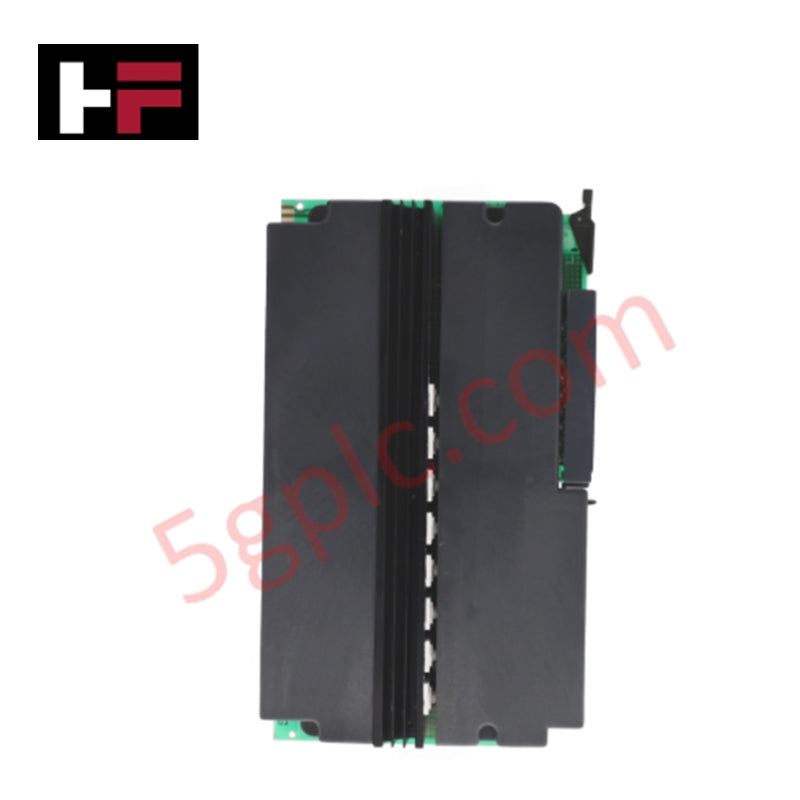
The 1771-OA is a rugged, 8-point digital AC output module designed for the Allen-Bradley PLC-5 (1771) I/O platform. It is engineered to switch 120V AC industrial loads, such as motor starters, solenoids, indicators, and small AC-operated actuators. As a cornerstone of the legacy 1771 chassis-based architecture, the 1771-OA utilizes solid-state triac switching to provide reliable, arc-free operation. Each output is independently fused to protect the module's internal circuitry from field-side electrical faults, making it a highly resilient choice for heavy-duty manufacturing and process control environments.
Detailed Engineering Specifications
The 1771-OA is a high-current module, capable of handling significant electrical loads directly without the need for interposing relays in many applications.
-
Module Type: Digital AC Output (Triac)
-
Number of Outputs: 8 Points
-
Voltage Category: 120V AC
-
Operating Voltage Range: 92V to 138V AC (@ 47–63 Hz)
-
Max Continuous Current (Per Channel): 1.5 Amperes
-
Max Continuous Current (Per Module): 6.0 Amperes
-
Surge Current (Max): 10 Amperes for 100 ms (repeatable every 2 seconds)
-
Backplane Current Draw: 1.5 Amperes @ 5V DC
-
Power Dissipation: 1.1 Watts (Min) to 10.7 Watts (Max)
-
Thermal Dissipation: 3.4 to 36.6 BTU/hr
-
Signal Delay (Off-to-On): 1.0 ms
-
Signal Delay (On-to-Off): 45 ms (±15 ms)
-
Off-State Leakage Current: 3.0 mA (Max) @ 132V AC
-
Data Format: BCD or Natural Binary
-
Physical Weight: 1.00 lbs (0.45 kg)
Installation and Field Wiring
The 1771-OA requires the use of a 1771-WA or 1771-WH field wiring arm. The wiring arm allows for the module to be replaced without disconnecting individual field wires, significantly reducing downtime during maintenance. To ensure the module is inserted correctly into the 1771 chassis, the backplane must be keyed using plastic keying bands at the following positions:
-
Upper Connector: Between pins 4 and 6
-
Lower Connector: Between pins 12 and 14
Fusing and Protection
Each output on the 1771-OA is protected by a 2.0 Ampere, 250V fuse (typically a 3AG or equivalent). These fuses are located behind the front pivot-up cover of the module. If an output is overloaded or a short circuit occurs in the field, the fuse will blow to prevent damage to the module's triacs. It is recommended to use shielded cabling for long runs to reduce electromagnetic interference, though standard THHN industrial wiring is common for discrete AC signals.
Technical FAQ
Can I use the 1771-OA to switch DC loads?
No. The 1771-OA uses triacs for switching, which require an AC zero-crossing to turn off. If used with a DC load, the output will turn on but will not turn off until power is physically removed.
What is the "Off-State Leakage Current," and why does it matter?
Triac-based modules like the 1771-OA have a small amount of leakage current (3.0 mA) even when the output is "Off." If you are controlling a very high-impedance load, such as a low-wattage LED indicator or a sensitive relay, this leakage might be enough to keep the device partially energized. In these cases, a "leakage resistor" (load resistor) must be wired in parallel with the load.
What is the difference between the 1771-OA and the 1771-OAD?
The 1771-OA is a standard 8-point module. The 1771-OAD is a high-density 16-point version. While the OAD saves rack space, it typically has a lower current rating per point compared to the 1.5A rating of the 1771-OA.
Additional Information
- 100% Genuine Parts: All products are original and authentic, ensuring reliable industrial performance.
- 30-Day Refund Guarantee: Return any in-stock item within 30 days in original, unopened packaging for a full refund (excluding shipping and fees).
- 12-Month Warranty: Covers defects in materials or workmanship; excludes misuse, normal wear, or unauthorized modifications.
- Worldwide Shipping: We ship via USPS, UPS, FedEx, and DHL. Delivery times vary by country and may be subject to customs or import fees.
- Support & Contact: Technical and warranty assistance is available anytime. Contact us here: Contact.
- Purchase Guidance: Check product specifications and compatibility carefully before ordering to ensure proper application.
Tech & Buying Guide

Voice-Activated Industrial Automation: Integrating Speech Control into PLC and DCS Architectures
Industrial automation integrates speech recognition, IIoT protocols, and NLP with PLCs and DCS to streamline operations. By leveraging advanced edge computing, engineers enable real-time, hands-free control—allowing personnel to manage smart factory processes safely away from hazardous equipment.

Modern Industrial Automation: Transforming Safety and Efficiency in Mining Operations
Industrial automation has evolved from a simple manufacturing tool into the operational backbone of high-risk sectors. Modern mining operations increasingly rely on advanced control systems, programmable logic controllers (PLCs), distributed control systems (DCS), and artificial intelligence to address deep-underground hazards. By replacing manual labor in high-risk zones, factory automation technologies protect personnel while significantly boosting operational throughput.