










Product Details
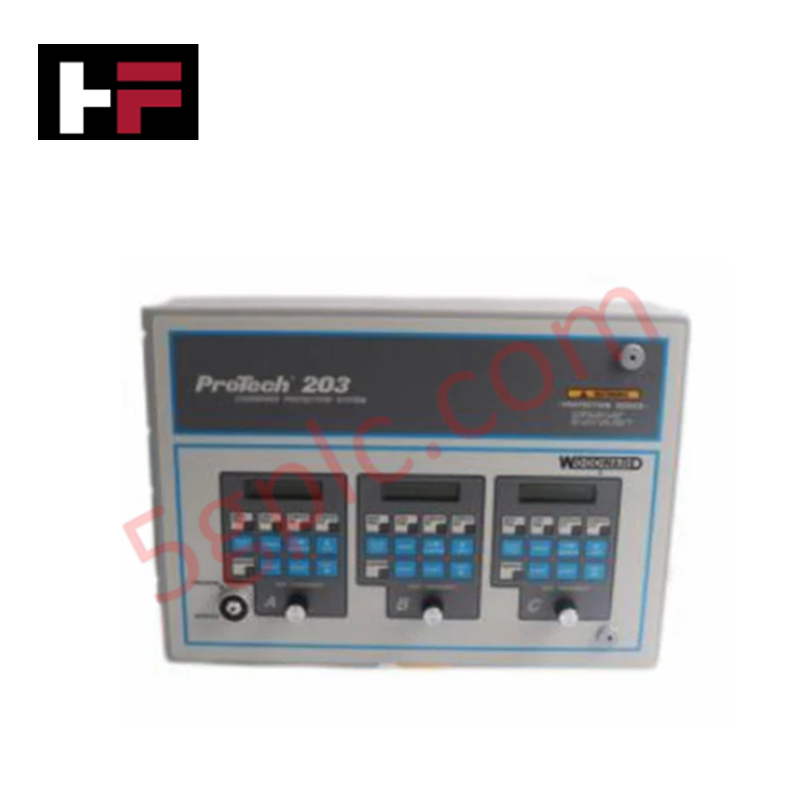
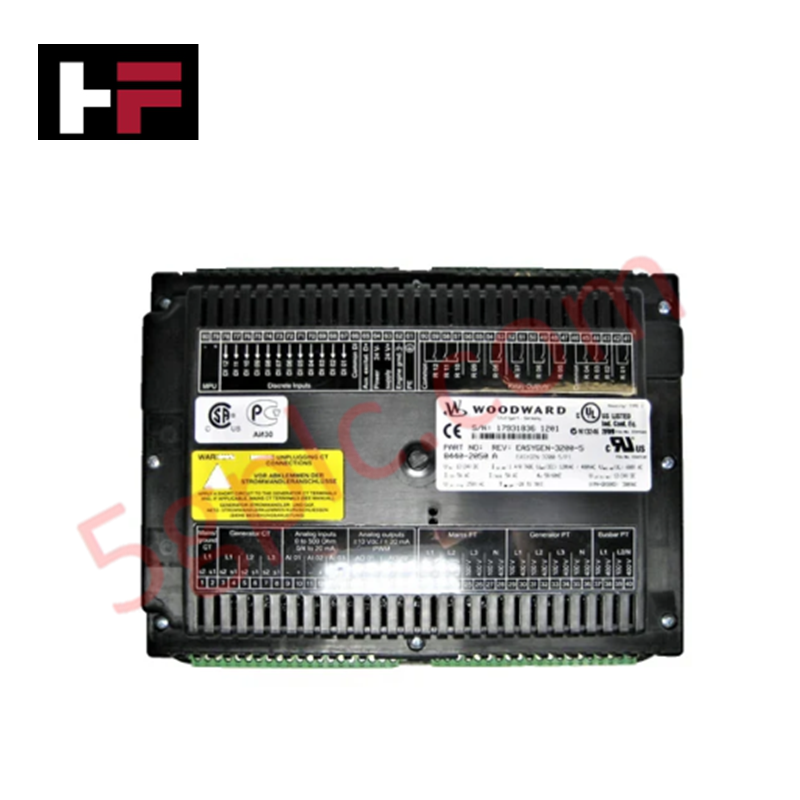
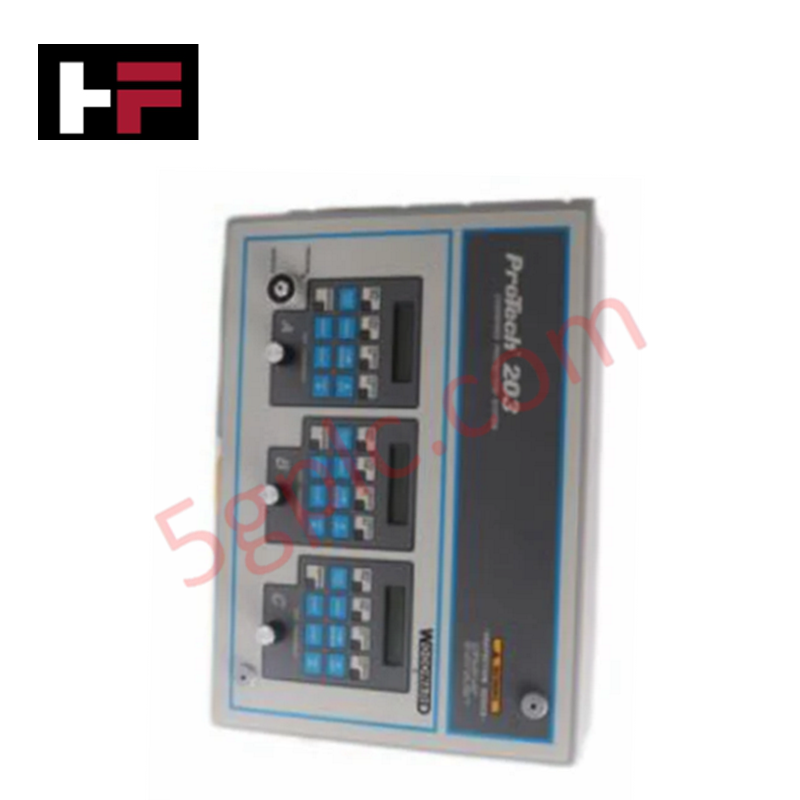
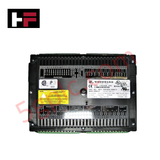
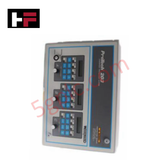
Configured for overspeed detection in turbine control systems, the Woodward 8200-205 (8200-205 Overspeed Protection System) provides direct electrical execution of triple modular redundant (TMR) speed sensing and trip logic.
Hardware Specifications
| Parameter | Specification |
|---|---|
| Model | 8200-205 |
| Brand | Woodward |
| Weight | 13.06 lbs |
| Dimensions | 19.0 in x 12.24 in x 5.62 in |
| Operating Temp | -15 deg C to +60 deg C |
| Power Consumption | Not specified |
| Input Voltage | 220 VAC |
| Trip Frequency | 250 Hz to 25 kHz |
Actuator Loop Feedback Response and Load Management
The 8200-205 utilizes a TMR architecture requiring three independent magnetic pickup inputs to monitor prime mover rotational frequency. The system performs continuous monitoring for overspeed conditions and loss-of-signal scenarios, utilizing de-energize-to-trip logic for fail-safe operation. The controller supports internal self-diagnostics to detect CPU and MPU failures, reporting status via the integrated display and keypad interface. To maintain signal integrity within the sensing loops, cable runs should be minimized, and shielding must be applied to prevent electromagnetic interference from inducing false speed readings. The operational environment must comply with IP54 and NEMA 4/4X standards to ensure the longevity of internal electronics against moisture and dust ingress.
Frequently Asked Questions
Q: Can the operational modes (PROGRAM vs. MONITOR) be accessed without the physical key?
A: No. Mode switching is strictly hardware-locked to prevent unauthorized configuration changes. Key lock access is mandatory for any adjustment to the internal protection parameters or turbine start/reset methods.
Q: How does the system handle a loss-of-signal condition in one of the three magnetic pickup channels?
A: The ProTech 203 system continually compares inputs across the three channels. A loss-of-signal in a single channel triggers an indication, allowing the system to maintain protection logic while identifying the faulty input sensor for maintenance intervention.
Field Installation Guidelines
- Mounting: Ensure the enclosure is mounted on a rigid, vibration-isolated surface. Adhere to NEMA 4/4X standards for enclosure integrity, utilizing appropriate cable glands for all conduit entries.
- Wiring: Connect the three magnetic pickups to the dedicated sensing inputs. Use high-quality shielded twisted-pair cabling for all speed signals, ensuring the shield is terminated to the common ground bus within the protection cabinet.
- Configuration: Upon installation, verify the selected turbine start method (separate start/reset or combined start/reset) according to the site-specific control requirements defined in manual 85205.
- Testing: Perform a low-speed simulation test prior to turbine startup to verify that the trip-point frequency ranges (250 Hz to 25 kHz) are correctly calibrated to the specific prime mover's speed characteristics.
Additional Information
- 100% Genuine Parts: All products are original and authentic, ensuring reliable industrial performance.
- 30-Day Refund Guarantee: Return any in-stock item within 30 days in original, unopened packaging for a full refund (excluding shipping and fees).
- 12-Month Warranty: Covers defects in materials or workmanship; excludes misuse, normal wear, or unauthorized modifications.
- Worldwide Shipping: We ship via USPS, UPS, FedEx, and DHL. Delivery times vary by country and may be subject to customs or import fees.
- Support & Contact: Technical and warranty assistance is available anytime. Contact us here: Contact.
- Purchase Guidance: Check product specifications and compatibility carefully before ordering to ensure proper application.
Tech & Buying Guide
Mastering Modern Industrial Joystick Controls in Heavy Automation
Industrial joysticks play a pivotal role in human-machine interaction across heavy material handling and mobile hydraulics. These tactile controllers translate complex operator movements into precise electrical signals for PLCs, motion controllers, and DCS networks. Consequently, selecting and installing the right joystick architecture ensures operator safety, reduces fatigue, and optimizes equipment performance.

Navigating Industrial Automation Failures: Types, Causes, and Mitigation Strategies
Modern manufacturing relies heavily on automated control systems to maximize throughput and maintain product quality. However, unplanned downtime in industrial automation can cost facility operators thousands of dollars per hour. Understanding how programmable logic controllers (PLCs), distributed control systems (DCS), and field instrumentation fail empowers engineering teams to implement robust preventive maintenance strategies.
Essential Motion Control Commands: A Practical Guide for Engineers
Automation engineers often rely on precise position and speed control to drive modern factory machinery. Modern industrial systems, such as Programmable Logic Controllers (PLCs) and Distributed Control Systems (DCS), depend heavily on standardized motion instructions. Mastering these commands ensures operational safety, protects mechanical components, and optimizes cycle times across production lines.