










Product Details
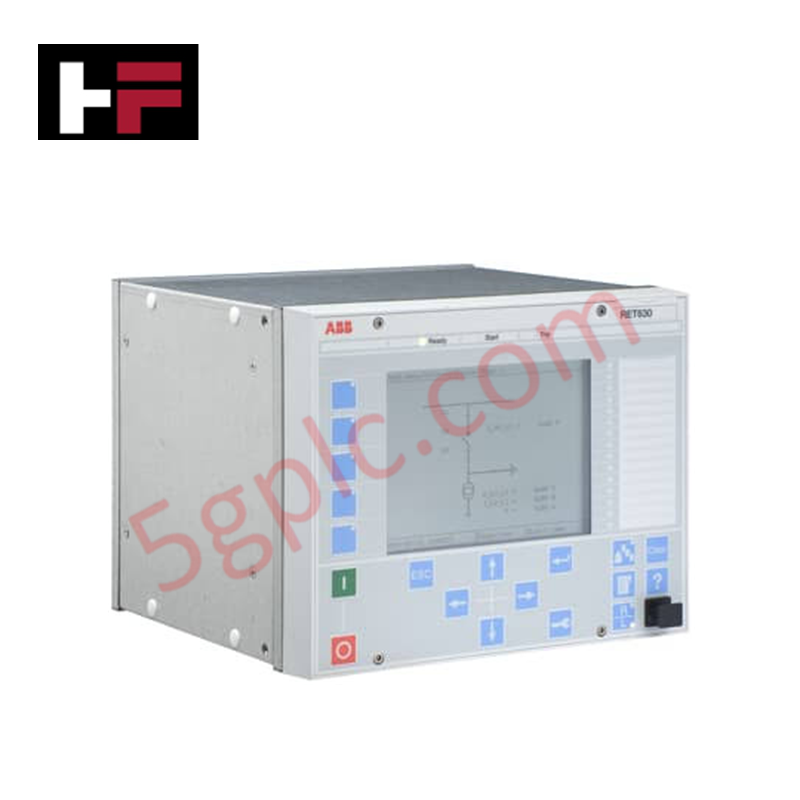
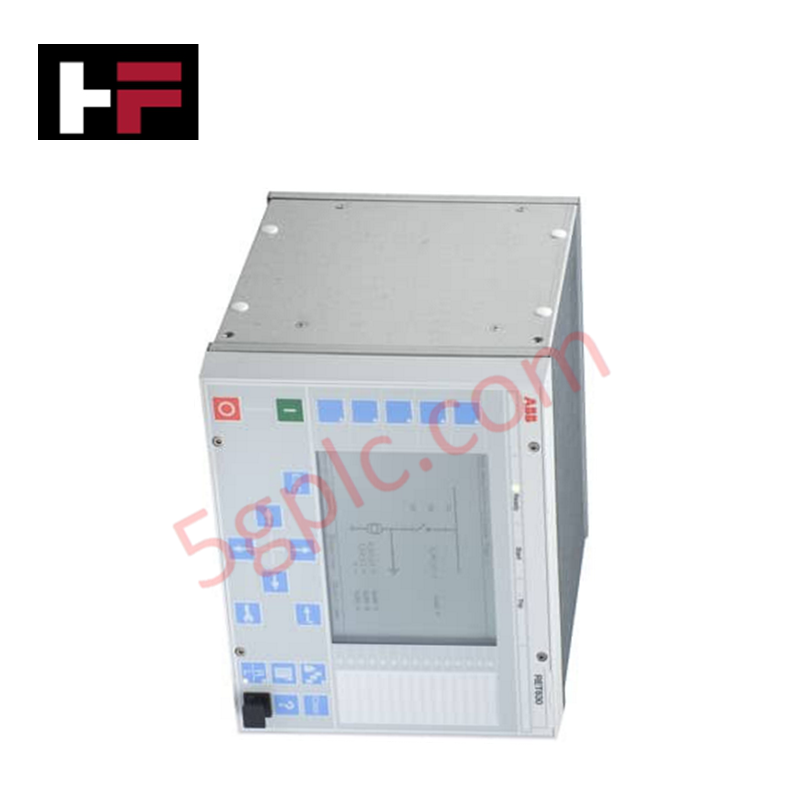
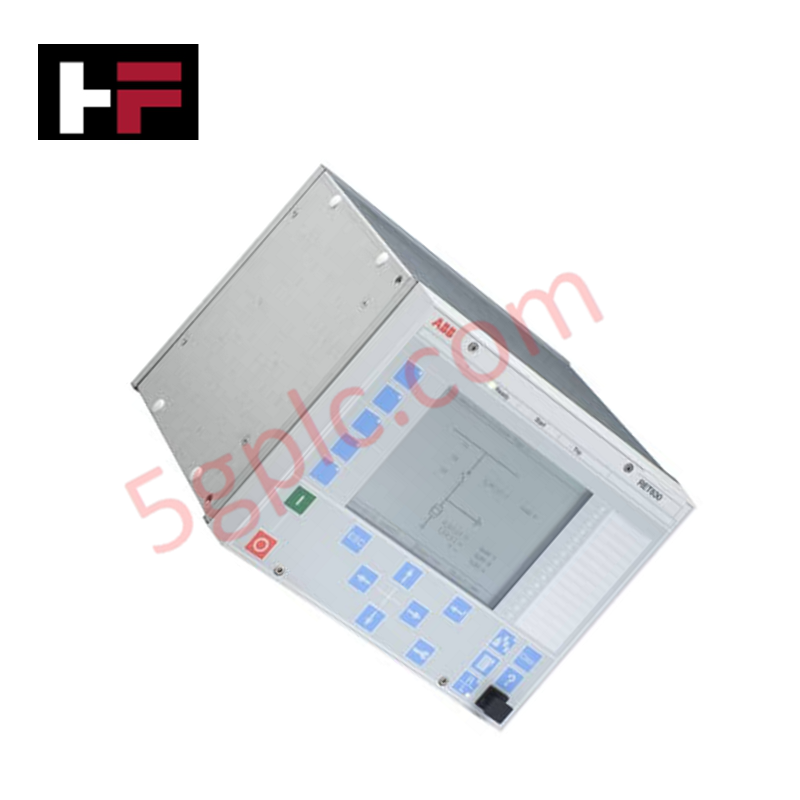
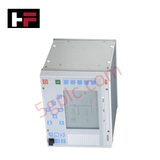
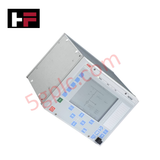
The ABB RET630 serves as the primary RET630 Transformer Protection and Control IED utilized to execute main differential protection, bay control, and localized measurement tasks across IEC 61850 station automation platforms. The hardware processes physical current and voltage signals from two-winding power transformers and generator-transformer blocks, providing automated real-time supervision and electrical execution without human intervention. The component utilizes scalable functional configuration blocks to align internal execution logic with external substation hardware configurations.
Hardware Specifications
| Parameter | Specification |
|---|---|
| Model | RET630 |
| Brand | ABB |
| Origin | Finland |
| Weight | 5.2 kg |
| Dimensions | 177 mm x 221 mm x 211 mm |
| Operating Temp | -25 to +55 deg C |
| Power Consumption | 25 W |
| Nominal Frequency | 50 / 60 Hz |
| Communication Protocols | IEC 61850-8-1, DNP3, Modbus |
| Analog Inputs | 10 CT/PT channels standard capacity |
| Binary I/O Capacity | Scalable via expansion slots |
I/O Density Scaling and Firmware Flash Compatibility
The hardware architecture utilizes a modular backplane design that regulates I/O density scaling based on real-time application profiles. Firmware flash compatibility checks are enforced at boot to prevent configuration mismatches between the primary processing unit and downstream binary or analog expansion sub-modules. Hardware interfaces map physical inputs directly to the internal execution matrix, ensuring deterministic network data packet transmission over the integrated Ethernet interfaces when communicating with SCADA networks via the IEC 61850 protocol.
Frequently Asked Questions
Q: How does the unit maintain data integrity during a localized firmware flash sequence?
A: The device utilizes a non-volatile flash memory architecture that partitions the active runtime configuration from the staging firmware container, preventing module failure if communication is interrupted during the update process.
Q: What are the physical constraints regarding binary input expansion module scaling?
A: Total current draw across the internal backplane bus restricts expansion to the maximum number of physical slots provided by the specific chassis layout configuration; exceeding this limit triggers a thermal or overcurrent diagnostic fault.
Q: Does the analog input subsystem require manual calibration when shifting nominal frequencies between 50 Hz and 60 Hz?
A: No, the nominal frequency parameter is adjusted inside the software configuration matrix, which automatically recalibrates the digital filtering algorithms and internal sampling clock frequency.
Field Installation Guidelines
During physical installation, mount the unit within a secure, grounded electronic enclosure to prevent EMI/RFI interference from adjacent high-voltage lines. Ensure all current transformer (CT) secondary circuits are securely fastened and short-circuited prior to disconnecting the terminal block from the rear panel interface to eliminate dangerous overvoltage conditions. All low-voltage signal wiring must be routed through dedicated conduit pathways separate from high-power alternating current distribution paths to suppress inductive cross-talk. Maintain a minimum of 50 mm clearance around the perimeter of the chassis enclosure to permit unhindered convective heat dissipation.
Additional Information
- 100% Genuine Parts: All products are original and authentic, ensuring reliable industrial performance.
- 30-Day Refund Guarantee: Return any in-stock item within 30 days in original, unopened packaging for a full refund (excluding shipping and fees).
- 12-Month Warranty: Covers defects in materials or workmanship; excludes misuse, normal wear, or unauthorized modifications.
- Worldwide Shipping: We ship via USPS, UPS, FedEx, and DHL. Delivery times vary by country and may be subject to customs or import fees.
- Support & Contact: Technical and warranty assistance is available anytime. Contact us here: Contact.
- Purchase Guidance: Check product specifications and compatibility carefully before ordering to ensure proper application.
Tech & Buying Guide
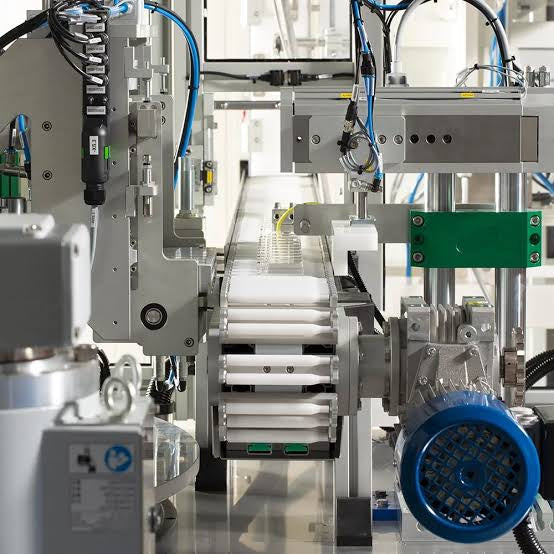
Mastering Modern Industrial Joystick Controls in Heavy Automation
Industrial joysticks play a pivotal role in human-machine interaction across heavy material handling and mobile hydraulics. These tactile controllers translate complex operator movements into precise electrical signals for PLCs, motion controllers, and DCS networks. Consequently, selecting and installing the right joystick architecture ensures operator safety, reduces fatigue, and optimizes equipment performance.

Navigating Industrial Automation Failures: Types, Causes, and Mitigation Strategies
Modern manufacturing relies heavily on automated control systems to maximize throughput and maintain product quality. However, unplanned downtime in industrial automation can cost facility operators thousands of dollars per hour. Understanding how programmable logic controllers (PLCs), distributed control systems (DCS), and field instrumentation fail empowers engineering teams to implement robust preventive maintenance strategies.
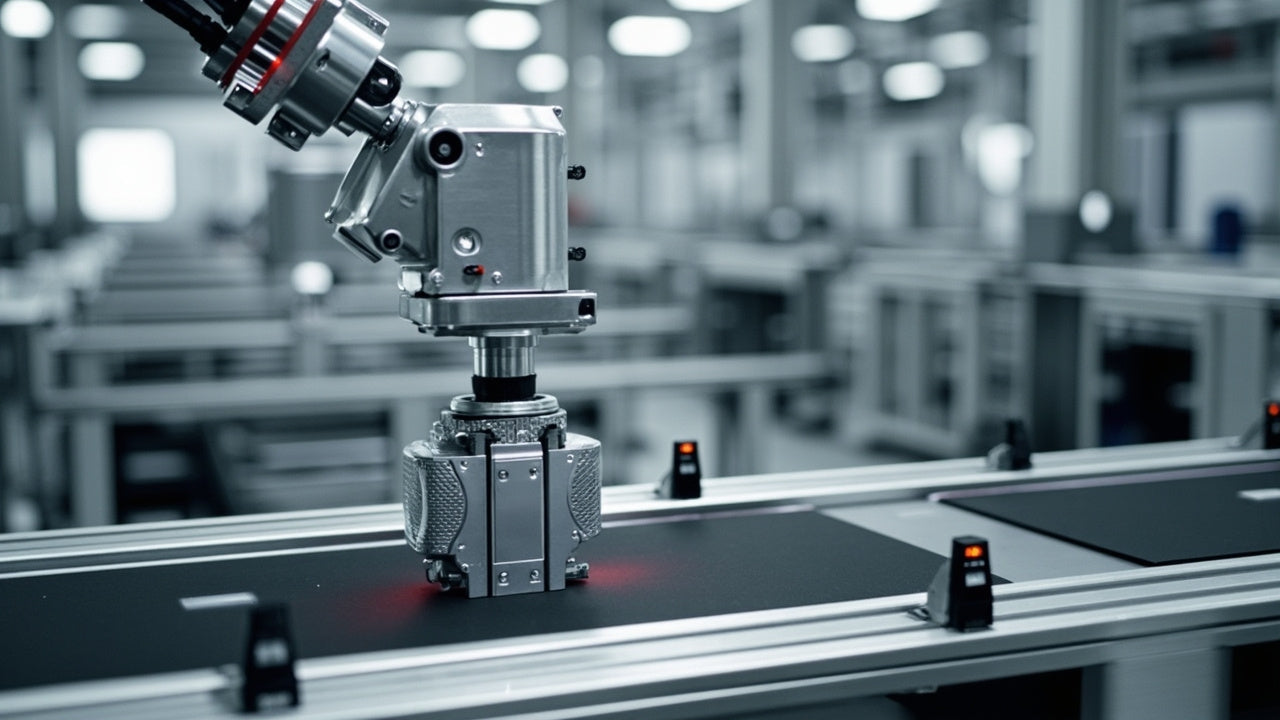
Essential Motion Control Commands: A Practical Guide for Engineers
Automation engineers often rely on precise position and speed control to drive modern factory machinery. Modern industrial systems, such as Programmable Logic Controllers (PLCs) and Distributed Control Systems (DCS), depend heavily on standardized motion instructions. Mastering these commands ensures operational safety, protects mechanical components, and optimizes cycle times across production lines.