










Power Electronics
Power Electronics includes industrial devices that manage, convert, and control electrical power within automation systems. This category covers drives, inverters, converters, and related modules designed for precise motor control, energy efficiency, and reliable operation. Widely applied in manufacturing, material handling, energy, and process industries, these products support system stability, long-term performance, and scalable industrial automation solutions.




Blog posts
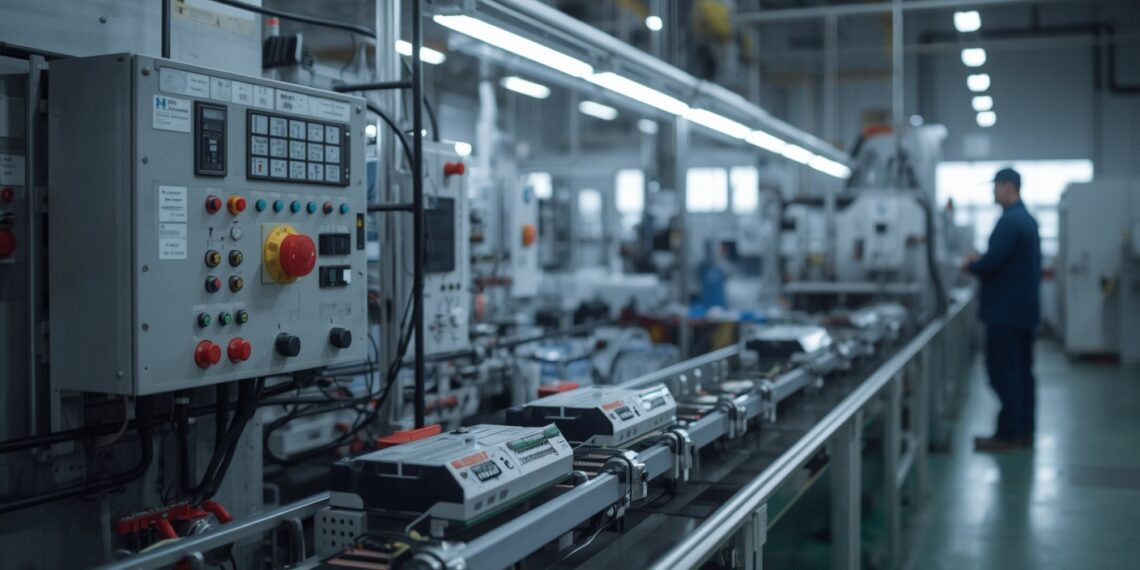
Redefining Control System Design: The Evolution of Flexible Input/Output Modules (FIOM) in Industrial Automation
Traditional industrial automation relies heavily on dedicated input-output (IO) modules. In a standard distributed control system (DCS) or programmable logic controller (PLC) setup, design engineers assign specific cards to distinct signal types. For instance, a traditional 16-channel digital input (DI) card exclusively processes digital signals. However, engineering projects frequently encounter last-minute changes in signal counts. Therefore, discovering a missing analog input (AI) channel late in the design phase forces engineers to purchase and install an entirely new, dedicated AI card. Consequently, this rigidity drives up hardware expenses, wastes cabinet space, and delays commissioning schedules.
Mastering VFD Braking Theory and Mechanical Brake Sequencing in Industrial Automation
In industrial automation, variable frequency drives (VFDs) regulate motor speed and torque across manufacturing plants and material handling systems. However, certain heavy-duty applications experience external loads that can rotate the motor shaft without an active command. For instance, gravity pulls loads downward in unanchored hoisting equipment. Therefore, engineers integrate mechanical brakes with VFD logic to maintain absolute safety and prevent structural damage or personnel injury during shutdowns.

Optimizing Tank Level Control Using Proportional Algorithms in PLC Systems
Industrial automation engineers frequently encounter liquid level regulation challenges across diverse process plants. Traditional ON-OFF control mechanisms often disrupt system stability due to abrupt actuator switching. Therefore, upgrading to closed-loop architectures like proportional control yields smoother responses. In a typical PLC environment, such as Siemens TIA Portal, engineers utilize closed-loop feedback to minimize process errors without requiring full PID complexity.