










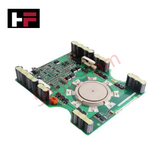
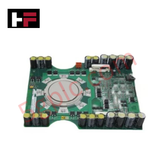
Product Details
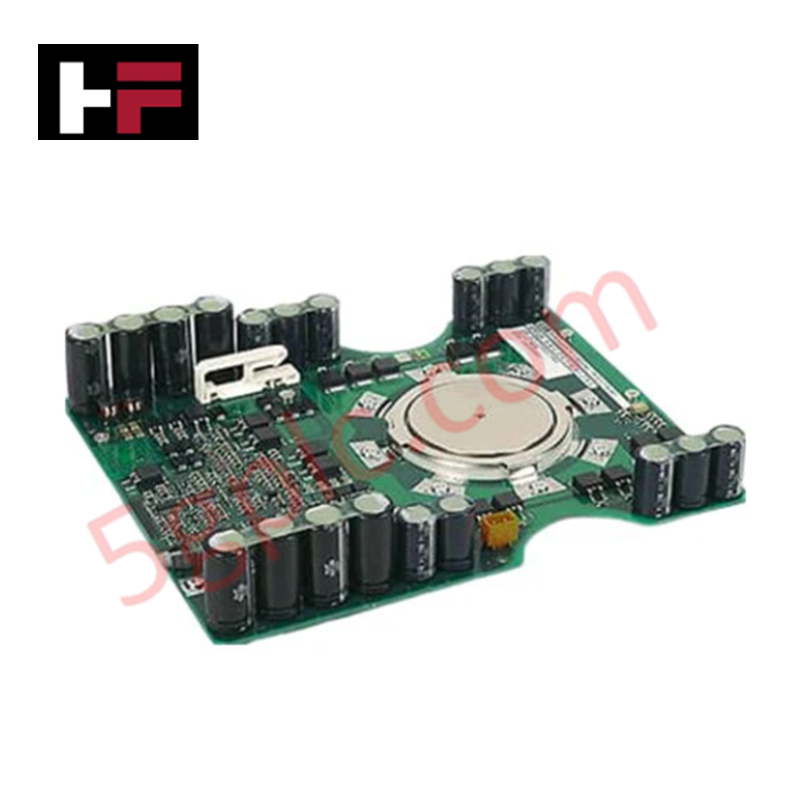
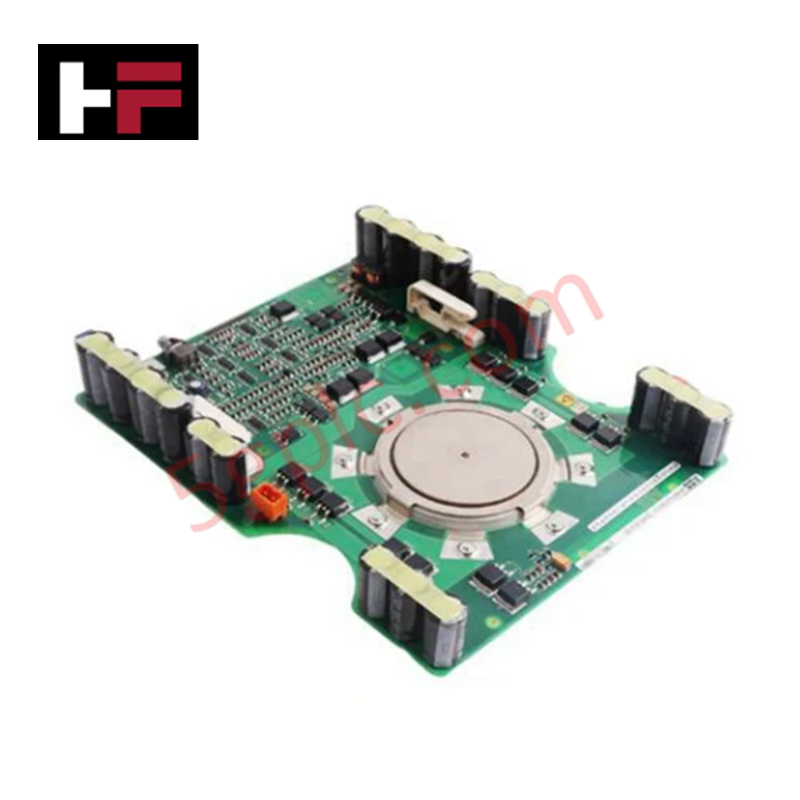
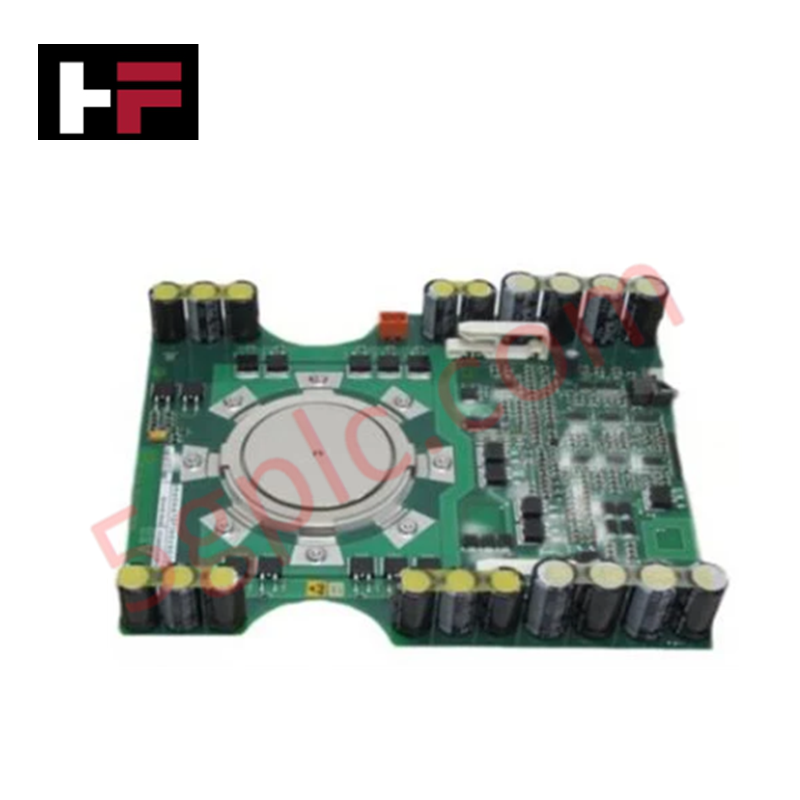
Configured for high-capacity current switching in heavy-duty drive systems, the ABB 3BHB005171R0101 (3BHB005171R0101 Gate-Commutated Thyristor Module) provides direct physical/electrical execution. It integrates the 5SHY3545L0002 semiconductor element alongside an embedded gate driver assembly to control high-voltage and megawatt-scale industrial power distribution networks without intermediate mechanical switching delays.
Hardware Specifications
| Parameter | Specification |
|---|---|
| Model | 3BHB005171R0101 |
| Brand | ABB |
| Semiconductor Sub-Module | 5SHY3545L0002 |
| Assembly Number | 3BHL000986P3105 |
| Origin | Germany / Switzerland |
| Current Rating | 1150 A |
| Operating Temp | Standard Industrial Grade (Refer to system enclosure limitations) |
| Power Consumption | Determined by gate driver supply and switching frequency |
| Dimensions | Compact cabinet footprint (Specific mm profiles subject to housing) |
| Weight | Heavy-duty industrial grade (Refer to factory package manifest) |
Industrial Drives and Control Systems Technical Features
The hardware relies heavily on internal backplane bus communication velocity and optimized switching matrices to ensure deterministic operation across industrial control loops. High I/O density scaling inside the module allows the embedded gate driver to receive switching commands with sub-microsecond latency. The gate driver circuit functions via dedicated power rails matching the industrial control network architecture, ensuring that firmware flash compatibility aligns with the host controller. This arrangement eliminates switching jitter and guarantees synchronous operation within high-power topology arrays.
Frequently Asked Questions
Q: Does the embedded gate driver require an external auxiliary power supply?
A: Yes, the integrated gate driver requires a stabilized, external DC power source via its dedicated control interface connectors to actuate the internal semiconductor gate and maintain the firing state.
Q: Can this module be hot-swapped while the primary power bus is energized?
A: No. Hot-swapping is strictly prohibited. The main DC/AC bus bars and control power must be completely de-energized, locked out, and discharged before attempting to remove or install this unit.
Q: What is the significance of the 5SHY3545L0002 number listed on the module?
A: The 5SHY3545L0002 designates the specific integrated semiconductor element used within the overall 3BHB005171R0101 module assembly, serving as the core current-carrying hardware.
Field Installation Guidelines
- Bus Bar Torque and Alignment: Ensure all primary electrical terminal connections are tightened strictly to factory-specified torque settings to prevent localized thermal degradation. Avoid placing structural stress on the module housing during mounting.
- Gate Driver Shielding and Control Wiring: Route all low-voltage control signals and fiber-optic triggers away from high-current AC or DC phase cables to suppress electromagnetic interference (EMI). Maintain standard industrial shielding separation gaps.
- Thermal Dissipation Matrix: Ensure the module is flush-mounted against the designated heat sink or cooling plate interface. Use an approved, evenly distributed layer of thermal conductive paste to ensure proper heat transfer out of the semiconductor substrate.
Additional Information
- 100% Genuine Parts: All products are original and authentic, ensuring reliable industrial performance.
- 30-Day Refund Guarantee: Return any in-stock item within 30 days in original, unopened packaging for a full refund (excluding shipping and fees).
- 12-Month Warranty: Covers defects in materials or workmanship; excludes misuse, normal wear, or unauthorized modifications.
- Worldwide Shipping: We ship via USPS, UPS, FedEx, and DHL. Delivery times vary by country and may be subject to customs or import fees.
- Support & Contact: Technical and warranty assistance is available anytime. Contact us here: Contact.
- Purchase Guidance: Check product specifications and compatibility carefully before ordering to ensure proper application.
Tech & Buying Guide

Transforming Shop Floor Data into Actionable Insights: A Deep Dive into MES
Manufacturing Execution Systems serve as the digital backbone of modern factory floors. Positioned at Level 3 of the ISA-95 automation pyramid, MES links enterprise resource planning with real-time shop floor control systems. Today, industrial operators rely on MES software to bridge operational strategy with physical production execution.

Managed Switch vs. Unmanaged Switch: Industrial Ethernet Architecture

Hot Standby vs. Cold Standby Redundancy in Industrial Automation
System availability determines process safety and productivity in industrial automation. Control engineers deploy redundancy to eliminate single points of failure. This technical guide evaluates Hot Standby vs. Cold Standby architectures, comparing failover speeds, memory sync, cost trade-offs, and field selection criteria.