












Product Details
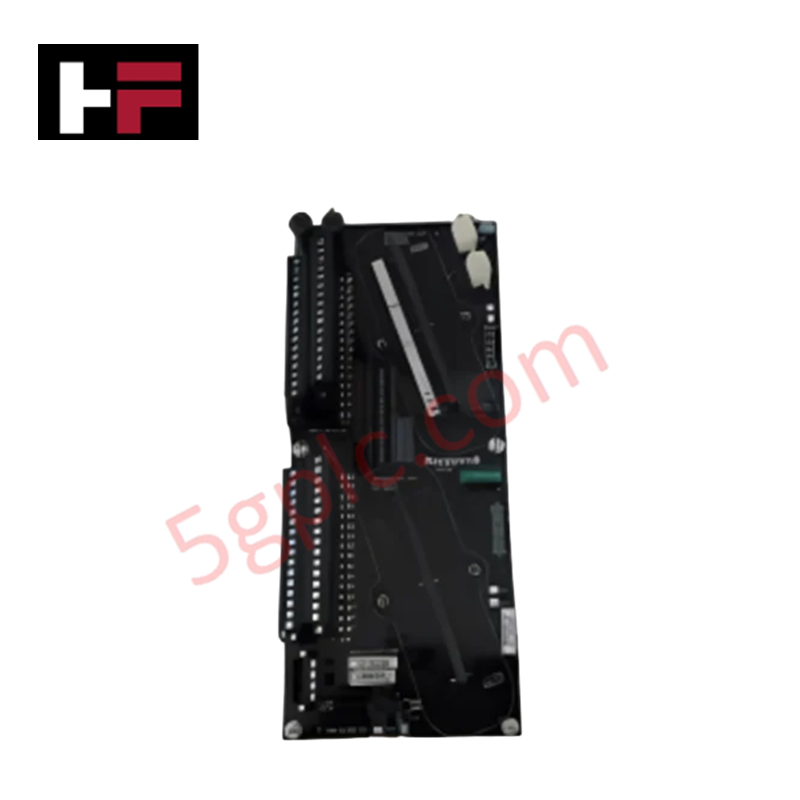
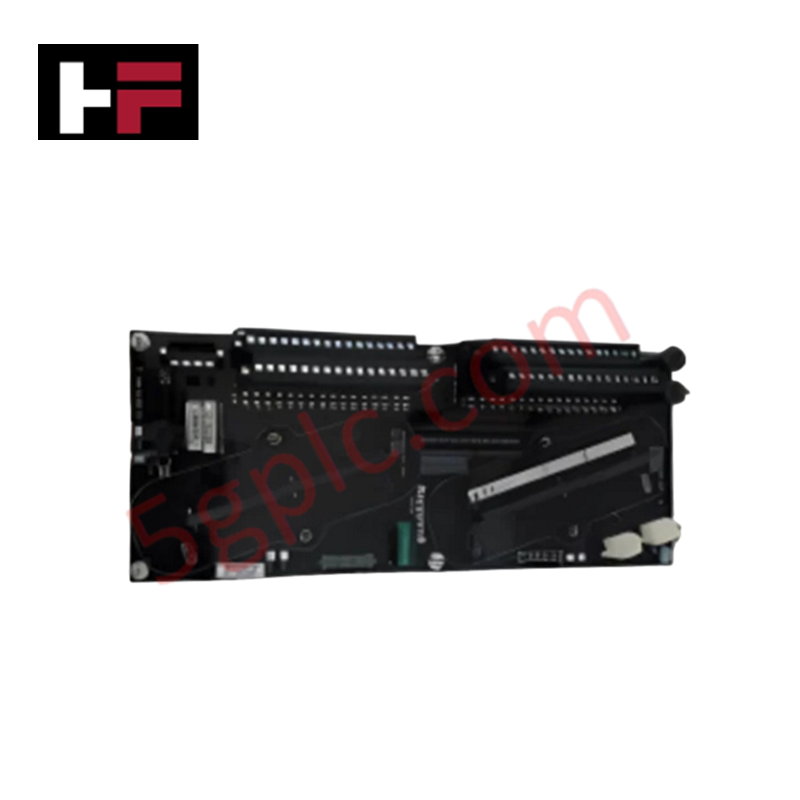
Configured for burner management and safety sequencing in industrial combustion systems, the Honeywell RM7885A1015, also cataloged as the RM7885A1015 Flame Safety Burner Control module, provides direct physical/electrical execution.
Hardware Specifications
| Parameter | Specification |
|---|---|
| Model | RM7885A1015 |
| Brand | Honeywell |
| Origin | Standard Industrial Manufacturing |
| Weight | 1.9 lbs |
| Dimensions | 127 x 127 x 133 mm |
| Operating Temp | -40 deg C to +60 deg C |
| Power Consumption | Max 10 W |
| Input Voltage | 120 VAC (+10%, -15%), 50/60 Hz |
| Connected Load | 2000 VA max |
| Pilot Establishing Period | 10 seconds |
Channel-To-Channel Isolation And Loop Protocol Integrity
The module integrates specialized flame amplifier inputs compatible with R7847, R7848, R7849, R7851, R7861, and R7886 sensors, maintaining strict electrical isolation between high-voltage control circuits and low-voltage logic terminals. It supports 4-20 mA HART loop protocol integration where applicable and provides galvanic separation to protect burner management networks from electromagnetic interference and ground potential shifts. Cold junction compensation (CJC) and internal nonvolatile memory safeguard sequence tracking and flame signal retention during transient power fluctuations.
Frequently Asked Questions
Q: Can the RM7885A1015 burner control module be hot-swapped while the burner management panel is energized?
A: No. Main electrical power and 120 VAC supply lines must be completely isolated and locked out prior to removing or inserting the module on its Q7800 subbase to prevent internal component damage or accidental ignition staging.
Q: What specific safety fusing is required for the power input circuit?
A: The input circuit requires a maximum 15 A time-delay fuse (type S/C or equivalent) to protect against overcurrent faults on the 120 VAC line.
Field Installation Guidelines
- Ensure all primary 120 VAC power feeds and burner interlock circuits are locked out and tagged out before handling the unit.
- Mount the module securely onto a compatible Q7800A/B universal wiring subbase, ensuring all plug-in pin connectors seat fully without binding.
- Verify correct wiring of the 15 A max slow-blow fuse and ensure flame detector signal leads maintain proper shielding against high-voltage ignition interference.
- Test system sequencing, pilot flame establishing periods, and safety shut-off valve response via manual burner startup checks before returning the equipment to service.
Additional Information
- 100% Genuine Parts: All products are original and authentic, ensuring reliable industrial performance.
- 30-Day Refund Guarantee: Return any in-stock item within 30 days in original, unopened packaging for a full refund (excluding shipping and fees).
- 12-Month Warranty: Covers defects in materials or workmanship; excludes misuse, normal wear, or unauthorized modifications.
- Worldwide Shipping: We ship via USPS, UPS, FedEx, and DHL. Delivery times vary by country and may be subject to customs or import fees.
- Support & Contact: Technical and warranty assistance is available anytime. Contact us here: Contact.
- Purchase Guidance: Check product specifications and compatibility carefully before ordering to ensure proper application.




Tech & Buying Guide

Comparing PID and Model Predictive Control (MPC) in Industrial Automation
Advanced process control strategies remain fundamental for maintaining optimal plant efficiency and product quality. Therefore, control engineers frequently evaluate whether a traditional Proportional-Integral-Derivative (PID) algorithm or a Model Predictive Control (MPC) strategy suits a given application. In my 15 years of commissioning distributed control systems (DCS) and factory automation networks, I have tuned thousands of PID loops while deploying complex MPC packages on multivariable distillation columns. Below, I break down the core operational differences between these two foundational control methodologies.
Mastering Time Synchronization in Industrial Automation Applications
Precise time synchronization remains vital for modern industrial automation, distributed control systems (DCS), and power protection networks. Therefore, control engineers must maintain uniform clocks across all controllers, human-machine interfaces (HMIs), and supervisory stations. In my 15 years of commissioning complex industrial automation projects, I have frequently investigated root-cause failures where misaligned timestamps obscured the true sequence of events. Below, I break down the core time synchronization protocols and methods essential for reliable factory automation.

Designing Robust SCADA Systems for Electrical Substation Automation
Electrical substation automation requires rigorous engineering standards to guarantee uninterrupted power distribution and grid stability. Therefore, control engineers must design supervisory control and data acquisition (SCADA) architectures with absolute precision. In my 15 years of commissioning power protection and substation automation systems, I have witnessed how meticulous SCADA design prevents catastrophic grid failures. Below, I outline the critical engineering practices required to build reliable substation SCADA solutions.