












Product Details
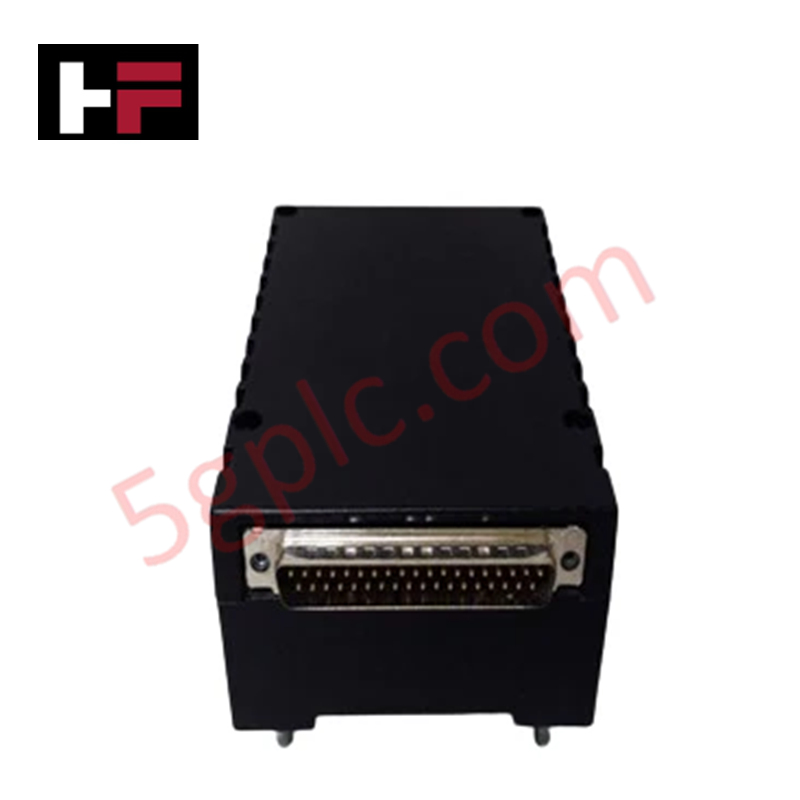
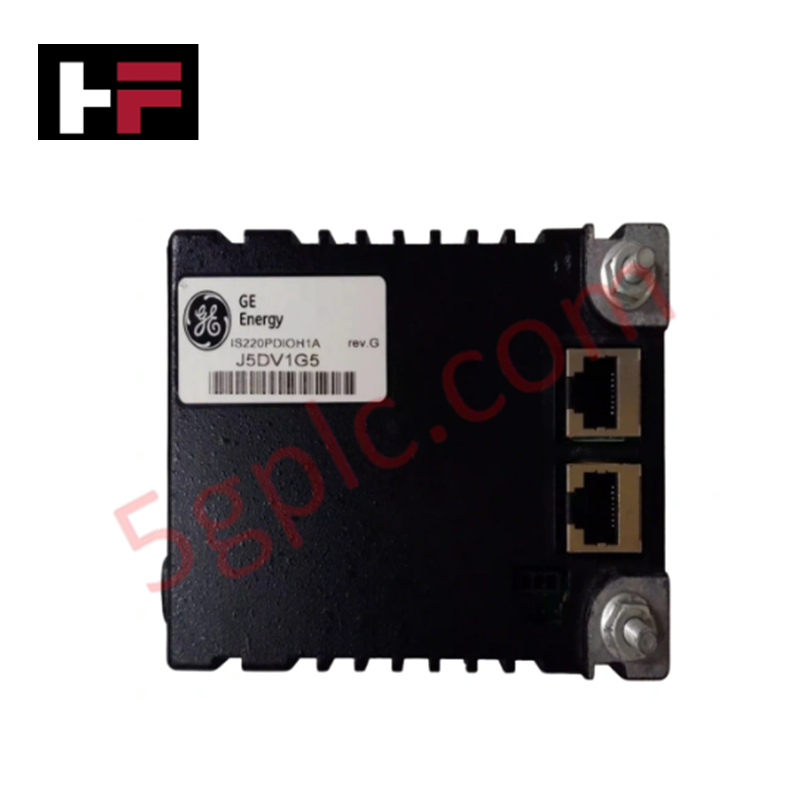
Configured for discrete I/O signal processing in Mark VIe control architectures, the GE IS220PDIOH1A (IS220PDIOH1A Discrete Contact Input/Output Terminal Board) provides direct physical and electrical execution of multi-channel signal routing and contact output switching.
Hardware Specifications
| Parameter | Specification |
|---|---|
| Model | IS220PDIOH1A |
| Brand | General Electric |
| Origin | USA |
| Weight | Standard terminal board assembly |
| Dimensions | 15.875 cm x 10.795 cm |
| Operating Temp | -40 deg C to 70 deg C |
| Power Consumption | System-bus dependent |
| Digital Inputs | 24 channels (Active High/Low) |
| Relay Outputs | 12 channels (Form C) |
| Isolation | Optical or Galvanic (1500 V input) |
| Response Time | < 5 ms |
Profinet / EtherNet/IP Deterministic Networks
The IS220PDIOH1A integrates into the Mark VIe platform to facilitate deterministic discrete signal exchange. The module utilizes hardware filtering with a 4 ms response time to ensure signal integrity and rejection of AC interference up to 60 V RMS. Backplane bus communication velocity is maintained through high-speed I/O pack interfacing, which governs the state transition timing of the 24 digital inputs and 12 relay command channels. Firmware flash compatibility is managed via the controller's I/O configuration, allowing for precise control of I/O density scaling across the cabinet. The terminal board supports versatile voltage ranges (5 VDC to 250 VAC), ensuring compatibility with diverse field instrument logic levels while providing robust optical or galvanic isolation to protect system electronics.
Frequently Asked Questions
Q: Is the IS220PDIOH1A terminal board hot-swappable under energized conditions?
A: No. The board must be de-energized prior to any removal or installation procedure to prevent damage to the backplane communication pins or transient current discharge on the relay output contacts.
Q: Are the 12 Form C relay contacts capable of switching high-inductive loads?
A: The relay contacts are rated for 5 A; however, when switching highly inductive loads, external suppression devices such as flyback diodes or RC snubbers are required to prevent contact pitting and premature relay failure.
Field Installation Guidelines
- Mounting: Secure the module using standard DIN-rail mounting techniques. Ensure the assembly is locked firmly onto the rail to maintain structural stability and electrical grounding integrity.
- Wiring: Terminate field wiring for the 24 digital inputs and 12 Form C outputs. Use shielded, twisted-pair cabling for all input signal lines, ensuring shields are bonded to the cabinet's common ground to mitigate electromagnetic interference.
- Signal Logic: Configure the input signal logic (Active High or Active Low) within the Mark VIe control software to match the field sensor output state.
- Environment: Verify that the installation location is within the -40 deg C to 70 deg C operating range. Ensure adequate spacing between high-voltage power lines and signal terminal blocks to prevent crosstalk.
- Verification: Before system commissioning, verify the optical/galvanic isolation status by measuring input-to-ground resistance. Confirm relay functionality by triggering manual commands through the controller diagnostic interface.
Additional Information
- 100% Genuine Parts: All products are original and authentic, ensuring reliable industrial performance.
- 30-Day Refund Guarantee: Return any in-stock item within 30 days in original, unopened packaging for a full refund (excluding shipping and fees).
- 12-Month Warranty: Covers defects in materials or workmanship; excludes misuse, normal wear, or unauthorized modifications.
- Worldwide Shipping: We ship via USPS, UPS, FedEx, and DHL. Delivery times vary by country and may be subject to customs or import fees.
- Support & Contact: Technical and warranty assistance is available anytime. Contact us here: Contact.
- Purchase Guidance: Check product specifications and compatibility carefully before ordering to ensure proper application.
Tech & Buying Guide

Essential Motion Control Commands: A Practical Guide for Engineers
Automation engineers often rely on precise position and speed control to drive modern factory machinery. Modern industrial systems, such as Programmable Logic Controllers (PLCs) and Distributed Control Systems (DCS), depend heavily on standardized motion instructions. Mastering these commands ensures operational safety, protects mechanical components, and optimizes cycle times across production lines.

Mastering Modern Industrial Joystick Controls in Heavy Automation
Industrial joysticks play a pivotal role in human-machine interaction across heavy material handling and mobile hydraulics. These tactile controllers translate complex operator movements into precise electrical signals for PLCs, motion controllers, and DCS networks. Consequently, selecting and installing the right joystick architecture ensures operator safety, reduces fatigue, and optimizes equipment performance.

Navigating Industrial Automation Failures: Types, Causes, and Mitigation Strategies
Modern manufacturing relies heavily on automated control systems to maximize throughput and maintain product quality. However, unplanned downtime in industrial automation can cost facility operators thousands of dollars per hour. Understanding how programmable logic controllers (PLCs), distributed control systems (DCS), and field instrumentation fail empowers engineering teams to implement robust preventive maintenance strategies.