












Product Details
Product Overview
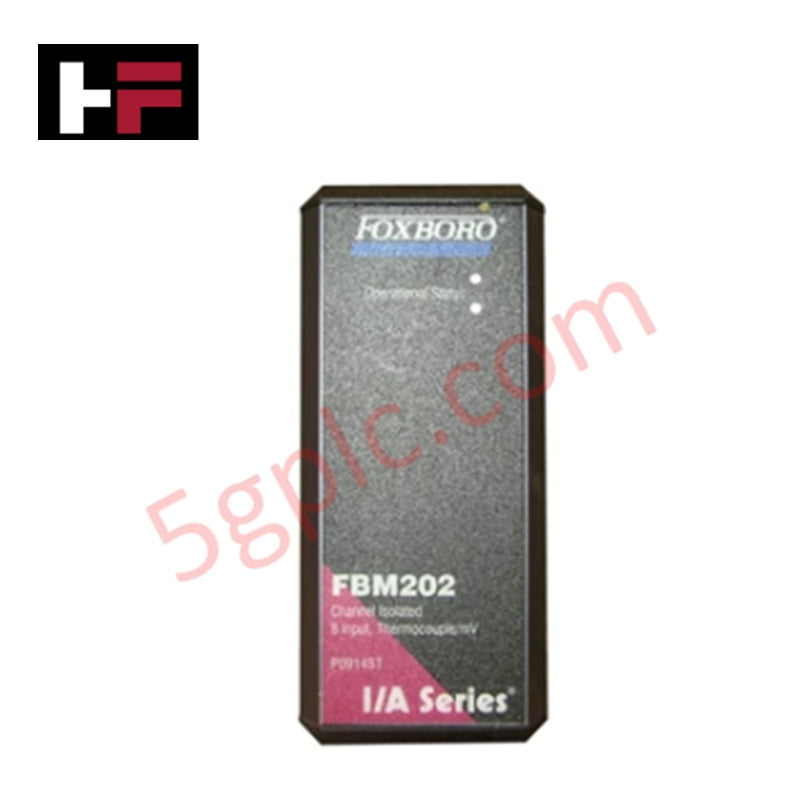
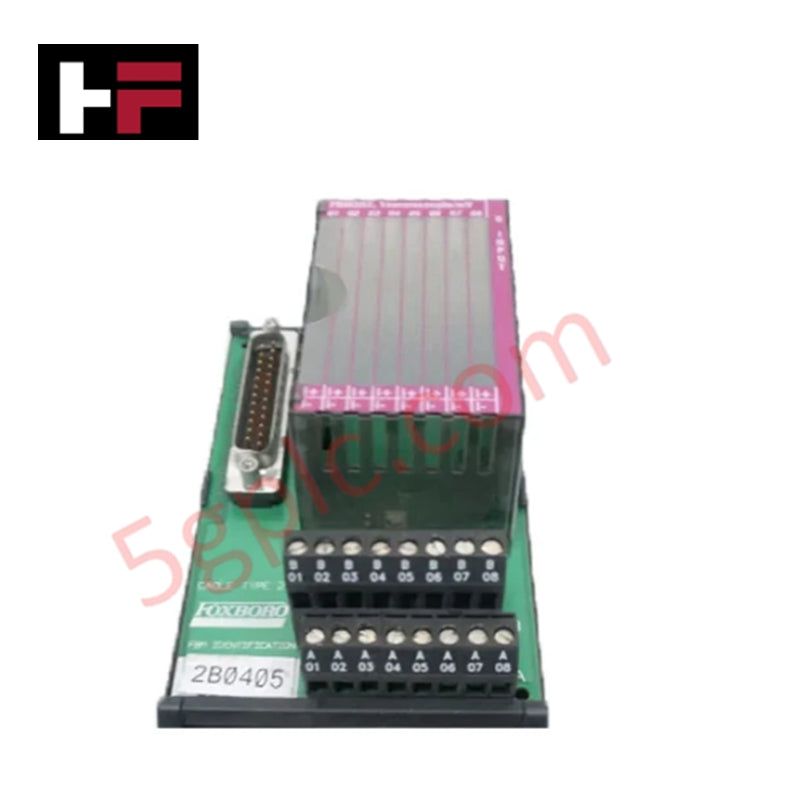
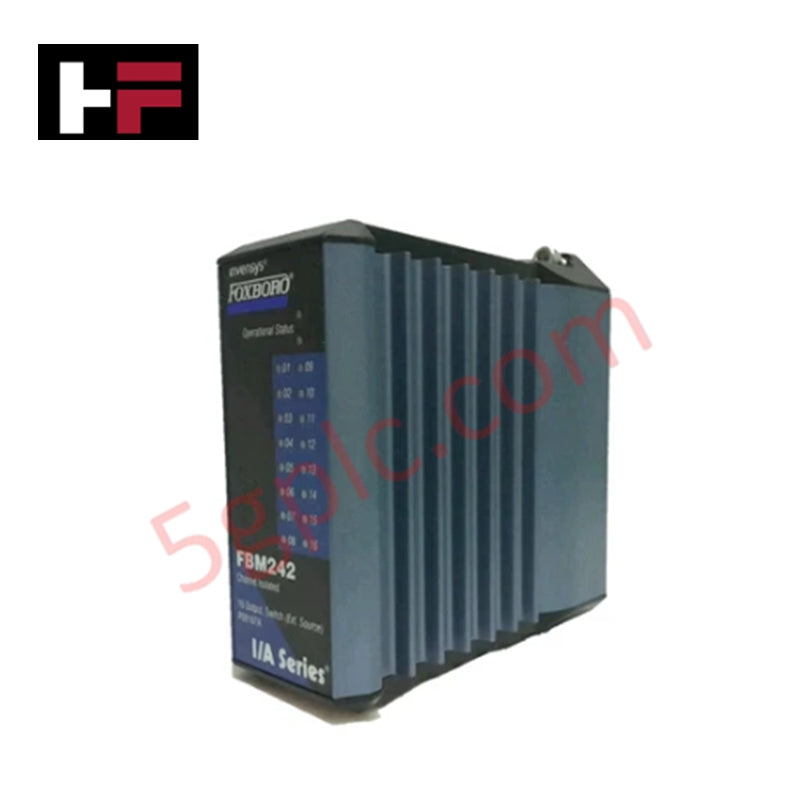
The Foxboro FBM202 (P09261Q) provides high-precision temperature and low-voltage acquisition for the Foxboro I/A Series Distributed Control System (DCS). This module interfaces directly with thermocouples and millivolt (mV) sources, removing the requirement for intermediate transmitters or external converters. It manages eight independent, isolated channels to ensure signal purity in high-interference industrial zones. We supply this unit as 100% Brand New and Original, ensuring factory-sealed reliability for critical thermal monitoring in blast furnaces, chemical reactors, and boiler systems.
Technical Specifications
| Parameter | Specification Details |
| Manufacturer | Foxboro (Schneider Electric) |
| Model / Part Number | FBM202 / P09261Q |
| Input Channels | 8 Isolated Channels |
| Measurement Range | -200 mV to +200 mV DC |
| Sensor Compatibility | Types B, E, J, K, N, R, S, T Thermocouples |
| Accuracy | 0.1% of Span |
| Signal Resolution | 0.01 mV |
| Common Mode Rejection | 120 dB at 60 Hz |
| Operating Temperature | -40°C to +80°C |
| Safety Features | Burnout Detection & Reverse Polarity Protection |
Engineering Advantages
The FBM202 P09261Q addresses specific thermal and electrical challenges found in heavy industrial process loops:
-
Eliminates Signal Jitter: The module features a Common Mode Rejection Ratio (CMRR) of 120 dB. This advanced filtering repels electromagnetic noise generated by high-power motors and switchgear, delivering a stable, clean signal to the control database.
-
Simplifies Sensor Management: Integrated open-circuit (burnout) detection monitors the integrity of the thermocouple wire. The module triggers an immediate system alert upon sensor failure, allowing maintenance teams to replace probes before process deviations occur.
-
Internalizes Cold Junction Compensation: When paired with a compatible Termination Assembly (TA), the FBM202 executes precise Cold Junction Compensation (CJC). This eliminates measurement errors caused by ambient temperature fluctuations at the connection terminals.
-
Withstands Thermal Extremes: Engineered for a wide operating range of -40°C to +80°C, this module survives in non-climate-controlled marshalling cabinets. The ruggedized circuitry prevents thermal drift, ensuring consistent accuracy in both cryogenic and high-heat applications.
-
Broad Sensor Versatility: The hardware supports a comprehensive range of thermocouple types (K, J, T, etc.) and low-voltage pH or ORP sensors within the ±200 mV range. This versatility allows engineers to standardize on a single module type for diverse analytical and thermal inputs.
FAQs
-
How do I configure the module for different thermocouple types?
You define the specific thermocouple type (e.g., Type K or Type S) via the I/A Series system software. The module then applies the correct linearization curves and compensation parameters to the raw mV data.
-
Is the P09261Q a direct replacement for older FBM202 versions?
Yes. As a 100% Brand New original unit, it functions as a drop-in replacement for any existing FBM202 module on a 200 Series modular baseplate. It maintains full compatibility with legacy I/A Series and modern Foxboro Evo Fieldbus architectures.
-
Does the module require a separate termination assembly?
Yes. The FBM202 requires a Thermocouple Termination Assembly (TA). The TA contains the necessary temperature sensors for accurate Cold Junction Compensation, ensuring the system calculates the true process temperature.
-
Can the module survive a reverse polarity connection?
The FBM202 includes integrated reverse polarity protection. This prevents damage to the internal semiconductors if field wiring errors occur during commissioning, protecting your investment from common installation mistakes.
Additional Information
- 100% Genuine Parts: All products are original and authentic, ensuring reliable industrial performance.
- 30-Day Refund Guarantee: Return any in-stock item within 30 days in original, unopened packaging for a full refund (excluding shipping and fees).
- 12-Month Warranty: Covers defects in materials or workmanship; excludes misuse, normal wear, or unauthorized modifications.
- Worldwide Shipping: We ship via USPS, UPS, FedEx, and DHL. Delivery times vary by country and may be subject to customs or import fees.
- Support & Contact: Technical and warranty assistance is available anytime. Contact us here: Contact.
- Purchase Guidance: Check product specifications and compatibility carefully before ordering to ensure proper application.
Tech & Buying Guide
Mastering Modern Industrial Joystick Controls in Heavy Automation
Industrial joysticks play a pivotal role in human-machine interaction across heavy material handling and mobile hydraulics. These tactile controllers translate complex operator movements into precise electrical signals for PLCs, motion controllers, and DCS networks. Consequently, selecting and installing the right joystick architecture ensures operator safety, reduces fatigue, and optimizes equipment performance.

Navigating Industrial Automation Failures: Types, Causes, and Mitigation Strategies
Modern manufacturing relies heavily on automated control systems to maximize throughput and maintain product quality. However, unplanned downtime in industrial automation can cost facility operators thousands of dollars per hour. Understanding how programmable logic controllers (PLCs), distributed control systems (DCS), and field instrumentation fail empowers engineering teams to implement robust preventive maintenance strategies.

Essential Motion Control Commands: A Practical Guide for Engineers
Automation engineers often rely on precise position and speed control to drive modern factory machinery. Modern industrial systems, such as Programmable Logic Controllers (PLCs) and Distributed Control Systems (DCS), depend heavily on standardized motion instructions. Mastering these commands ensures operational safety, protects mechanical components, and optimizes cycle times across production lines.