
Product Details
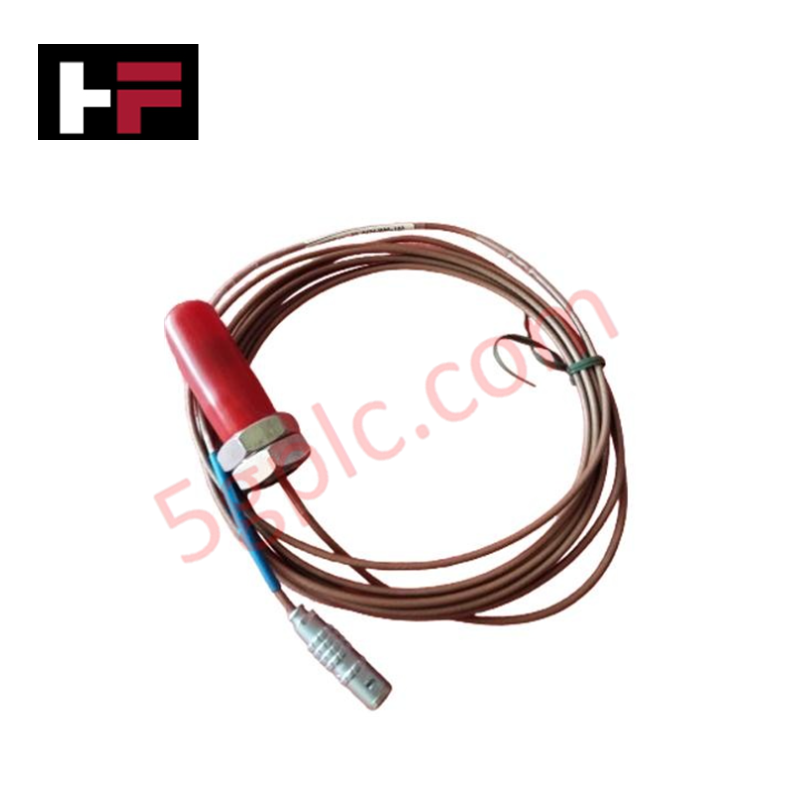
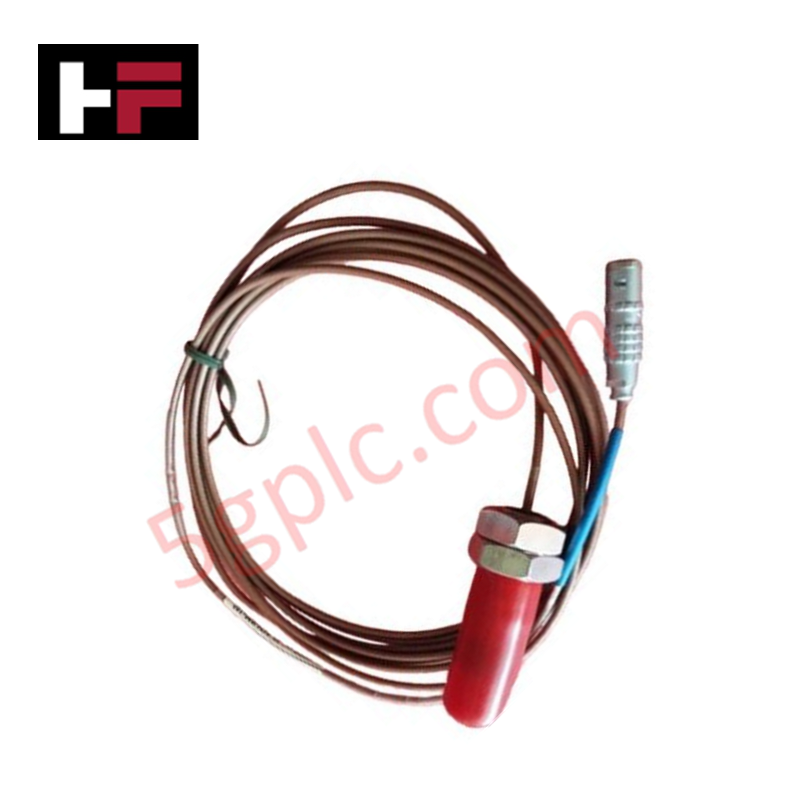
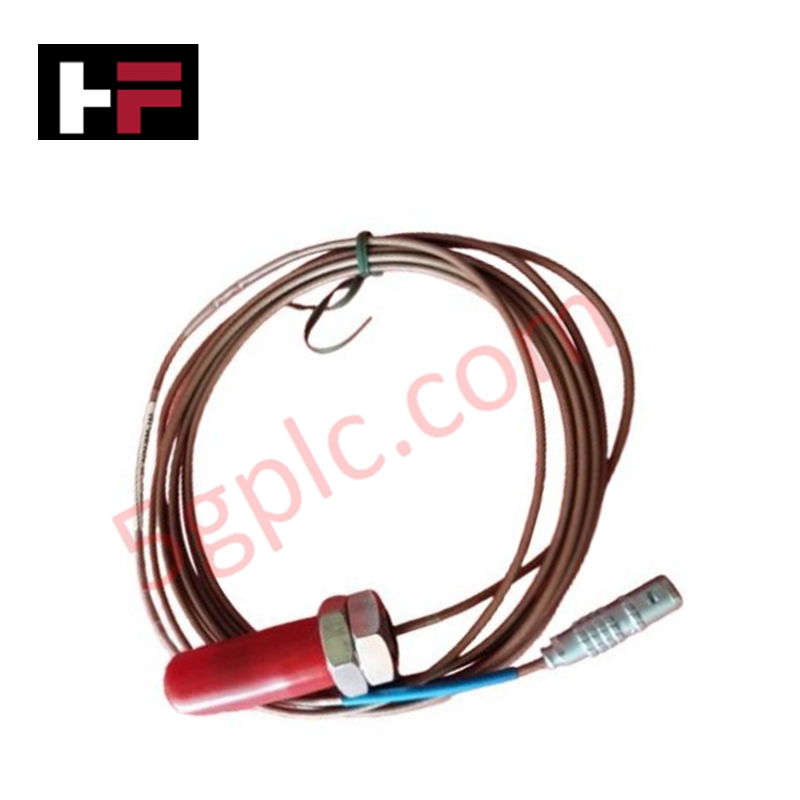
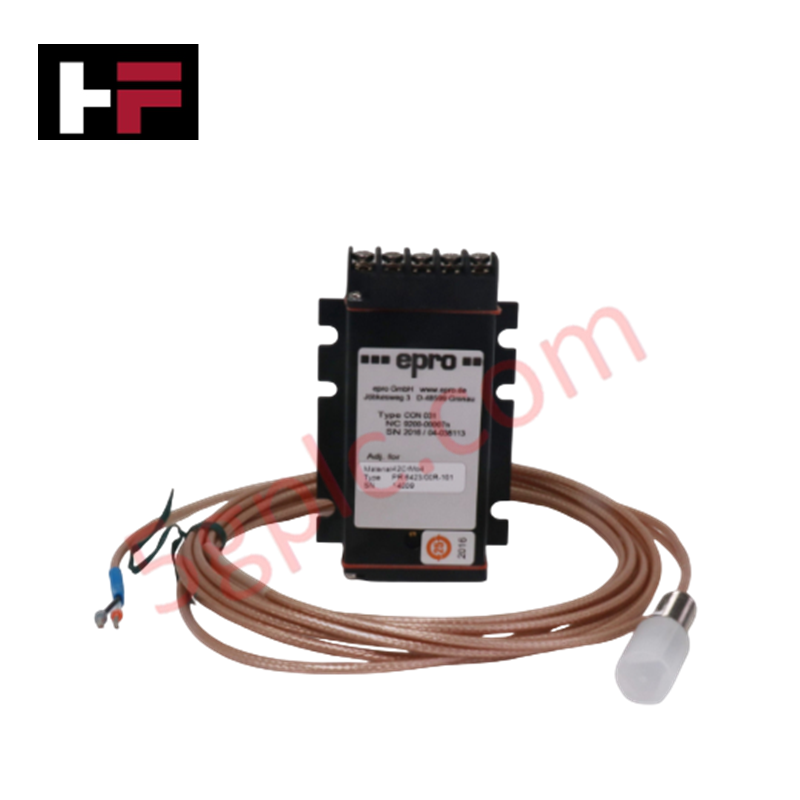
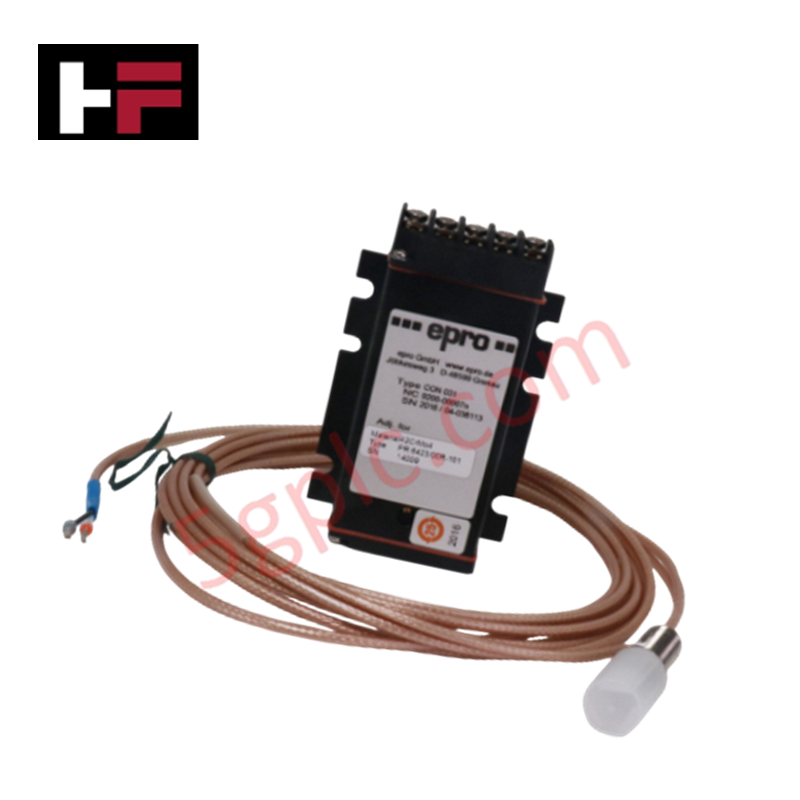
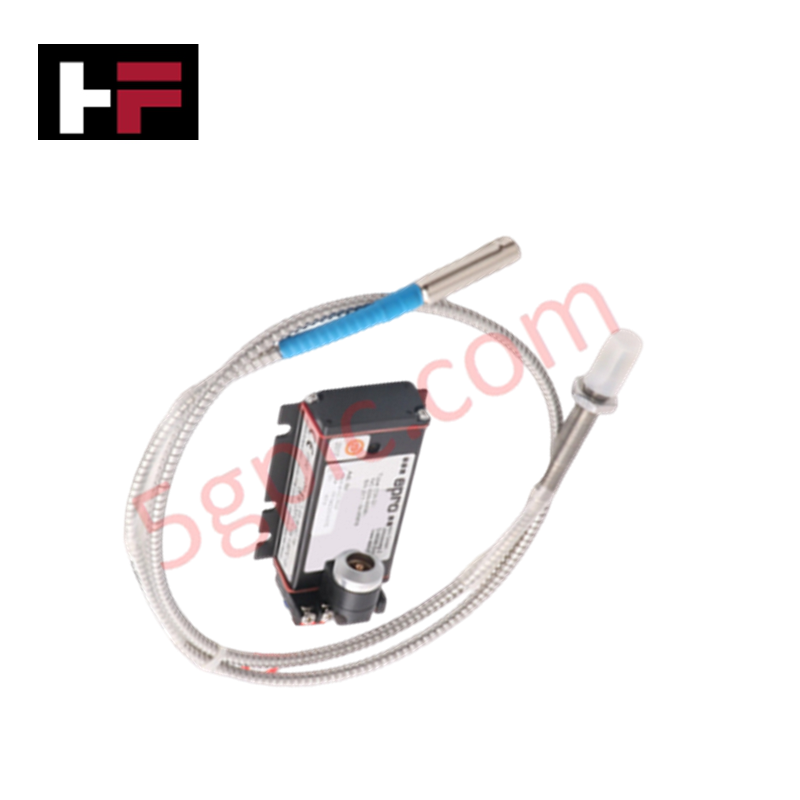
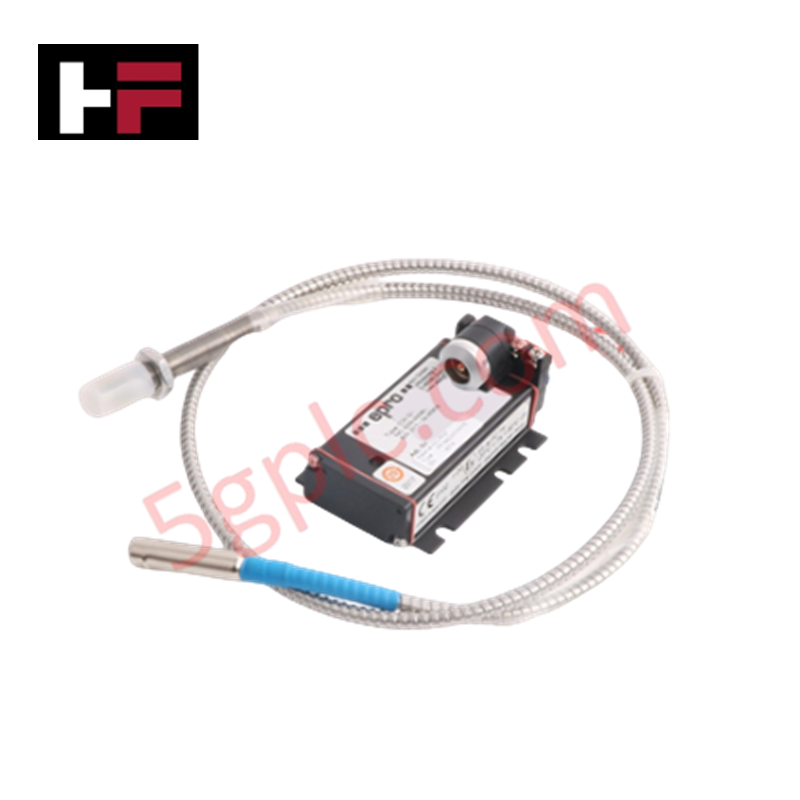
Configured for non-contact vibration and shaft displacement monitoring in rotating machinery, the Emerson PR6424/010-100 (PR6424 16 mm Eddy Current Sensor) provides direct physical/electrical execution. It measures radial dynamic motion and axial shaft position by generating dynamic high-frequency field damping when interfaced with Epro CON021 signal converters.
Hardware Specifications
| Parameter | Specification |
|---|---|
| Model | PR6424/010-100 |
| Brand | Emerson Epro |
| Origin | Germany |
| Weight | Approx. 0.20 kg |
| Dimensions | Probe Tip Diameter: 16 mm; Sleeve Thread: M18 x 1.5 |
| Operating Temp | -35 deg C to +150 deg C |
| Power Consumption | Driven via external converter (CON021 / EZ1000) |
| Measurement Range | Static: +-2.0 mm; Dynamic: 0 to 1000 um |
| Output Signal | Dynamic voltage via signal converter |
| Sensitivity | 4 V/mm (101.6 mV/mil) |
| Frequency Response | 0 Hz to 20 kHz (-3 dB) |
| Linearity | <= +-1.5% full scale |
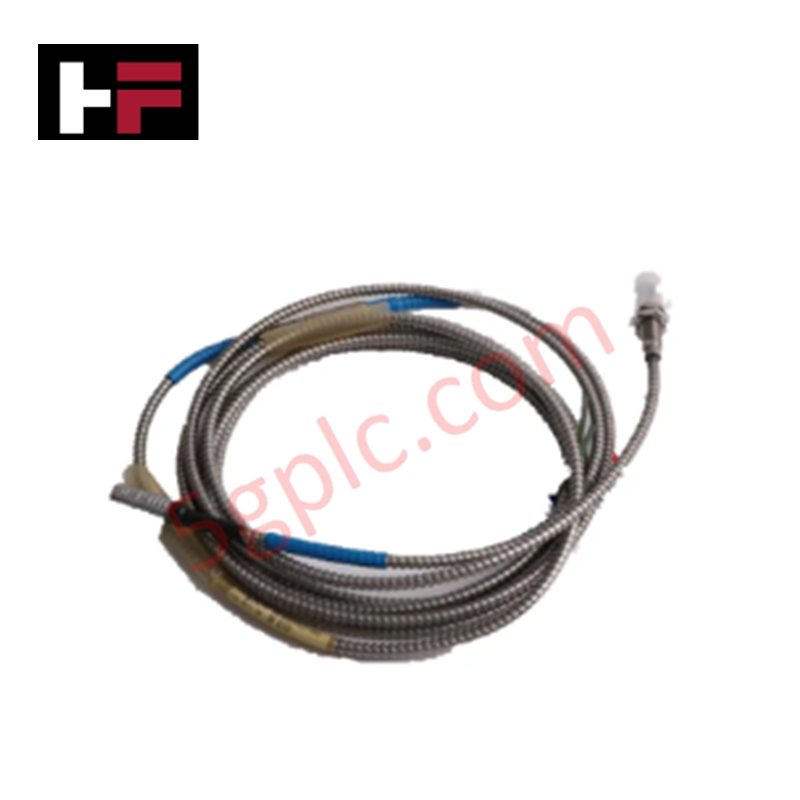
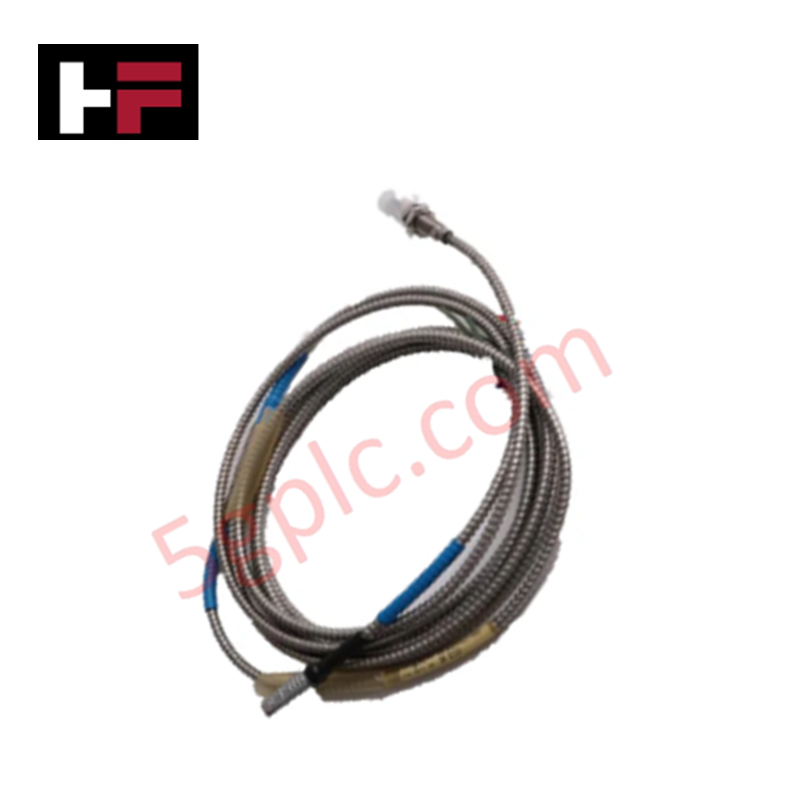
| Cable Options | 5 m integral cable with stainless steel flexible armor and LEMO end |
| Probe Tip Material | High-temperature epoxy resin cap / PEEK |
| Protection Rating | IP67 (head / threaded body) |
| Target Material | Ferromagnetic steel (standard 42CrMo4) |
Eddy-Current Probe Scaling and Gap Voltage Validation
The Emerson PR6424/010-100 requires precise eddy-current probe scaling to convert high-frequency electromagnetic field damping into an accurate position signal across its nominal 4 mm linear measuring range. With a standardized sensitivity of 4 V/mm, proper installation relies on initial gap voltage validation (targeting approximately 2.7 mm mechanical center air gap or -10 VDC static offset via CON021 conditioning hardware) prior to securing the M18 lock nuts. Correct spatial positioning prevents cross-talk suppression degradation from nearby metal casing walls and limits measurement drift caused by shaft runout or structural rotor dynamics.
Frequently Asked Questions
Q: How is the physical air gap set during mechanical installation of the PR6424/010-100?
A: Thread the M18 x 1.5 sleeve into the mounting bracket until the DC gap voltage at the CON021 converter output reads the designated center value (-10 VDC nominal offset, corresponding to an approximate 2.7 mm air gap) before torquing lock nuts.
Q: Can the 5 m integral cable with LEMO connector be modified or spliced in the field?
A: Splicing or trimming the integral cable alters total system capacitance and inductance, which directly corrupts the calibrated 4 V/mm probe sensitivity and introduces non-linear measuring errors.
Q: What structural precautions prevent side-wall interference on the 16 mm probe tip?
A: Maintain a counterbore clearance area around the epoxy tip free of secondary metallic materials to avoid artificial damping of the RF magnetic field.
Field Installation Guidelines
- Thread the M18 x 1.5 stainless steel sleeve into tapped mounting points, ensuring a minimum engagement of 5 full threads before locking with jam nuts.
- Provide at least 30 mm of clear radial space around the 16 mm sensor head to eliminate unwanted eddy-current coupling with surrounding machine housings.
- Route the armored flexible cable through dedicated grounded metallic conduit, observing a minimum bend radius of 35 mm to prevent inner core damage.
- Connect the LEMO plug securely to the driver interface module, keeping the instrument shield grounded exclusively at the monitoring rack end to prevent ground loop noise.
Additional Information
- 100% Genuine Parts: All products are original and authentic, ensuring reliable industrial performance.
- 30-Day Refund Guarantee: Return any in-stock item within 30 days in original, unopened packaging for a full refund (excluding shipping and fees).
- 12-Month Warranty: Covers defects in materials or workmanship; excludes misuse, normal wear, or unauthorized modifications.
- Worldwide Shipping: We ship via USPS, UPS, FedEx, and DHL. Delivery times vary by country and may be subject to customs or import fees.
- Support & Contact: Technical and warranty assistance is available anytime. Contact us here: Contact.
- Purchase Guidance: Check product specifications and compatibility carefully before ordering to ensure proper application.




Tech & Buying Guide

Understanding Instrumentation Control Systems in Modern Industrial Automation
An instrumentation control system (ICS) serves as the central nervous system of modern manufacturing plants and processing facilities. Engineers classify these setups as Electrical, Electronic, or Programmable Electronic Systems (E/E/PES). In practice, an ICS bridges the physical world of industrial machinery with digital decision-making tools. Therefore, understanding its architecture is essential for anyone working in factory automation, process control, or plant safety.

Mastering Electrical Grounding Fundamentals in Industrial Automation and Control Systems
Electrical grounding is a complex engineering discipline. It requires deep knowledge of soil composition and conductor materials. National Electrical Code (NEC) Article 250 outlines these requirements clearly. Many engineers confuse grounding, earthing, and bonding. Grounding connects circuits to a common reference point. Earthing specifically links equipment directly to the planet. Bonding permanently joins metallic parts to ensure electrical continuity.

Architectural Blueprint of Industrial Automation and Control Systems (IACS): Standards, Safety, and Remote Operations
According to IEC 62443, Industrial Automation and Control Systems (IACS) integrate personnel, hardware, and software. These components collectively influence the safety and reliability of any industrial process. Modern control systems allow extensive remote monitoring and operation. However, enabling remote capabilities introduces complex cybersecurity challenges. Therefore, facility operators must evaluate system functions carefully before expanding connectivity.