













Product Details
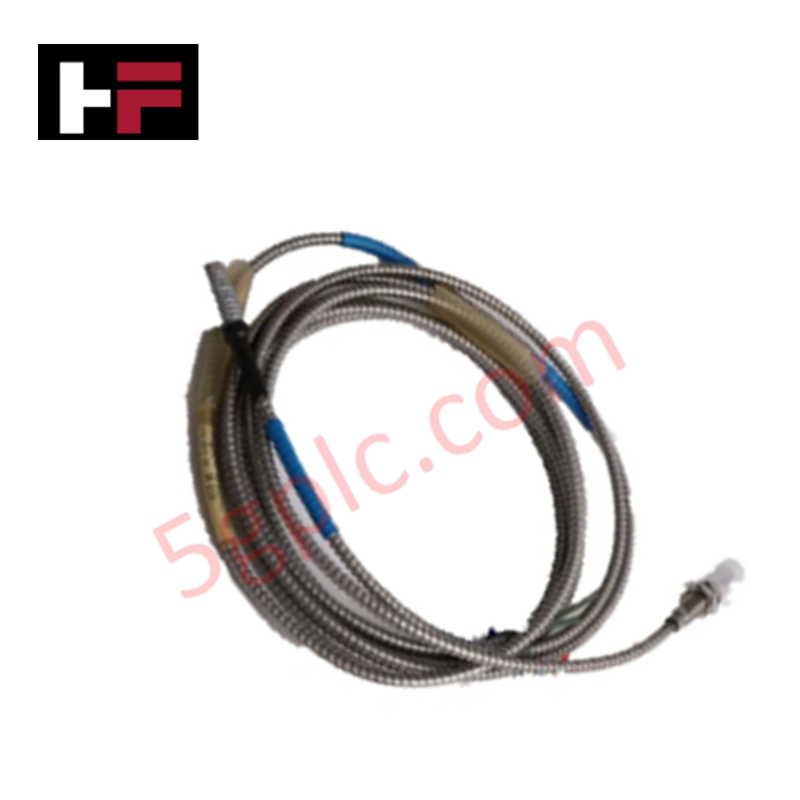
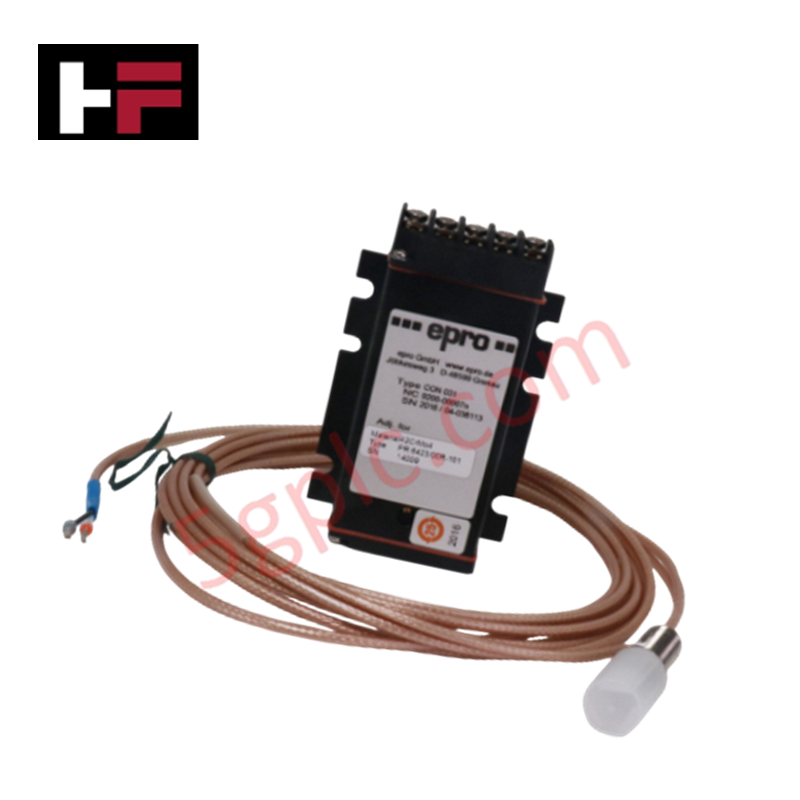
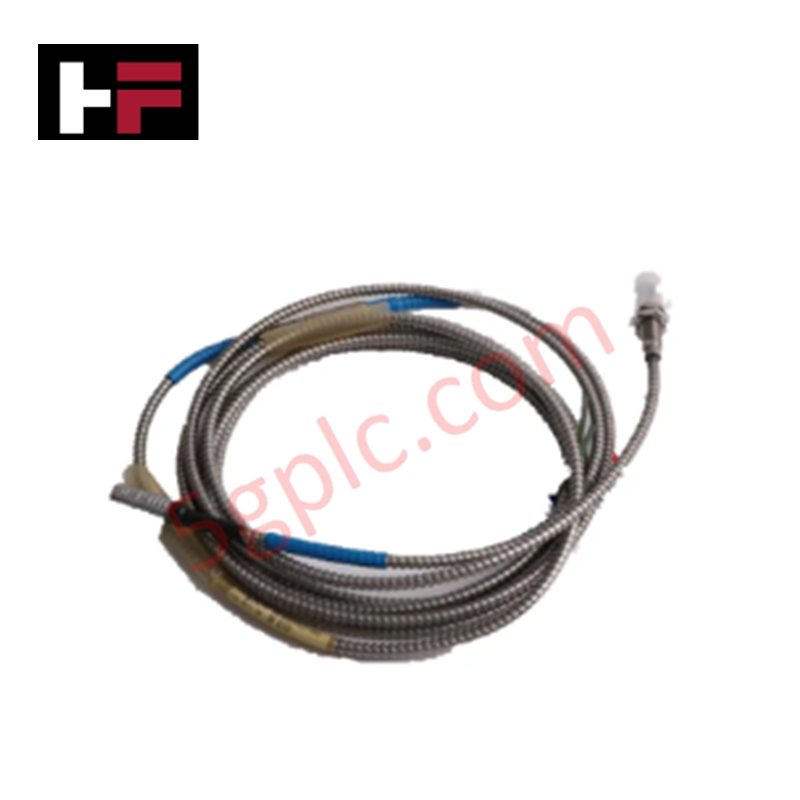
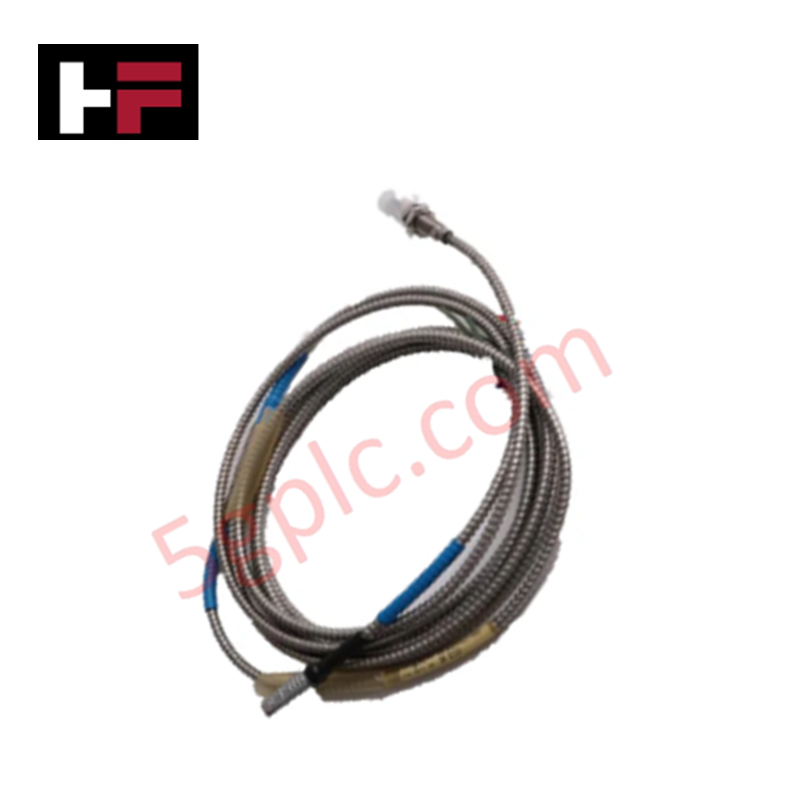
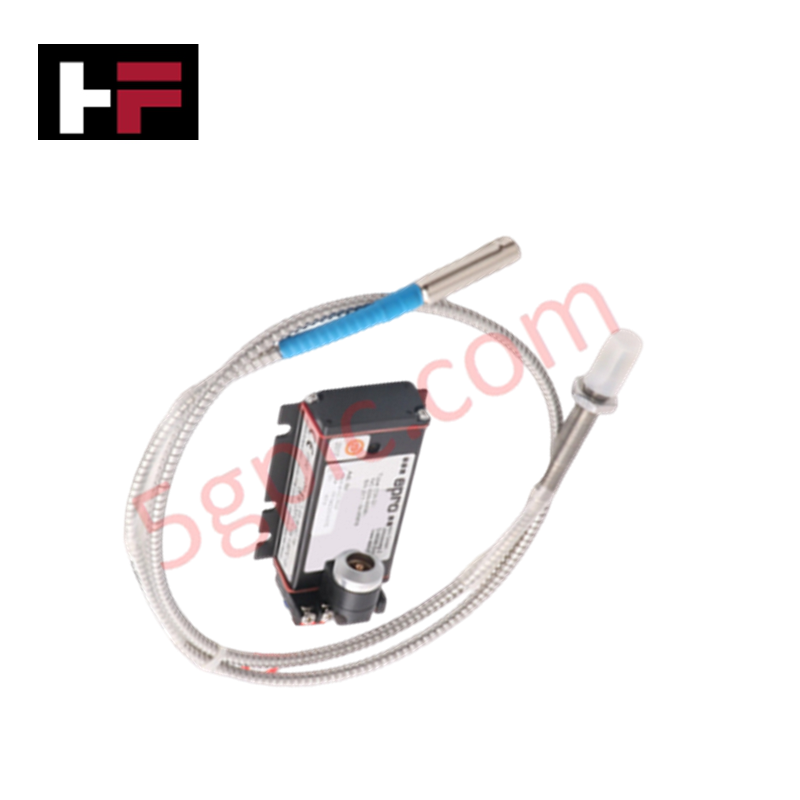
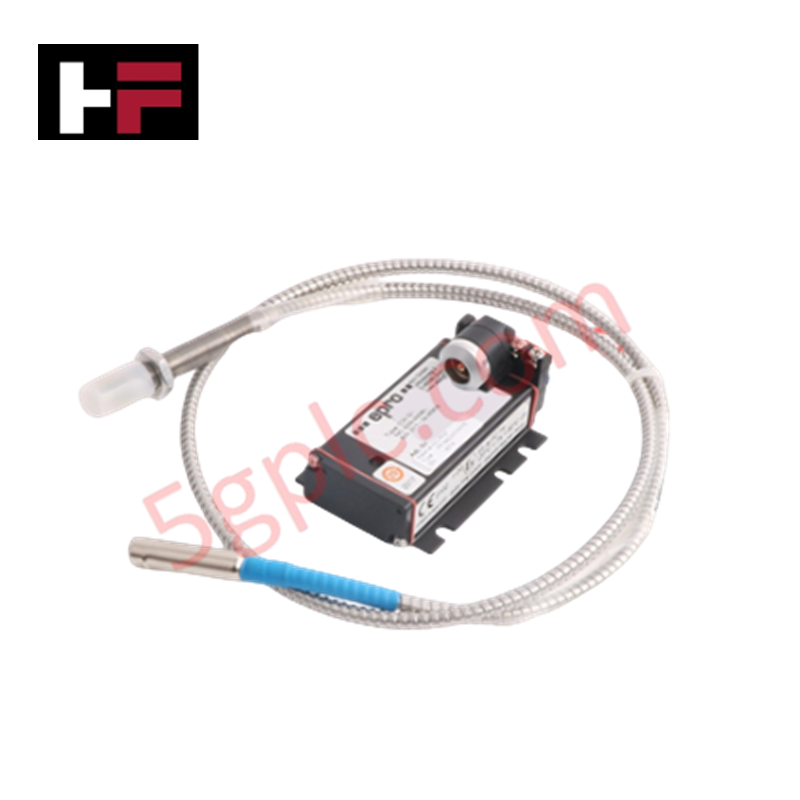
The Emerson PR6423/010-100, also cataloged as the PR6423/010-100 Eddy Current Displacement Sensors, operates as a dedicated hardware component for non-contact dynamic shaft displacement and position measurement within turbomachinery protection systems. The probe conditions electromagnetic field alterations generated by rotor target proximity directly into dynamic displacement signals.
Hardware Specifications
| Parameter | Specification |
|---|---|
| Model | PR6423/010-100 |
| Brand | Emerson |
| Origin | Germany |
| Weight | Standard sensor assembly mass |
| Dimensions | 100 mm case thread length |
| Operating Temp | -35 to +180 deg C (-31 to +356 deg F) |
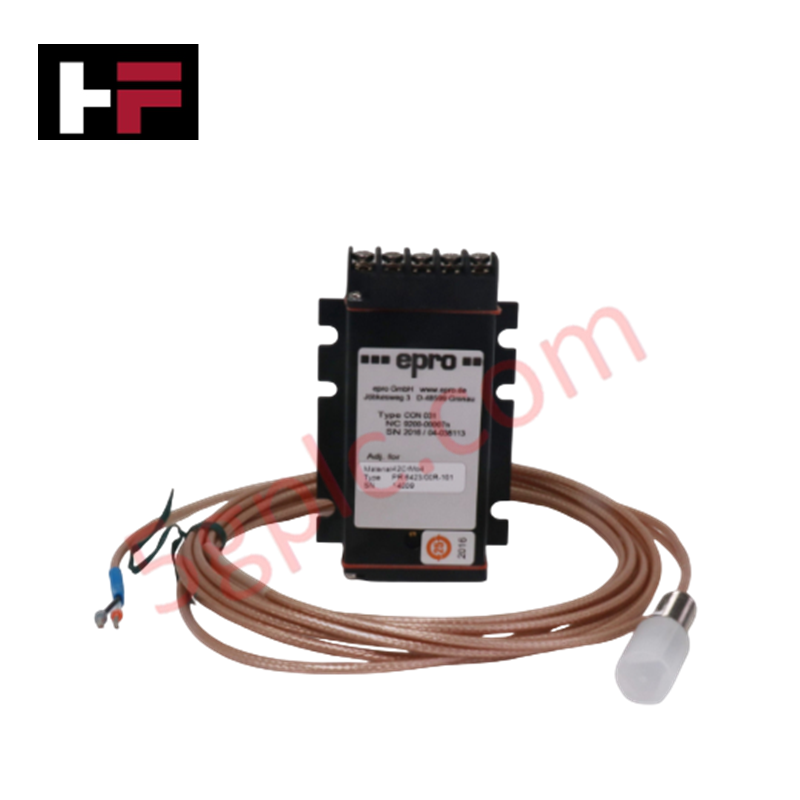
| Power Consumption | Powered via external signal converter |
| Measurement Range | +/- 2.0 mm (dynamic) |
| Sensitivity | 8 V/mm (203.2 mV/mil) |
| Target Material | Ferromagnetic steel |
| Pressure Resistance | Up to 10000 hPa (145 psi) |
| Cable Material | PTFE (optional armored cable available) |
| Protection Class | IP66 |
| Product Type | Eddy Current Displacement Sensors |
4-20 mA HART Loop Protocol and Channel Isolation
The signal conditioning electronics downstream of the PR6423/010-100 sensor utilize channel-to-channel isolation architecture to isolate primary inductive sensor loops from plant power buses and process interference. When integrated into control networks featuring 4-20 mA HART loop protocol transmitters or FOUNDATION Fieldbus monitoring nodes, the sensor system preserves linearity across dynamic vibration profiles. Thermal variations within the -35 to +180 deg C range are offset by cold junction compensation reference tracking within the evaluation converter to maintain sensitivity stability.
Frequently Asked Questions
Q: What target material is required to maintain the specified 8 V/mm sensitivity without recalibration?
A: The sensor sensitivity of 8 V/mm is calibrated specifically for ferromagnetic steel targets; non-magnetic or alternative alloy targets alter inductive coupling and require re-scaling.
Q: How does the IP66 rating and pressure resistance limit environmental ingress at the installation point?
A: The sensor body features an IP66 ingress protection rating against heavy fluid spray and resists static process casing pressures up to 10000 hPa (145 psi).
Q: What is the mechanical function of the PTFE cable sheath?
A: The PTFE cable material provides high thermal tolerance up to +180 deg C and Chemical resistance against synthetic lubricants inside turbomachinery housings.
Field Installation Guidelines
- Clean the rotor measurement surface to ensure it is free from metal debris, mechanical gouges, and excessive surface runout.
- Thread the 100 mm casing of the probe into the mounting bracket perpendicular to the target shaft axis.
- Set the mechanical air gap using non-magnetic feeler gauges or by monitoring static DC bias voltage at the evaluation unit before locking.
- Torque the outer mounting jam nut against the bracket to prevent mechanical loosening under operational vibration.
- Route the PTFE cable through protective grounded conduit, maintaining minimum bend radii to protect internal coaxial conductors.
- Connect the cable shield to the single-point instrument ground bus inside the junction enclosure.
Additional Information
- 100% Genuine Parts: All products are original and authentic, ensuring reliable industrial performance.
- 30-Day Refund Guarantee: Return any in-stock item within 30 days in original, unopened packaging for a full refund (excluding shipping and fees).
- 12-Month Warranty: Covers defects in materials or workmanship; excludes misuse, normal wear, or unauthorized modifications.
- Worldwide Shipping: We ship via USPS, UPS, FedEx, and DHL. Delivery times vary by country and may be subject to customs or import fees.
- Support & Contact: Technical and warranty assistance is available anytime. Contact us here: Contact.
- Purchase Guidance: Check product specifications and compatibility carefully before ordering to ensure proper application.




Tech & Buying Guide

Designing Robust SCADA Systems for Electrical Substation Automation
Electrical substation automation requires rigorous engineering standards to guarantee uninterrupted power distribution and grid stability. Therefore, control engineers must design supervisory control and data acquisition (SCADA) architectures with absolute precision. In my 15 years of commissioning power protection and substation automation systems, I have witnessed how meticulous SCADA design prevents catastrophic grid failures. Below, I outline the critical engineering practices required to build reliable substation SCADA solutions.

Demystifying Earthing, Grounding, and Bonding in Industrial Process Plants
Industrial automation networks, power distribution systems, and complex control loops rely heavily on proper grounding to maintain operational integrity. Therefore, control engineers and electrical specialists must thoroughly understand the distinctions between earthing, grounding, and bonding. In my 15 years of commissioning distributed control systems (DCS) and factory automation architectures, I have encountered numerous mysterious equipment failures caused by improper grounding practices. Below, I clarify these essential concepts and outline the industry standards governing industrial electrical safety.

Empowering Predictive Maintenance in PLC and SCADA Systems Through Maintenance Management
Industrial automation networks constantly generate vast streams of diagnostic data before major equipment failures occur. Therefore, integrating control systems with maintenance management platforms is essential for maximizing plant uptime. In my 15 years of commissioning programmable logic controllers (PLCs) and supervisory control and data acquisition (SCADA) networks, I have witnessed how raw alarms sit unnoticed in controller buffers. Bridging the gap between automation software and computerized maintenance management systems (CMMS) transforms early warning signals into actionable work orders. Below, I examine how this integration drives predictive maintenance across modern industrial facilities.