










Product Details
Product Overview
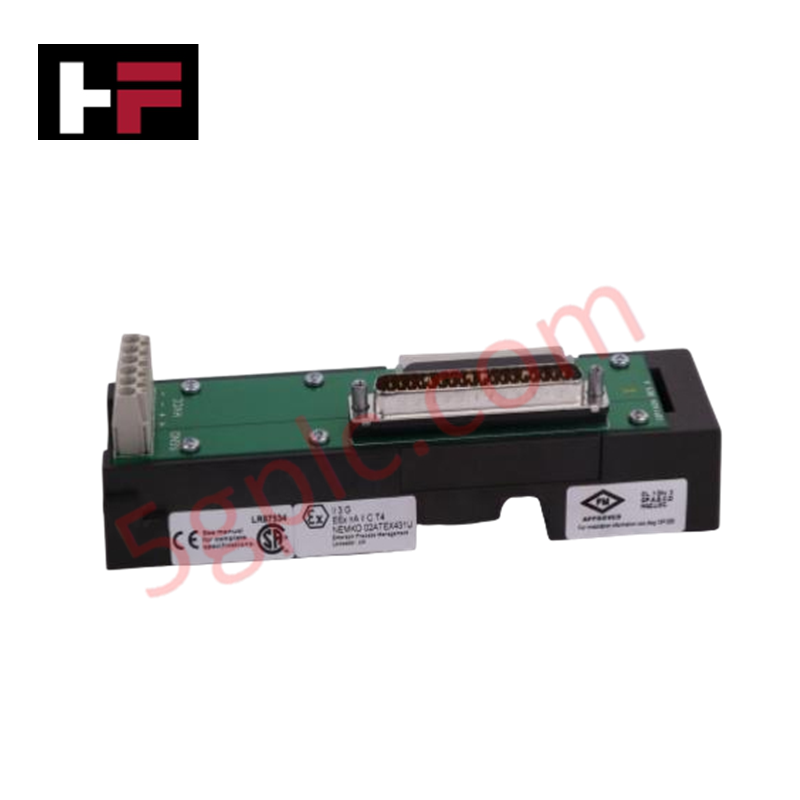
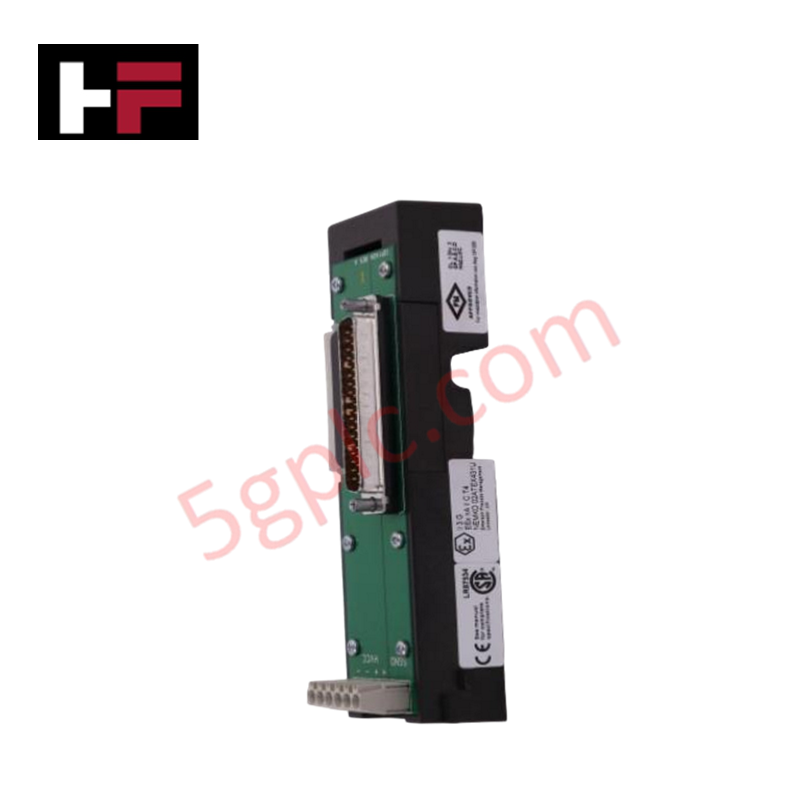
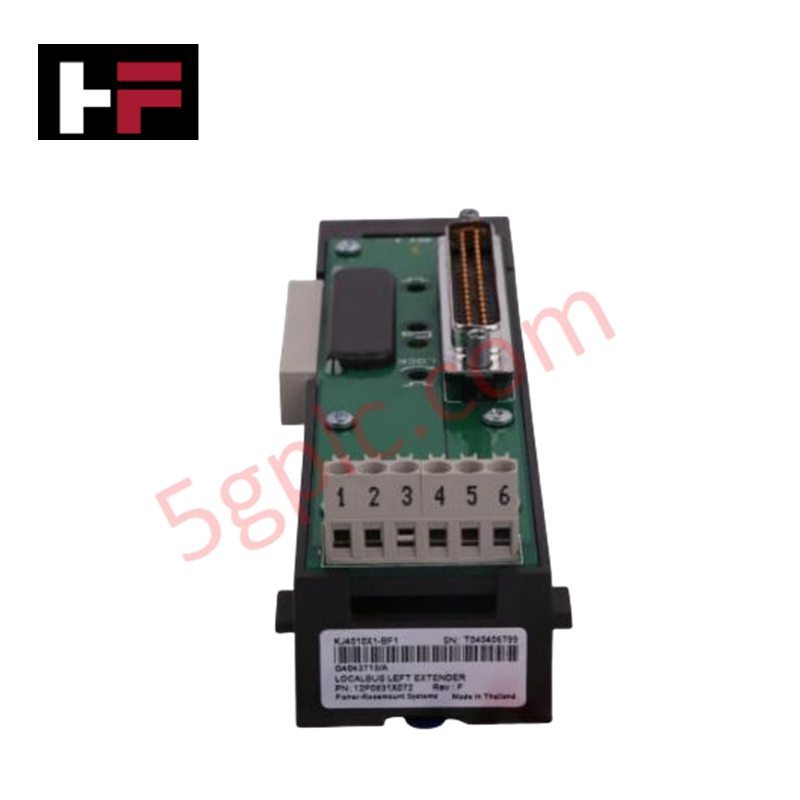
The Emerson KJ4010X1-BF1 serves as the definitive Localbus Right Extender within the DeltaV distributed control system (DCS) physical architecture. This critical hardware bridge attaches directly to the far-right termination point of a horizontal system carrier row. It intercepts the internal data and power backplane lines—the Localbus—and redirects these essential communication tracks via an expansion cable down to an adjacent multi-row carrier assembly. By connecting separated hardware racks, the extender permits continuous, uncompromised system expansion without requiring additional expensive controller nodes. We guarantee this Localbus Right Extender arrives in 100% brand new, original factory-sealed condition.
Technical Specifications
| Parameter | Specification Value |
| Manufacturer | Emerson Automation Solutions |
| Product Line | DeltaV Control Hardware |
| Model Number | KJ4010X1-BF1 |
| Component Type | Localbus Right-Side Extension Module |
| Primary Function | Multi-row carrier backplane bridging |
| Physical Dimensions | 16.8 cm x 4.7 cm x 4.4 cm |
| Net Component Weight | 0.15 kg (0.33 lbs) |
| Country of Origin | United States of America (USA) |
| Mounting Position | Far-Right Slot of DeltaV Carrier Row |
Engineering Advantages
-
High-Speed Bus Signal Regeneration Across Carrier Rows: The internal solid-state circuitry maintains high-frequency data signal integrity as the Localbus transitions away from the main rack. This technology stops packet dropped-frames and eliminates signal attenuation across multi-tier marshalling panels, ensuring crisp communications with distant I/O blocks.
-
Ultra-Compact Footprint for High-Density Layouts: Physical dimensions of 16.8cm x 4.7cm x 4.4cm ensure the extender consumes negligible footprint space at the edge of the DIN rail. This compact design gives installation crews extra margin to route thick, structured field wiring bundles inside confined, shallow junction boxes.
-
Low-Mass Design Resists Mechanical Rail Fatigue: Weighing just 0.15 kg, the module exerts minimal structural torque onto standard industrial mounting rails. This lightweight composition stops retention-clip bending and prevents accidental module disconnection during high-vibration heavy machinery plant operations.
-
Direct Pin-to-Socket Backplane Interlocking: The module features a heavy-duty, factory-aligned male/female connector set that seats directly into the standard DeltaV carrier backplane. This direct-mating framework removes the need for delicate, unshielded jumper cables, completely blocking nearby high-voltage variable frequency drives (VFDs) from introducing electromagnetic noise.
FAQs
-
Does this KJ4010X1-BF1 extender ship in its original Emerson factory packaging?
Yes. We deliver this hardware module exclusively as a 100% brand new, factory-original component. It remains fully sealed inside its untouched, original Emerson anti-static protective wrap within the official manufacturer box, preserving all corporate asset stickers, tracking barcodes, and factory serial marks.
-
Can I mount this extender on the left side of a DeltaV carrier row?
No. Emerson engineered the KJ4010X1-BF1 specifically with right-hand physical keying configurations and pin layouts to terminate the right edge of a carrier row. If your structural expansion prints require a left-side bus entry on the subsequent lower row, you must pair this right extender with the corresponding left-side expansion counterpart module.
-
Do I need to turn off system power before installing this Localbus extender?
Yes. Unlike standard hot-swappable I/O cards, the Localbus extender routes the primary control network and power trunk lines for multiple downstream racks. Attaching or removing this extender on a live system can disrupt active backplane voltages, potentially causing a critical controller trip. Always isolate system power prior to mounting this hardware block.
-
What type of cable connects this right extender to the next row?
This extender utilizes a specialized, factory-manufactured Emerson Localbus expansion cable. The heavy-shielded cable secures directly onto the front connector face of the KJ4010X1-BF1, providing a highly isolated, low-impedance path that preserves digital data tracks between the individual carrier levels.
Additional Information
- 100% Genuine Parts: All products are original and authentic, ensuring reliable industrial performance.
- 30-Day Refund Guarantee: Return any in-stock item within 30 days in original, unopened packaging for a full refund (excluding shipping and fees).
- 12-Month Warranty: Covers defects in materials or workmanship; excludes misuse, normal wear, or unauthorized modifications.
- Worldwide Shipping: We ship via USPS, UPS, FedEx, and DHL. Delivery times vary by country and may be subject to customs or import fees.
- Support & Contact: Technical and warranty assistance is available anytime. Contact us here: Contact.
- Purchase Guidance: Check product specifications and compatibility carefully before ordering to ensure proper application.
Tech & Buying Guide

Understanding Types of Noise in Electronic Circuits and Control Systems
Signal integrity directly determines measurement accuracy and loop stability across industrial automation environments. Electronic noise introduces unwanted stochastic interference into analog loops, sensor feedback lines, and digital fieldbus networks. Understanding how intrinsic electronic noise and external electromagnetic interference manifest allows control engineers to optimize signal conditioning and shield sensitive instrumentation effectively.

Why 24V DC Power Supplies Standardize Modern Industrial Automation
Industrial control cabinets worldwide rely on 24V DC as the universal power standard for field instrumentation, sensors, and controllers. Walk into any manufacturing plant, and you will find PLCs, human-machine interfaces (HMIs), and smart actuators running on extra-low voltage DC. Standardizing on 24V DC enhances operational safety, lowers cabinet footprint, and maintains steady control performance across factory networks.

Essential Motion Control Commands: A Practical Guide for Engineers
Automation engineers often rely on precise position and speed control to drive modern factory machinery. Modern industrial systems, such as Programmable Logic Controllers (PLCs) and Distributed Control Systems (DCS), depend heavily on standardized motion instructions. Mastering these commands ensures operational safety, protects mechanical components, and optimizes cycle times across production lines.