












Product Details
Module Overview
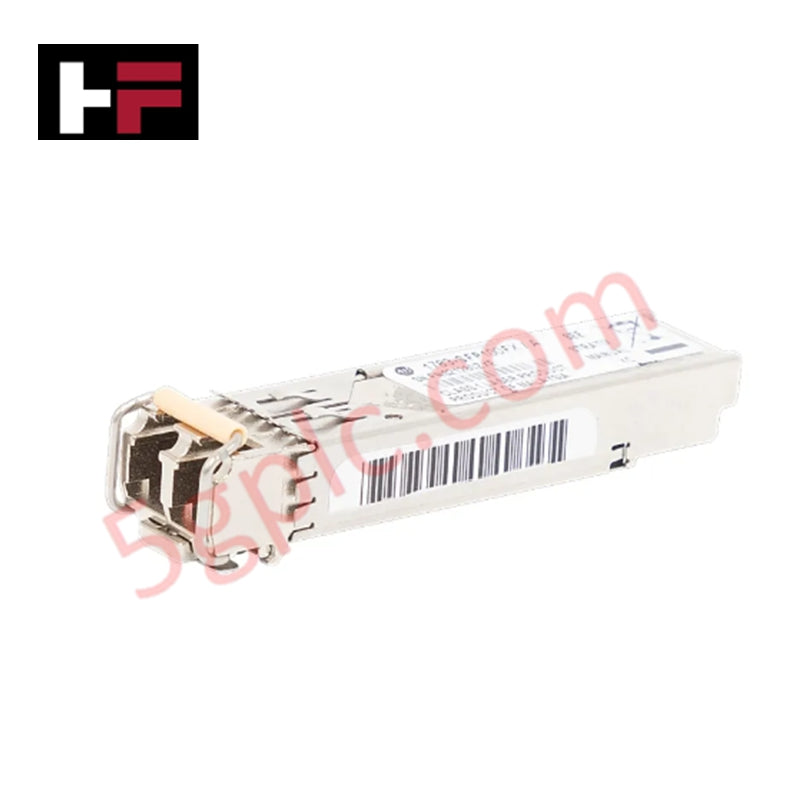
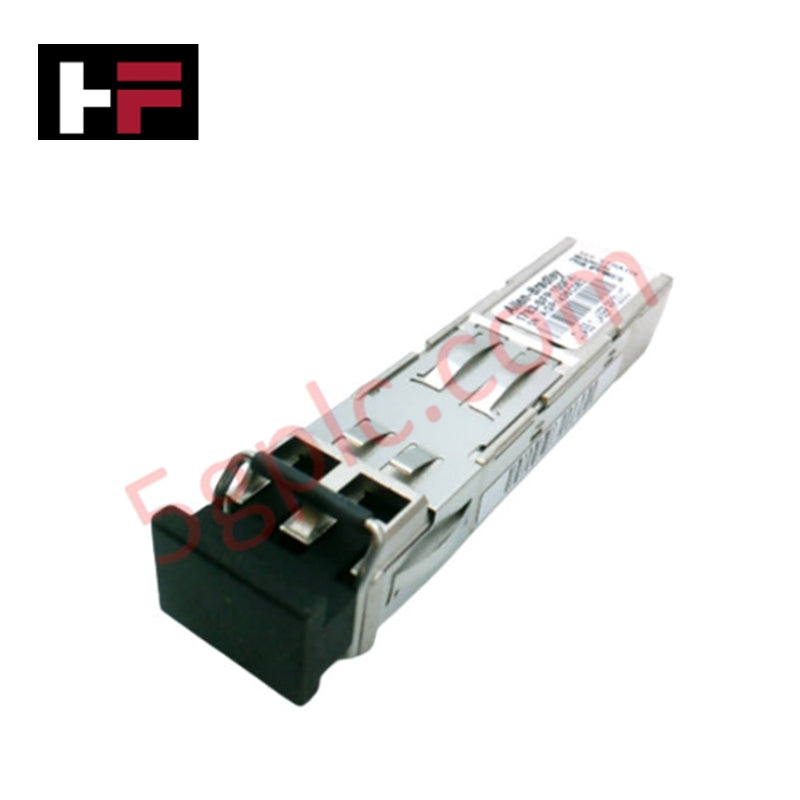
The 1783-SFP100FX is a high-performance Small Form-factor Pluggable (SFP) optical transceiver designed for the Allen-Bradley Stratix series of industrial managed switches (such as the Stratix 5400, 5700, and 8000). This module enables high-speed Ethernet communication over Multimode Fiber (MMF) at speeds of 100 Mbps. By utilizing fiber optics rather than copper, the 1783-SFP100FX provides complete electrical isolation between networking nodes, effectively eliminating ground loops and protecting the network infrastructure from electromagnetic interference (EMI) and high-voltage surges common in industrial environments.
Detailed Engineering Specifications
The 1783-SFP100FX is an "Industrial Grade" component, rated for the extended temperature ranges and vibration levels found in factory floor environments.
-
Communication Rate: 100 Mbps (Fast Ethernet)
-
Media Interface: Multimode Fiber (MMF)
-
Wavelength: 1310 nm
-
Maximum Transmission Distance: 2 Kilometers (approx. 1.24 miles)
-
Connector Type: Dual LC (Lucent Connector)
-
Core Size Compatibility: 50/125 µm or 62.5/125 µm
-
Optical Budget: Approximately 11 dB
-
Hot-Pluggable: Yes, supports "Removal and Insertion Under Power" (RIUP)
-
Operating Temperature: -40°C to 85°C (-40°F to 185°F)
-
Physical Weight: 0.04 lbs (0.02 kg)
-
Compliance: SFP Multi-Source Agreement (MSA)
Network Expansion and Reliability
The primary advantage of the 1783-SFP100FX is its 2-kilometer range, which far exceeds the 100-meter limitation of standard Category 5e/6 copper cabling. This makes it the ideal choice for connecting distributed I/O racks in separate buildings or across large manufacturing plants. Because it uses light instead of electricity to transmit data, it is immune to the "noise" generated by high-power variable frequency drives (VFDs) and large industrial motors, ensuring a stable and deterministic EtherNet/IP connection for ControlLogix and CompactLogix systems.
Installation and Compatibility
This transceiver is a "plug-and-play" device. It is inserted into the SFP slot of a compatible Stratix switch or a ControlLogix Ethernet module equipped with SFP cages (such as the 1756-EN2FT). Once the module clicks into place, the LC fiber patch cables are attached. In the switch software (such as the Stratix Device Manager or Studio 5000), the port will automatically detect the 1783-SFP100FX and configure the link speed to 100 Mbps.
Technical FAQ
Can I use the 1783-SFP100FX with a Gigabit SFP port?
Most Stratix Gigabit SFP slots are "dual-rate" and can support this 100 Mbps module. However, you must manually configure the port speed to 100 Mbps in the switch settings, as auto-negotiation between 1000 Mbps and 100 Mbps fiber can sometimes fail.
What is the difference between 100FX and 1000LX/SX?
The 100FX refers to Fast Ethernet (100 Mbps) over fiber. The 1000LX/SX modules are Gigabit (1000 Mbps). You must ensure that the transceivers on both ends of the fiber link have matching speeds and wavelengths (e.g., a 100FX module cannot talk to a 1000SX module).
Is this module compatible with Single-mode Fiber?
No. The 1783-SFP100FX is strictly for Multimode Fiber. For Single-mode applications requiring distances up to 10km or more, the 1783-SFP100LX (Single-mode) would be the correct choice.
Additional Information
- 100% Genuine Parts: All products are original and authentic, ensuring reliable industrial performance.
- 30-Day Refund Guarantee: Return any in-stock item within 30 days in original, unopened packaging for a full refund (excluding shipping and fees).
- 12-Month Warranty: Covers defects in materials or workmanship; excludes misuse, normal wear, or unauthorized modifications.
- Worldwide Shipping: We ship via USPS, UPS, FedEx, and DHL. Delivery times vary by country and may be subject to customs or import fees.
- Support & Contact: Technical and warranty assistance is available anytime. Contact us here: Contact.
- Purchase Guidance: Check product specifications and compatibility carefully before ordering to ensure proper application.






Tech & Buying Guide

Understanding Marshalling Cabinets in Industrial Control Systems Architecture
Industrial control system deployments rely on structured signal distribution to bridge field instrumentation with central processing hardware. A marshalling cabinet serves as the vital intermediate connection point between heavy field home-run multi-pair cables and delicate input/output (I/O) modules housed inside Programmable Logic Controller (PLC) or Distributed Control System (DCS) enclosures. By segregating field cable terminations from control hardware, engineers maintain system flexibility, safeguard controller components, and streamline commissioning workflows.

FAT vs SAT in Industrial Control Systems: Key Differences and Execution Guide
Industrial control system deployment relies on strict verification protocols to guarantee operational safety, system stability, and regulatory compliance. Commissioning complex Programmable Logic Controller (PLC) racks, Distributed Control Systems (DCS), and Safety Instrumented Systems (SIS) requires two critical milestones: the Factory Acceptance Test (FAT) and the Site Acceptance Test (SAT). Both procedures validate that system automation meets design specifications, but they occur at different stages of project execution and target distinct operational risks.

Hub vs Switch vs Router in Industrial Automation Architecture
Modern factory automation relies on reliable industrial networking infrastructure to exchange real-time field data across operational technology systems. Engineers often encounter networking hardware like hubs, switches, and routers when integrating Programmable Logic Controllers, Distributed Control Systems, and SCADA monitoring nodes. Although these devices share physical ports, they operate at different layers of the Open Systems Interconnection reference model and deliver distinct traffic management capabilities.