













Product Details
Product Description
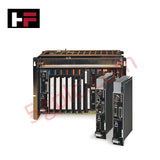
The Allen-Bradley 1785-L80C15 PLC-5/80C processor is a high-capacity controller designed for complex automation systems. It supports extensive I/O, multiple communication protocols, and redundancy features, making it ideal for mission-critical industrial applications.
Technical Specifications
-
Manufacturer Allen-Bradley
-
Category PLCs
-
Product Line PLC-5
-
Part Number 1785-L80C15
-
Weight 3.00 lbs (1.36 kg)
-
Processor Type PLC-5/80C
-
Maximum User Memory 100 Kwords
-
Memory Modules Supported 1785-ME32, 1785-ME64, 1785-M100
-
EEPROM Backup Supported with 1785-ME16, -ME32, -ME64, -M100
-
Battery Allen-Bradley 1770-XYC (for battery-backed static RAM)
-
Program Scan Time 0.5 ms per Kword (bit logic), 2 ms per Kword (typical)
-
Maximum I/O Capacity 3072 points (any mix of input/output)
-
Analog I/O Capacity 3072 forcible, 50,176 non-forcible channels
-
Maximum I/O Chassis Supported 125 total, 60 via Universal Remote I/O
-
I/O Scan Time per Rack ControlNet: 0.5 ms average; Universal Remote I/O: 10 ms at 57.6 kbps, 7 ms at 115.2 kbps, 3 ms at 230.4 kbps
-
Hardware Addressing 2-slot, 1-slot, 1/2-slot addressing supported
-
Module Location Installed in 1771 chassis (A1B, A2B, A3B, A3B1, A4B), left-most slot
-
I/O System Compatibility Bulletin 1771 I/O, 1794 Flex I/O, 1746 I/O, 1791 I/O (supports 8-, 16-, 32-point and intelligent modules)
-
Communication Ports Data Highway Plus (DH+), Remote I/O (RIO), Serial, DH (via 1785-KA), two ControlNet ports, RS-232-C/422-A/423-A
-
Expansion Control coprocessor expansion port included
-
Controller Redundancy Supported
-
Protected Memory Not available
Application Scenarios
-
Large-scale process automation requiring high I/O density
-
Redundant control systems for mission-critical operations
-
Integration with legacy Allen-Bradley 1771 I/O systems
-
High-speed communication networks using ControlNet and DH+
FAQ
Q: Does the 1785-L80C15 support redundancy? A: Yes, redundancy is supported for critical applications requiring failover protection.
Q: What memory options are available? A: Up to 100 Kwords user memory with optional EEPROM backup modules.
Q: Which communication protocols are supported? A: DH+, RIO, ControlNet, RS-232, and DH (via 1785-KA).
Comparison with Similar Models
-
1785-L40C15: Lower memory and reduced I/O capacity.
-
1785-L60C15: Mid-range option with moderate I/O support.
-
1785-L80C15: Highest capacity in the PLC-5 ControlNet series, designed for large-scale automation.
Additional Information
- 100% Genuine Parts: All products are original and authentic, ensuring reliable industrial performance.
- 30-Day Refund Guarantee: Return any in-stock item within 30 days in original, unopened packaging for a full refund (excluding shipping and fees).
- 12-Month Warranty: Covers defects in materials or workmanship; excludes misuse, normal wear, or unauthorized modifications.
- Worldwide Shipping: We ship via USPS, UPS, FedEx, and DHL. Delivery times vary by country and may be subject to customs or import fees.
- Support & Contact: Technical and warranty assistance is available anytime. Contact us here: Contact.
- Purchase Guidance: Check product specifications and compatibility carefully before ordering to ensure proper application.




Tech & Buying Guide

Wellhead Control Panel (WHCP) Architecture in Oil and Gas Automation
Upstream oil and gas operations rely on specialized field control platforms to manage wellhead extraction safety and hydraulic actuation. A Wellhead Control Panel (WHCP) serves as a dedicated hydraulic and pneumatic power unit designed to operate critical Christmas Tree isolation valves. By interfacing field safety components directly with Programmable Logic Controller (PLC) architecture, a WHCP protects upstream extraction assets against overpressure, catastrophic leaks, and thermal emergencies.

Understanding Marshalling Cabinets in Industrial Control Systems Architecture
Industrial control system deployments rely on structured signal distribution to bridge field instrumentation with central processing hardware. A marshalling cabinet serves as the vital intermediate connection point between heavy field home-run multi-pair cables and delicate input/output (I/O) modules housed inside Programmable Logic Controller (PLC) or Distributed Control System (DCS) enclosures. By segregating field cable terminations from control hardware, engineers maintain system flexibility, safeguard controller components, and streamline commissioning workflows.

FAT vs SAT in Industrial Control Systems: Key Differences and Execution Guide
Industrial control system deployment relies on strict verification protocols to guarantee operational safety, system stability, and regulatory compliance. Commissioning complex Programmable Logic Controller (PLC) racks, Distributed Control Systems (DCS), and Safety Instrumented Systems (SIS) requires two critical milestones: the Factory Acceptance Test (FAT) and the Site Acceptance Test (SAT). Both procedures validate that system automation meets design specifications, but they occur at different stages of project execution and target distinct operational risks.