












Product Details
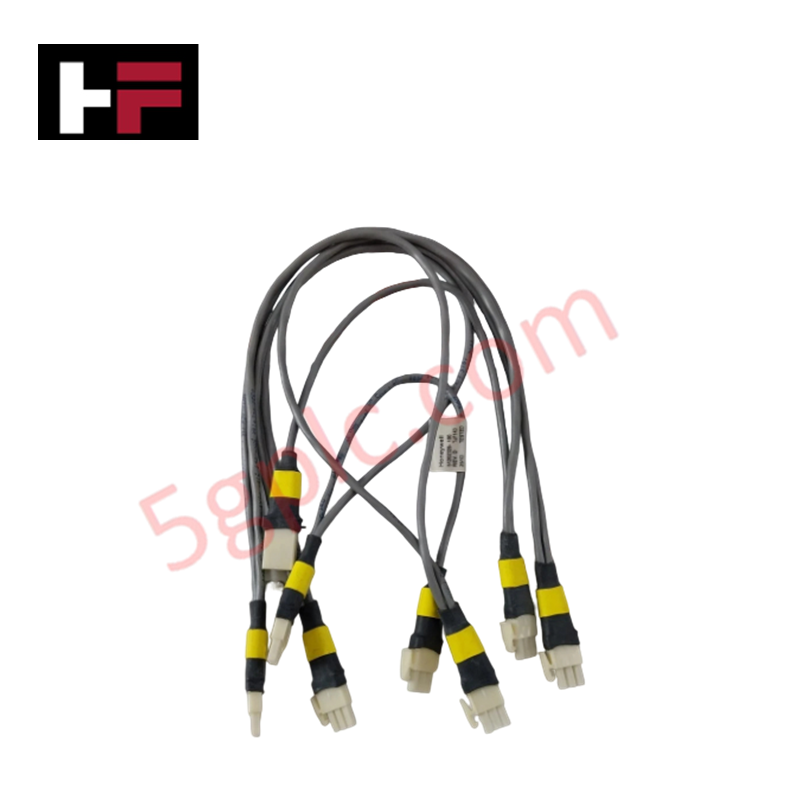
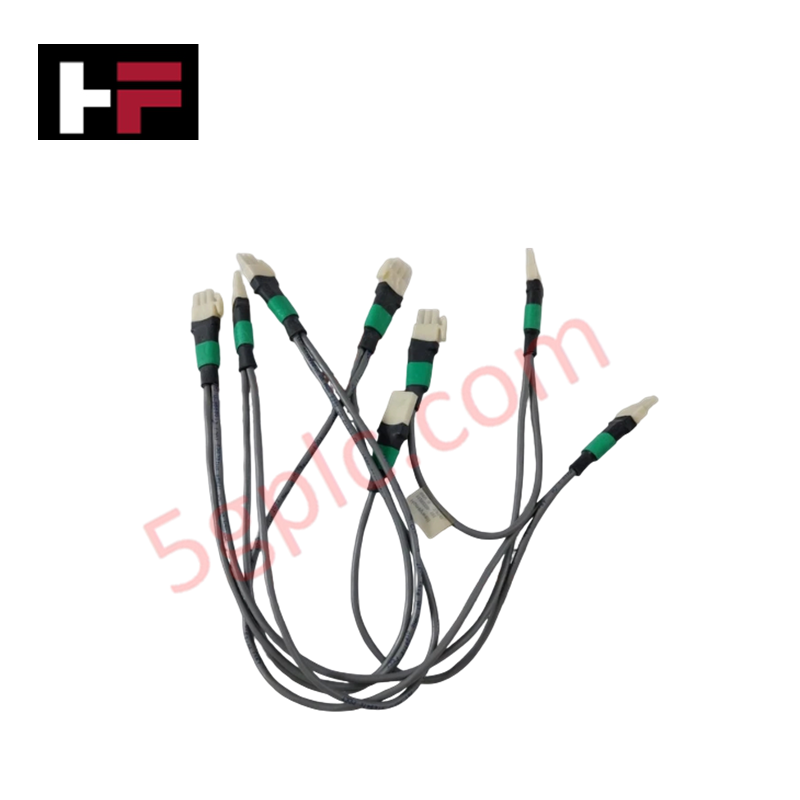
Configured for signal routing between field termination assemblies and control modules in Honeywell Experion PKS and TDC 3000 platforms, the Honeywell MU-KFTA08 (MU-KFTA08 Field Termination Assembly Cables) provides direct physical/electrical execution. Cataloged under part number 51201420-008, it transfers discrete and analog field variables through factory-terminated industrial connectors while maintaining overall shielding against high-frequency interference.
Hardware Specifications
| Parameter | Specification |
|---|---|
| Model | MU-KFTA08 |
| Brand | Honeywell |
| Origin | USA |
| Operating Temp | -20 deg C to 80 deg C |
| Power Consumption | Passive cable assembly; no external power consumption |
| Part Number | 51201420-008 |
| Product Type | Field Termination Assembly Cables |
| Voltage Rating | 300 V |
| Shielding | Overall shielded construction for EMI/RFI protection |
| Compliance | UL, CE certified |
Process Control & Field Signal Isolation
The MU-KFTA08 cable assembly provides structured multi-wire interconnection between Honeywell process controller I/O hardware and field termination panels. Designed to operate alongside 4-20 mA HART loop protocol architectures and digital I/O buses, the cable integrates continuous foil/braid shielding to isolate internal conductors from external noise sources. Channel-to-channel crosstalk is minimized by maintaining dedicated pinout assignments across all field-side terminations.
Frequently Asked Questions
Q: Does the MU-KFTA08 cable assembly consume active power from the backplane?
A: No. The MU-KFTA08 is a passive field interconnection assembly that contains no active processing circuitry or internal power consumption.
Q: How does the internal shield structure reduce field signal corruption?
A: The overall shield layer encloses the conductor bundle to attenuate ambient electromagnetic and radio-frequency interference (EMI/RFI) before it can induce voltage transients on 4-20 mA or digital signal paths.
Q: What voltage limits apply to conductors within the MU-KFTA08 cable?
A: The conductor insulation is factory-rated for a maximum operating limit of 300 V DC/AC.
Field Installation Guidelines
- Connector Keying: Align connector orientation keys before inserting plugs into host I/O boards or field termination cards to avoid bent pin terminals.
- Separation Rules: Lay signal cables in designated low-voltage raceways, maintaining spatial separation from high-power AC conductors and motor drives.
- Mechanical Strain Relief: Secure the cable jacket at panel entry points to prevent mechanical tension from acting on individual wire terminations.
- Ground Drain Wiring: Connect the cable shield drain wire to the central system instrumentation earth bar in accordance with Honeywell grounding standards.
- Bending Radius: Maintain standard installation bending radii during cable pulling to prevent shield rupture or wire fatigue.
Additional Information
- 100% Genuine Parts: All products are original and authentic, ensuring reliable industrial performance.
- 30-Day Refund Guarantee: Return any in-stock item within 30 days in original, unopened packaging for a full refund (excluding shipping and fees).
- 12-Month Warranty: Covers defects in materials or workmanship; excludes misuse, normal wear, or unauthorized modifications.
- Worldwide Shipping: We ship via USPS, UPS, FedEx, and DHL. Delivery times vary by country and may be subject to customs or import fees.
- Support & Contact: Technical and warranty assistance is available anytime. Contact us here: Contact.
- Purchase Guidance: Check product specifications and compatibility carefully before ordering to ensure proper application.


Tech & Buying Guide

Hub vs Switch vs Router in Industrial Automation Architecture
Modern factory automation relies on reliable industrial networking infrastructure to exchange real-time field data across operational technology systems. Engineers often encounter networking hardware like hubs, switches, and routers when integrating Programmable Logic Controllers, Distributed Control Systems, and SCADA monitoring nodes. Although these devices share physical ports, they operate at different layers of the Open Systems Interconnection reference model and deliver distinct traffic management capabilities.

Marshalling Cabinet Preventive Maintenance: Essential Healthiness Checks for PLC, DCS, and ESD Systems
Marshalling cabinets serve as the vital interface between field instrumentation and control room electronics in modern process facilities. Regular preventive maintenance of these cabinets ensures signal integrity across programmable logic controllers (PLCs), distributed control systems (DCS), and emergency shutdown (ESD) networks. System technicians must execute structured inspection protocols to mitigate environmental risks, identify loose wiring, and maintain continuous operational readiness.

Spatial Computing in Industrial Automation: Elevating PLC and DCS Operations with AR and VR
Industry 4.0 integrates digital intelligence into field operations, transforming factory automation landscapes worldwide. Spatial technologies—specifically Augmented Reality (AR) and Virtual Reality (VR)—redefine how engineers interact with industrial control systems. By bridging computer-generated CAD models with real-time operational technology (OT) data, immersive displays enable intuitive monitoring, rapid diagnostics, and safer maintenance across complex processing facilities.